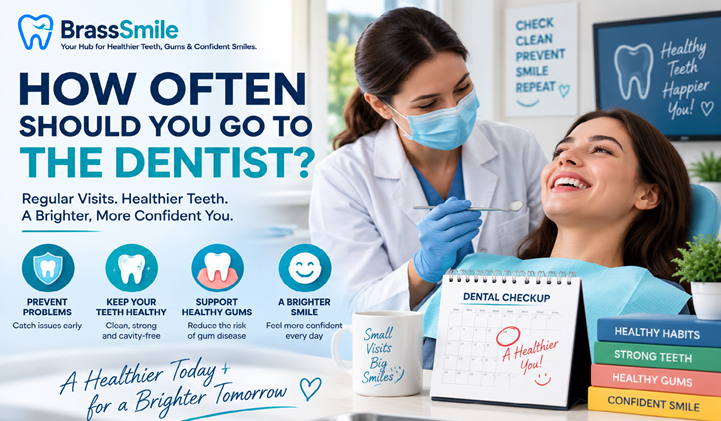

“How often should you go to the dentist?” sounds like it should have a simple answer.
For years, many people have heard that everyone should visit the dentist every six months. That schedule can be appropriate for some people, but it is not a universal rule.
Your ideal dental visit schedule depends on your oral health, history of cavities or gum disease, risk factors, age, medications, and the recommendations of your dental professional. The American Dental Association (ADA) says dental recall intervals should be tailored to individual needs and disease risk rather than applying one schedule to everyone.
That means someone with healthy teeth and gums may need a different schedule from someone with recurring cavities or periodontal disease.
The Oral Hygiene Tips important thing is not to chase a particular number of months. It is to have a preventive-care plan that fits your mouth.
This guide explains how often you should go to the dentist, what can change your recommended schedule, what happens during a routine visit, and which symptoms mean you should make an appointment sooner.
Dental health disclaimer: This article provides general educational information. It does not diagnose dental conditions or replace advice from a qualified dentist.
How Often Should You Go to the Dentist?
For many people, a dental checkup every six months is a familiar routine. However, there is no single interval that is medically appropriate for every person.
The ADA recommends that dental recall intervals be based on individual risk. NIDCR also recommends routine dental checkups and professional cleanings, with more frequent visits potentially appropriate for people at higher risk of tooth decay or gum disease.
In practical terms:
- Low-risk patients may be able to go longer between routine checkups.
- Moderate-risk patients may benefit from more regular visits.
- Higher-risk patients may need dental visits every few months.
- People with active dental problems may need appointments based on their treatment plan.
- Anyone with concerning symptoms should not wait for their next routine appointment.
The NHS similarly explains that checkup intervals can vary according to oral-health risk, How to Keep Gums Healthy, ranging from several months to much longer intervals in some low-risk adults.
So, instead of asking only, “Is six months enough?” ask:
“What dental visit schedule is appropriate for my oral-health risk?”
That is a much better question to discuss with your dentist.
Is Going to the Dentist Every Six Months Still Necessary?
It can be.
A six-month schedule remains common in dental practice and may work well for many patients. However, current guidance does not support treating six months as a mandatory interval for every adult.
The ADA notes that research has not established one universally optimal recall frequency for preventing cavities or periodontal disease. It recommends tailoring the interval to an individual’s assessed risk.
That distinction is important.
A person with excellent oral health, low cavity risk, and healthy gums may not need the same appointment frequency as someone with:
- Frequent cavities
- Gum disease
- Dry mouth
- A history of extensive dental treatment
- Poor plaque control
- Certain medical conditions
- Tobacco use
- Other factors that increase oral-health risk
Your dentist can evaluate those factors and recommend an appropriate interval.
Why Do Regular Dental Checkups Matter?
A dental visit is about more than getting your teeth polished.
Routine appointments give your dental team an opportunity to monitor your mouth over time. They can identify changes that may not be obvious when you look in the mirror.
Depending on your needs, a routine appointment may involve checking:
- Teeth
- Gums
- Plaque and tartar
- Existing fillings or restorations
- Signs of tooth decay
- Signs of gum disease
- Oral tissues
- Changes that require further investigation
NIDCR recommends routine dental checkups and professional cleanings as part of maintaining healthy teeth and gums.
Early attention can also make treatment simpler.
A small cavity may be easier to manage than a tooth that has developed significant decay. Likewise, early gum inflammation can be addressed before periodontal disease causes more serious damage.
Factors That Determine How Often You Should Visit the Dentist
There is no universal schedule because people have different levels of dental risk.
Here are some of the most important factors.
1. Your History of Cavities
If you regularly develop cavities, your dentist may recommend more frequent monitoring.
Cavities can develop without causing obvious pain during their early stages. Regular examinations can help identify changes before they become more extensive.
Your dentist may also review your brushing, fluoride exposure, diet, and other factors that affect your risk.
2. Your Gum Health
Gum health can significantly affect your dental schedule.
If you have gingivitis or periodontal disease, you may require closer monitoring and professional treatment.
NIDCR recommends routine dental care and notes that people at higher risk of gum disease may need to see their dental professional more frequently.
Patients who have undergone periodontal treatment may also require ongoing maintenance visits. The ADA notes that people with a history of periodontitis can benefit from more frequent periodontal maintenance, often around every three to six months depending on the clinical situation.
3. Your Risk of Tooth Decay
Some people are naturally more prone to cavities.
Risk can be influenced by factors such as:
- Frequent sugar exposure
- Inadequate plaque removal
- Dry mouth
- Certain medications
- Previous cavities
- Limited fluoride exposure
- Some medical conditions
For someone with elevated cavity risk, waiting a full year between dental examinations may not be appropriate.
Your dentist can assess your individual risk and determine how closely your teeth should be monitored.
4. Dry Mouth
Saliva plays an important role in protecting the mouth.
People with persistent dry mouth can have a higher risk of tooth decay because saliva helps protect teeth and maintain the oral environment.
Some medications can contribute to dry mouth. NIDCR specifically identifies dry mouth caused by medications as one example of a factor that can increase cavity risk and may warrant additional preventive care.
If your mouth frequently feels dry, tell your dentist.
It may affect your preventive-care plan.
5. Your Age
Dental needs change throughout life.
Children may need different preventive care from adults. Teenagers may have specific concerns related to orthodontic treatment, diet, wisdom teeth, and developing permanent teeth.
Older adults may face additional concerns involving gum recession, tooth wear, dry mouth, medications, root cavities, and existing restorations.
Your dental schedule should therefore evolve as your needs change.
How Often Should Adults Go to the Dentist?
For adults, the answer depends primarily on individual risk.
A healthy adult with low dental risk may not necessarily need a checkup every six months. Someone with active or recurring dental problems may need to visit more frequently.
The key point from current evidence-based guidance is personalization.
The ADA recommends regular preventive dental care with the interval adjusted to individual needs and disease risk.
If you have not seen a dentist for several years, do not assume that you need to wait for a particular calendar date.
Make an appointment and let the dental team establish an appropriate schedule based on your current oral health.
How Often Should You Get Your Teeth Cleaned?
Professional dental cleaning and a dental examination are related but not always identical.
A cleaning focuses on removing plaque, tartar, and other deposits that cannot be adequately removed through ordinary home care.
An examination allows the dentist to assess your teeth, gums, mouth, and overall oral-health status.
Some people may need professional cleaning more frequently because they develop tartar quickly or have periodontal disease. Others may need less frequent professional intervention.
Your dental professional can determine the appropriate interval.
NIDCR recommends routine professional cleaning as part of ongoing dental care.
Signs You Should See a Dentist Before Your Next Checkup
You should not wait for your scheduled appointment if something unusual develops.
Make a dental appointment if you experience:
- Persistent tooth pain
- Tooth sensitivity that does not improve
- Swollen gums
- Repeated gum bleeding
- A loose adult tooth
- Pain when chewing
- Persistent bad breath
- A cracked or broken tooth
- A filling that feels loose or damaged
- A noticeable change in your bite
- Swelling around the face or jaw
- A sore or mouth lesion that does not heal
Some symptoms require prompt attention.
Severe facial swelling, difficulty breathing or swallowing, uncontrolled bleeding, or a serious dental injury can require urgent or emergency care rather than a routine appointment.
What Happens During a Routine Dental Checkup?
Many people feel nervous because they are unsure what will happen once they sit in the dental chair.
A routine visit is generally straightforward.
Your dentist or dental team may:
Examine your teeth
They will look for signs of decay, damage, wear, or other changes.
Check your gums
The dental team may assess gum health and look for signs of inflammation or periodontal disease.
Review your oral-health history
Tell your dentist about any changes since your previous appointment.
That includes new sensitivity, pain, bleeding, dry mouth, medications, or other concerns.
Perform professional cleaning when appropriate
A hygienist or dentist may remove plaque and tartar that regular brushing cannot eliminate.
Recommend additional care
Depending on what they find, you may receive recommendations about home care, fluoride, fillings, periodontal treatment, or further evaluation.
Decide when you should return
Your next appointment should be based on your individual needs rather than an arbitrary schedule.
Do You Need Dental X-Rays at Every Visit?
No.
Dental X-rays are not automatically necessary at every routine appointment.
The ADA’s updated 2026 recommendations emphasize that dental X-rays should be ordered when clinically necessary. The appropriate frequency depends on factors such as age, current oral health, disease risk, and signs or symptoms.
That means your dentist may recommend an X-ray when there is a specific reason to investigate something that cannot be adequately assessed through a regular examination.
If you are unsure why an X-ray has been recommended, ask.
A good dental appointment should include a clear explanation of why a diagnostic procedure is useful.
What Can You Do Between Dental Visits?
Your daily routine matters enormously.
Going to the dentist regularly does not compensate for poor home care.
The ADA recommends brushing twice daily with fluoride toothpaste and cleaning between teeth regularly. NIDCR similarly recommends brushing twice a day, cleaning between teeth daily, and maintaining routine dental visits.
A simple daily routine includes:
- Brush twice a day with fluoride toothpaste.
- Spend about two minutes brushing.
- Clean between your teeth once a day.
- Avoid frequent sugary snacks and drinks.
- Drink water regularly.
- Avoid tobacco.
- Pay attention to changes in your mouth.
- Follow your dentist’s personalized recommendations.
These habits can reduce the risk of problems between appointments.
How Often Should You Go to the Dentist if You Have Gum Disease?
If you have gum disease, your schedule may be more frequent than the standard six-month pattern.
The exact interval depends on the severity of your condition and whether you have completed active periodontal treatment.
People with periodontitis may require ongoing supportive periodontal care. ADA guidance notes that more frequent maintenance visits, potentially every three to six months, may benefit patients after periodontal treatment.
Do not use three or six months as a self-prescribed schedule, though.
Your periodontist or dentist should determine the appropriate interval for your condition.
How Often Should You Go to the Dentist if You Have Sensitive Teeth?
Sensitive teeth do not automatically mean you need more frequent routine appointments.
However, new, persistent, or worsening sensitivity deserves evaluation.
Sensitivity can result from several causes, including:
- Enamel wear
- Gum recession
- Cavities
- Cracked teeth
- Worn fillings
- Exposed tooth roots
If you have persistent sensitivity, your dentist can investigate the cause rather than simply recommending a different toothpaste.
This is particularly important if sensitivity affects one tooth or occurs without an obvious trigger.
What If You Haven’t Been to the Dentist in Years?
You are not alone.
If you have missed several appointments, embarrassment should not stop you from returning.
Dental professionals see patients who have delayed care for many different reasons.
Your first appointment may involve a more comprehensive assessment than a routine checkup. The dentist may identify cavities, gum problems, tartar, damaged restorations, or other concerns.
That information gives you a starting point.
Instead of worrying about how long you have been away, focus on what you can do next.
Book an appointment and rebuild your preventive-care routine from there.
Dental Checkup Frequency at a Glance
| Situation | Possible Visit Pattern |
|---|---|
| Healthy, low-risk adult | May be able to attend less frequently |
| History of frequent cavities | Often needs closer monitoring |
| Gum disease | May require more frequent visits |
| After periodontal treatment | Often requires ongoing maintenance |
| High cavity risk or dry mouth | May need additional preventive care |
| Dental pain or swelling | Do not wait for routine appointment |
| New or worsening symptoms | Arrange an evaluation |
| Children and teenagers | Schedule based on age and individual needs |
This table is a general guide, not a personalized treatment schedule.
Your dentist should determine your actual recall interval.
Common Myths About Dental Visits
Myth 1: Everyone must go every six months
Not necessarily.
Six months is common, but current guidance supports individualized recall intervals based on risk.
Myth 2: You only need a dentist when something hurts
Not true.
Many dental problems can develop before they cause obvious pain. Preventive visits help identify problems earlier.
Myth 3: Good brushing means you don’t need a dentist
Even excellent home care cannot replace professional evaluation and treatment when needed.
Myth 4: Dental X-rays are required every time
No.
X-ray frequency should depend on clinical need and individual risk.
Myth 5: A dental cleaning is the same as a full checkup
Not exactly.
Cleaning removes deposits such as plaque and tartar, while an examination evaluates your oral health.
How to Make Dental Visits More Effective
You can make your appointments more useful by preparing beforehand.
Keep track of symptoms
If you have experienced sensitivity, pain, bleeding, or another change, write it down.
Bring an updated medication list
Some medications can affect oral health.
Tell your dentist about lifestyle changes
Changes in smoking, diet, oral-care habits, or other relevant factors can help your dental team assess risk.
Ask questions
If your dentist recommends an X-ray, filling, cleaning, or other procedure, ask what it is for and why it is appropriate.
Follow through
A dental appointment only helps if you act on important recommendations afterward.
Expert Tips for Maintaining Better Dental Health
Don’t use the calendar as your only guide
Your mouth can change between scheduled appointments.
Symptoms matter.
Think prevention, not just treatment
Dental visits are an opportunity to identify risk before it becomes a larger problem.
Keep your home routine consistent
The ADA emphasizes that daily home oral care is an important contributor to oral health.
Ask about your personal risk level
Instead of asking only, “When should I come back?” ask:
“What makes me high, moderate, or low risk for dental problems?”
That conversation can make your schedule easier to understand.
Don’t skip care because you feel fine
A lack of pain does not guarantee that everything is healthy.
(FAQs)
How often should you go to the dentist?
There is no single schedule for everyone. Your dentist should recommend an interval based on your oral health and risk of future problems. Six-month visits may be appropriate for some people, while others may need more or less frequent care.
Is going to the dentist every six months necessary?
Not for everyone. Six months is a common schedule, but the ADA supports tailoring recall intervals to individual risk and needs.
How often should adults get a dental checkup?
Adults should receive routine dental checkups, but the interval should be determined by their individual oral-health risk. People with healthy mouths may need less frequent visits, while people at higher risk may need more frequent appointments.
How often should I get my teeth cleaned?
It depends on your oral health, tartar buildup, gum condition, and individual risk. Your dental professional can recommend an appropriate cleaning schedule.
Can I skip the dentist if I brush and floss every day?
No. Daily oral hygiene is essential, but professional examinations can identify problems that you may not notice yourself.
How often should I go to the dentist if I have gum disease?
People with gum disease may need more frequent professional care. After periodontal treatment, supportive maintenance visits may be scheduled every three to six months in some cases.
Should I see a dentist if my teeth don’t hurt?
Yes. Dental problems can develop without obvious pain. Routine preventive care helps identify issues before they become more complicated.
Do I need an X-ray at every dental visit?
No. The ADA recommends that X-rays be taken based on clinical need, considering factors such as age, oral health, disease risk, and symptoms.
What if I haven’t seen a dentist in several years?
Make an appointment rather than continuing to delay care. Your dentist can assess your current oral health and create a plan to address any problems and establish an appropriate preventive schedule.
What should I do if I have dental pain between appointments?
Contact your dental office rather than waiting for your next routine checkup. Persistent pain, swelling, trauma, or other significant symptoms may require earlier evaluation.
Final Thoughts
So, how often should you go to the dentist?
The most accurate answer is: as often as your individual oral-health needs require.
For some people, that may mean a routine visit around every six months. Others with low dental risk may be able to wait longer, while people with cavities, gum disease, dry mouth, or other risk factors may need more frequent monitoring. The ADA and other health authorities increasingly emphasize individualized, risk-based dental care rather than assuming one interval fits everyone.
What matters most is having a plan.
Keep brushing twice a day with fluoride toothpaste. Clean between your teeth daily. Watch for changes in your mouth. Avoid tobacco and manage habits that increase dental risk. Then work with your dentist to determine when you should return.
And if something feels wrong between appointments, don’t wait for the calendar.
Your next dental visit should be based on your health—not simply on the date six months from now.



Pingback: Why Does My Jaw Pop When I Chew? Causes & Treatment