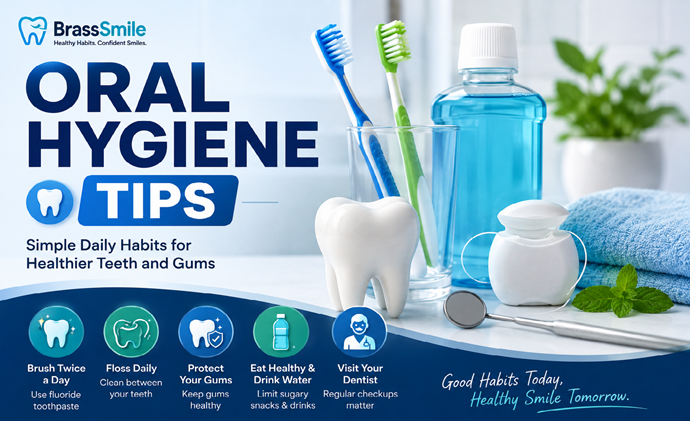

A healthy smile does not usually come from one expensive product or a complicated routine. It comes from small habits repeated consistently.
Good oral hygiene helps remove plaque, protect tooth enamel, support healthy gums, and reduce the risk of common dental problems. The basics are surprisingly simple: brush twice a day with fluoride toothpaste, clean between your teeth regularly, make sensible food choices, and keep up with professional dental care. The American Dental Association and National Institute of Dental and Craniofacial Research both support these core habits.
Still, knowing what to do and knowing how to do it properly are two different things.
You may brush every morning and night but miss areas around the gumline. You may floss occasionally but stop when your gums bleed. Or you may buy mouthwash because you assume it can replace brushing and flossing.
This guide breaks down practical oral hygiene tips that fit into a normal daily routine. It also explains common mistakes, choosing the right tools, and knowing when a dental professional should take a closer look.
What Is Oral Hygiene?
Oral hygiene refers to the daily practices used to keep your teeth, gums, tongue, and mouth clean and healthy.
One of the biggest targets is dental plaque. Plaque is a sticky film of bacteria that continuously forms on teeth. When it is not removed regularly, it can contribute to tooth decay and gum disease.
Your daily routine therefore has two major jobs:
- Remove plaque from tooth surfaces.
- Clean areas that a toothbrush cannot reach effectively.
That is why brushing alone is not the complete picture.
A strong oral-care routine combines toothbrushing, cleaning between teeth, healthy lifestyle choices, and professional dental care.
Practical Oral Hygiene Tips for Everyday Dental Health
Brush Your Teeth Twice a Day
The first rule is also one of the most important.
The American Dental Association recommends brushing twice a day for two minutes with fluoride toothpaste. Both manual and powered toothbrushes can work effectively when used correctly.
Try to make brushing part of two fixed points in your day, such as:
- After getting ready in the morning
- Before going to bed
The evening brushing session deserves particular attention. Going to sleep without cleaning away the day’s plaque and food debris gives bacteria more time to remain on your teeth.
Consistency matters more than owning an expensive toothbrush.
Use Fluoride Toothpaste
When choosing toothpaste, look for fluoride.
Fluoride is a naturally occurring mineral that helps prevent tooth decay. It strengthens enamel and can help reverse mineral loss associated with the early stages of decay.
For most adults, fluoride toothpaste should be a basic part of daily brushing.
However, toothpaste choices can vary for children and people with specific dental needs. If you are unsure which toothpaste is appropriate for you or your child, ask a dentist.
A useful rule
Do not choose toothpaste based only on claims such as:
- “Extra whitening”
- “Maximum freshness”
- “Deep cleaning”
- “Natural”
Look at what the product is actually designed to do and whether it contains fluoride.
Brush Gently, Not Aggressively
Harder brushing does not automatically mean cleaner teeth.
The NIDCR recommends positioning the bristles toward the gumline and using gentle, small circular motions. It also recommends brushing the different surfaces of each tooth and the tongue.
A simple technique is:
- Place the brush near the gumline.
- Use gentle, short movements.
- Clean the outer surfaces.
- Clean the inner surfaces.
- Brush the chewing surfaces.
- Carefully clean the tongue.
Avoid treating your toothbrush like a scrubbing brush.
Aggressive brushing can be uncomfortable and may be especially problematic for people who already have gum recession or sensitive teeth.
Clean Between Your Teeth Every Day
This is one of the most frequently overlooked oral hygiene tips.
A toothbrush cannot effectively clean every surface between your teeth. Cleaning between teeth helps remove plaque and food particles from those spaces.
The ADA recommends cleaning between teeth once a day using floss or another interdental cleaner.
You do not necessarily have to use traditional string floss.
Depending on your mouth and dental needs, options may include:
- Traditional dental floss
- Floss holders
- Interdental brushes
- Water flossers
- Other interdental cleaning tools
The best option is one you can use consistently and correctly.
If you have braces, dental bridges, implants, or other dental work, ask your dental professional which method fits your situation.
Learn How to Floss Without Hurting Your Gums
Flossing should not involve aggressively snapping the floss between your teeth.
Instead, guide it gently through the contact point. Once it reaches the gumline, curve the floss around the side of the tooth and move it carefully along the tooth surface. The NIDCR specifically advises against forcing floss into place because doing so can harm the gums.
If your gums bleed when you begin cleaning between your teeth, do not automatically assume that flossing is damaging them.
Bleeding can be associated with gum inflammation. Persistent bleeding should be discussed with a dental professional rather than ignored.
Pay Attention to Your Gum Health
Healthy teeth are only half of a healthy mouth.
Your gums provide important support for your teeth, so changes in their appearance or condition deserve attention.
Possible warning signs include:
- Red or swollen gums
- Gums that bleed easily
- Persistent bad breath
- Gum tenderness
- Receding gums
- Loose teeth
- Pain when chewing
Plaque that remains on the teeth can harden into tartar, also called calculus. Unlike ordinary plaque, tartar cannot simply be brushed away at home and requires professional cleaning.
Do not wait for severe pain before taking gum problems seriously.
Replace Your Toothbrush When It Becomes Worn
Your toothbrush does not last forever.
The ADA recommends replacing a toothbrush every three to four months, or sooner when the bristles become visibly worn or frayed.
A simple way to remember this is to check your toothbrush at the beginning of each new season.
You should also consider replacing it sooner if the bristles become badly flattened or damaged.
Both manual and powered toothbrushes can be effective. The most important factor is using the brush correctly and consistently.
Be Smarter About Sugar and Snacking
Brushing matters, but your diet matters too.
Frequent exposure to sugary foods and drinks can increase the risk of tooth decay. The ADA recommends a healthy diet that limits sugary beverages and snacks.
You do not need to eliminate every food you enjoy.
Instead, think about frequency.
Constantly sipping sweetened drinks or repeatedly snacking on sugary foods throughout the day can expose teeth to repeated acid attacks.
Better everyday choices can include:
- Water instead of sugary beverages
- Balanced meals
- Fewer frequent sugary snacks
- Nutritious foods
- Limiting sugar-sweetened drinks
Small changes can be easier to maintain than extreme restrictions.
Do Not Treat Mouthwash as a Replacement for Brushing
Mouthwash can be useful for some people, but it does not turn a weak brushing routine into a strong one.
Your basic routine should still center on brushing and cleaning between your teeth.
The ADA describes mouthwash as a possible addition to a daily routine, while the NIDCR emphasizes brushing and cleaning between teeth as core oral-hygiene practices.
Some people may benefit from specific mouth rinses based on their individual risk factors. Your dentist can tell you whether one is appropriate.
Keep Regular Dental Appointments
Even an excellent home routine cannot replace professional dental care.
Regular dental visits allow professionals to look for problems that may not be obvious to you. Professional cleaning can also remove tartar that has hardened on the teeth.
How often you need an appointment depends on your individual oral-health needs.
People with a higher risk of cavities or gum disease may require more frequent care. Your dentist can recommend an appropriate schedule.
Oral Hygiene Routine: A Simple Daily Schedule
You do not need to spend hours caring for your teeth.
A straightforward routine could look like this:
| Time | Habit |
|---|---|
| Morning | Brush with fluoride toothpaste for two minutes |
| During the day | Choose water and limit frequent sugary snacks |
| Evening | Clean between your teeth |
| Before bed | Brush with fluoride toothpaste for two minutes |
| Regularly | Visit your dentist for examinations and professional care |
The exact order of brushing and interdental cleaning is less important than doing both thoroughly. The ADA notes that either brushing or cleaning between teeth first can be acceptable.
Common Oral Hygiene Mistakes to Avoid
Even people with good intentions can develop habits that work against their oral health.
Brushing too hard
More pressure does not necessarily mean better plaque removal. Gentle technique is preferable.
Skipping the back teeth
The teeth at the back of your mouth are easy to overlook. Make sure you clean their outer, inner, and chewing surfaces.
Ignoring the gumline
Plaque can accumulate around the gumline. Positioning the bristles appropriately helps clean this important area.
Flossing only when food gets stuck
Interdental cleaning is about more than removing visible food. It helps disrupt plaque between teeth.
Using an old toothbrush
Worn bristles are a good reason to replace your brush.
Assuming bleeding gums are normal
Occasional bleeding should not simply become something you ignore. Persistent bleeding can be a sign of gum inflammation or disease.
Relying on whitening products
Whitening addresses tooth color. It does not replace basic oral hygiene.
Manual vs. Powered Toothbrush: Which Is Better?
Both can work.
The ADA states that both manual and powered toothbrushes can be effective.
| Feature | Manual Toothbrush | Powered Toothbrush |
|---|---|---|
| Effectiveness | Effective with proper technique | Effective with proper technique |
| Cost | Usually lower | Usually higher |
| Portability | Very convenient | Depends on model |
| Technique assistance | Requires manual control | Some models provide helpful features |
| Replacement | Replace the brush | Replace brush head as recommended |
The right choice depends on your preferences, technique, budget, and dental needs.
If you struggle to clean your teeth thoroughly with a manual brush, ask your dentist whether a powered toothbrush could help.
What About Water Flossers?
Water flossers can be another option for cleaning between teeth.
The ADA recognizes water flossers as an alternative interdental-cleaning method, and the NIDCR also lists water flossers among possible tools.
They may be particularly convenient for some people who find traditional floss difficult to handle.
However, different tools suit different mouths.
If you have orthodontic appliances, implants, bridges, or other dental work, ask your dental professional which interdental method is most appropriate.
Oral Hygiene Tips for People With Sensitive Teeth
Sensitive teeth can make brushing uncomfortable, but avoiding the affected area completely is not a good long-term strategy.
Instead:
- Use a soft-bristled toothbrush.
- Brush gently.
- Avoid aggressive scrubbing.
- Consider discussing sensitivity with your dentist.
- Do not assume persistent sensitivity is harmless.
Sensitivity can have different causes, including exposed tooth surfaces, wear, cavities, or other dental problems. If sensitivity persists or becomes severe, professional evaluation is appropriate.
Oral Hygiene Tips for Better Breath
Bad breath can sometimes come from something as simple as bacteria and food debris in the mouth.
A consistent routine can help:
- Brush twice daily.
- Clean your tongue.
- Clean between your teeth.
- Drink water regularly.
- Keep dental appointments.
- Address persistent gum problems.
If bad breath continues despite good oral hygiene, it is worth discussing with a dentist or healthcare professional.
Persistent bad breath can sometimes be associated with an underlying oral or other health issue.
When Should You See a Dentist?
Not every dental concern requires an emergency visit, but some symptoms deserve professional attention.
Contact a dental professional if you experience:
- Persistent tooth pain
- Swollen gums
- Repeated gum bleeding
- A loose adult tooth
- Severe sensitivity
- Pain while chewing
- A broken or damaged tooth
- Persistent bad breath
- Changes in your gums or mouth that do not go away
More serious symptoms, such as significant swelling or difficulty breathing or swallowing, require urgent medical attention.
The important point is simple: do not rely on online articles to diagnose a dental condition.
Pros and Cons of a Simple Oral Hygiene Routine
Pros
- Helps control dental plaque
- Supports healthy teeth and gums
- Can reduce the risk of tooth decay and gum disease
- Takes relatively little time
- Requires only basic tools
- Can become an easy daily habit
Cons
- Requires consistency
- Cannot remove hardened tartar at home
- Cannot diagnose existing dental problems
- Does not replace professional dental examinations
- Individual dental needs may require additional care
Expert Tips for Making Oral Hygiene Easier
Keep your toothbrush visible
If your toothbrush is easy to see, brushing becomes harder to forget.
Set a two-minute timer
Many people underestimate how quickly they brush. A timer can help you stay consistent.
Choose comfort over complexity
A simple toothbrush you use correctly is better than an advanced product you rarely use.
Make interdental cleaning a fixed habit
Choose a time that works for you. The ADA notes that the best time to clean between your teeth is the time you can consistently maintain.
Treat changes in your mouth as information
Bleeding, swelling, persistent sensitivity, or pain should not automatically be dismissed.
Ask your dentist for personalized advice
General oral hygiene recommendations apply broadly, but your dental needs may be different. The ADA specifically distinguishes general home-care recommendations from personalized guidance for people with higher risks or specific needs.
Frequently Asked Questions About Oral Hygiene Tips
How often should I brush my teeth?
For most people, the ADA recommends brushing twice a day for two minutes with fluoride toothpaste.
Is flossing really necessary if I brush well?
Brushing cannot effectively clean every surface between your teeth. The ADA recommends cleaning between teeth once daily with floss or another suitable interdental cleaner.
Should I brush before or after flossing?
Either order can work as long as you clean thoroughly. Choose the sequence that helps you maintain the habit consistently.
Are powered toothbrushes better than manual toothbrushes?
Not necessarily for everyone. Both manual and powered toothbrushes can effectively clean teeth when used correctly.
How often should I replace my toothbrush?
The ADA recommends replacing your toothbrush every three to four months, or sooner if the bristles become worn or frayed.
Why do my gums bleed when I floss?
Bleeding can be associated with gum inflammation. If bleeding persists, speak with a dental professional rather than simply ignoring it.
Can mouthwash replace flossing?
No. Mouthwash may be a useful addition for some people, but it does not replace brushing and cleaning between teeth.
Does fluoride really help teeth?
Yes. Fluoride helps prevent tooth decay by strengthening enamel and supporting the remineralization of early tooth damage.
How can I keep my gums healthy?
Brush twice daily with fluoride toothpaste, clean between your teeth regularly, avoid tobacco, maintain dental appointments, and seek professional care for persistent gum symptoms.
Can good oral hygiene prevent every dental problem?
No. Good habits can reduce risk and support oral health, but they cannot guarantee that you will never develop a dental problem. Genetics, medications, diet, age, existing dental conditions, and other factors can influence oral health.
Final Thoughts
The best oral hygiene tips are rarely complicated.
Brush your teeth twice a day with fluoride toothpaste. Spend enough time cleaning every surface. Clean between your teeth every day. Be gentle around your gums. Limit frequent sugary foods and drinks. Replace worn toothbrushes. And keep up with professional dental care.
Those habits may seem ordinary, but ordinary habits become powerful when you maintain them consistently.
At BrassSmile, our approach is simple: better oral health starts with better information and practical daily habits. A brighter smile can be part of that journey, but healthy teeth and gums should come first.
Healthy habits. Healthier teeth. More confident smiles.

Pingback: How Often Should You Go to the Dentist? Complete Guide
Pingback: What Is Oral Health? A Complete Guide to Your Teeth and Gums