
Waking up tired after a full night in bed can be frustrating. For people with sleep apnea, it can also become a daily struggle. That’s where sleep apnea self-care comes in.
Sleep apnea is a sleep-related breathing disorder that repeatedly interrupts normal breathing. These interruptions can lower oxygen levels and disrupt the body’s natural sleep cycle. As a result, many people wake up with headaches, dry mouth, poor concentration, or persistent fatigue.
Although medical treatment plays a central role in managing sleep apnea, everyday habits matter too. Your sleeping position, exercise routine, alcohol consumption, and weight can all influence your symptoms.
The right approach can support better sleep, improve overall health, and make prescribed treatments easier to follow. However, lifestyle changes alone cannot replace medical care, especially when sleep apnea is moderate or severe.
This guide explores 15 practical self-care strategies, explains how they work, and highlights when professional treatment becomes necessary.
Also Read: Ear and Jaw Pain on One Side
What Is Sleep Apnea?
Sleep apnea occurs when breathing repeatedly stops or becomes unusually shallow during sleep. Each interruption can last several seconds or longer. Some people experience these events dozens of times per hour.
There are three main types of sleep apnea.
1. Obstructive Sleep Apnea (OSA)
Obstructive sleep apnea is the most common form. It develops when the muscles supporting the throat relax during sleep, narrowing or blocking the upper airway.
Common signs include loud snoring, gasping, choking sounds, and repeated breathing pauses.
2. Central Sleep Apnea (CSA)
Central sleep apnea has a different cause. The brain temporarily fails to send the signals needed to control breathing.
It may occur alongside certain heart conditions, neurological disorders, or other medical problems.
3. Complex Sleep Apnea
Also called treatment-emergent central sleep apnea, this condition involves central breathing interruptions that appear or continue during treatment for obstructive sleep apnea.
Each type requires proper diagnosis. Treatment and self-care recommendations should reflect the underlying condition rather than follow a one-size-fits-all approach.
Common Symptoms of Sleep Apnea: Sleep Apnea Self-Care
Sleep apnea symptoms do not always appear obvious. Some people notice nighttime breathing problems, while others mainly struggle with daytime fatigue.
Nighttime symptoms may include:
- Loud, frequent snoring.
- Noticeable pauses in breathing.
- Gasping, choking, or snorting during sleep.
- Frequent nighttime awakenings.
- Restless sleep.
- Waking with a dry mouth.
Daytime symptoms may include:
- Excessive sleepiness.
- Morning headaches.
- Difficulty concentrating.
- Memory problems.
- Irritability or mood changes.
- Low energy throughout the day.
- Feeling tired despite spending enough time in bed.
Not everyone with sleep apnea snores loudly. Some people have significant breathing interruptions without obvious symptoms.
If someone notices repeated pauses in your breathing, take that observation seriously. A healthcare professional can determine whether a sleep evaluation is necessary.
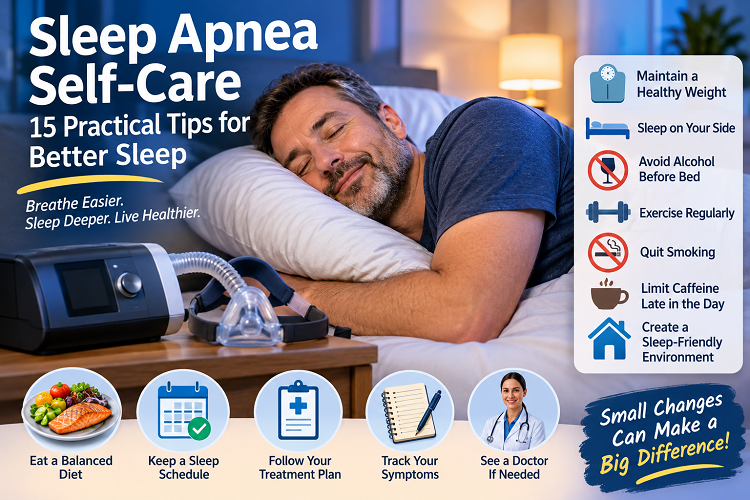
15 Practical Sleep Apnea Self-Care Tips
Managing sleep apnea involves more than getting enough hours in bed. Consistent habits can support treatment and improve your overall well-being.
Here are 15 strategies worth incorporating into your daily routine.
1. Maintain a Healthy Weight
Excess body weight can increase the risk and severity of obstructive sleep apnea. Fat deposits around the neck and upper airway may contribute to airway narrowing during sleep.
For people carrying extra weight, gradual weight loss can sometimes reduce symptoms.
Start with realistic changes:
- Include vegetables and lean protein in your meals.
- Choose whole grains more often.
- Reduce sugary drinks and frequent high-calorie snacks.
- Pay attention to portion sizes.
- Build regular physical activity into your schedule.
- Set achievable weight-management goals.
Avoid extreme diets or rapid weight-loss programs. Sustainable changes are generally easier to maintain.
It’s also worth remembering that sleep apnea affects people of all body types. Weight loss does not guarantee a cure, and it should never delay necessary treatment.
2. Sleep on Your Side
Your sleeping position can influence how easily air moves through your throat.
For some people with obstructive sleep apnea, lying on the back makes breathing interruptions worse. Gravity can allow the tongue and soft tissues to move backward, narrowing the airway.
Side sleeping may reduce these position-related problems.
Try using:
- A supportive body pillow.
- A pillow behind your back.
- A comfortable mattress that supports side sleeping.
- A positional therapy device, if recommended.
Positional therapy works best for people whose breathing problems are strongly related to sleeping on their backs. It may not provide enough relief for other forms or more severe cases of sleep apnea.
3. Avoid Alcohol Before Bedtime
An evening drink may seem relaxing, but alcohol can make sleep apnea symptoms worse.
Alcohol relaxes the muscles in your throat. This can increase airway obstruction and contribute to breathing interruptions during sleep. It may also disturb normal sleep patterns.
Consider these changes:
- Avoid alcohol close to bedtime.
- Reduce your overall alcohol consumption.
- Don’t use alcoholic drinks as a sleep aid.
- Discuss regular drinking habits with your healthcare provider.
For people with obstructive sleep apnea, avoiding alcohol in the evening can be a particularly useful lifestyle adjustment.
4. Follow a Consistent Sleep Schedule
Your body responds well to predictable sleep and wake times. Frequently changing your schedule can disrupt your natural sleep-wake rhythm.
Try going to bed and waking up at roughly the same time every day, including weekends.
A relaxing evening routine can make this easier:
- Finish demanding tasks before bedtime.
- Dim the lights.
- Put away your phone and other screens.
- Take a warm shower.
- Read a book or listen to something calming.
- Go to bed at your planned time.
Most adults need at least seven hours of sleep each night, although individual needs vary.
Keep in mind that a regular schedule cannot correct an untreated breathing disorder. It supports healthy sleep habits but does not replace sleep apnea treatment.
5. Make Exercise Part of Your Routine
Regular physical activity benefits the heart, supports weight management, and promotes overall health.
Research also suggests that exercise may reduce obstructive sleep apnea severity in some people, even beyond its effects on body weight.
You don’t need an expensive gym membership to get started.
Consider activities such as:
- Walking for 20–30 minutes.
- Cycling.
- Swimming.
- Light strength training.
- Gentle stretching.
Choose something you enjoy. Consistency matters more than starting with an intense workout.
If you have an existing medical condition or haven’t exercised regularly, discuss a suitable starting routine with your healthcare provider.
6. Stop Smoking
Smoking irritates the respiratory system and can contribute to inflammation in the upper airway. This may create additional breathing problems during sleep.
Quitting smoking benefits both respiratory and cardiovascular health.
A practical quitting plan might include:
- Choosing a realistic quit date.
- Identifying situations that trigger cravings.
- Avoiding environments where people smoke.
- Asking about nicotine replacement therapy.
- Considering counselling or a smoking cessation programme.
Quitting isn’t always easy, particularly if you’ve smoked for years. Professional support can make the process more manageable.
7. Reduce Caffeine Later in the Day
Coffee may help you feel alert in the morning, but caffeine can interfere with sleep when consumed too late.
Coffee, tea, energy drinks, and some soft drinks contain caffeine. Its effects can last several hours, depending on individual sensitivity.
Try limiting caffeine later in the day.
You can also:
- Replace evening coffee with caffeine-free drinks.
- Check energy drink labels.
- Reduce afternoon caffeine gradually.
- Notice whether caffeine affects your ability to fall asleep.
Caffeine does not directly treat sleep apnea. However, better sleep habits can make daytime fatigue easier to manage.
8. Create a Comfortable Sleeping Environment
Your bedroom should make it easier to relax and maintain a consistent sleep routine.
A few simple adjustments can improve your sleeping environment:
- Keep the room dark.
- Reduce background noise.
- Maintain a comfortable temperature.
- Wash bedding regularly.
- Choose supportive pillows.
- Limit bright screens before bedtime.
If outside noise frequently wakes you, consider earplugs or a white-noise machine.
These changes can improve sleep comfort. They won’t physically prevent airway obstruction, so people with sleep apnea still need appropriate treatment.
9. Use Your CPAP Machine as Prescribed
Continuous positive airway pressure, commonly known as CPAP, is a widely used treatment for obstructive sleep apnea.
The machine sends pressurised air through a mask. This pressure helps keep the upper airway open during sleep, reducing breathing interruptions.
If your healthcare provider prescribes CPAP, use it consistently as directed.
A few habits can make treatment more comfortable:
- Wear the mask during every sleep period.
- Check the fit before going to bed.
- Clean the equipment according to manufacturer instructions.
- Replace worn supplies when necessary.
- Contact your provider about persistent discomfort.
- Bring your equipment when travelling.
Some people initially experience dry mouth, nasal congestion, or mask leaks. These problems often have practical solutions.
A different mask style, heated humidifier, or professional adjustment may help.
Never change your prescribed pressure settings without medical guidance. If CPAP feels uncomfortable, ask your provider about troubleshooting or alternative treatments instead of simply stopping therapy.
10. Manage Nasal Congestion
A blocked nose can make nighttime breathing uncomfortable. It can also make CPAP treatment harder to tolerate.
Allergies, dry air, and respiratory infections are common causes of nasal congestion.
Depending on the underlying problem, helpful measures may include:
- Keeping dust away from your bedroom.
- Washing bedding regularly.
- Using saline nasal spray when appropriate.
- Discussing allergy treatment with a healthcare professional.
- Asking about heated humidification for CPAP.
Be careful with medicated nasal decongestant sprays. Using certain products for too long can cause rebound congestion.
If nasal problems continue, discuss them with your healthcare provider.
11. Avoid Unprescribed Sleeping Pills
Not all sleep medications are suitable for people with sleep apnea.
Certain sedatives and sleeping pills can affect breathing, muscle activity, and alertness. Some may worsen breathing problems during sleep.
Before using sleep medication, discuss your options with a healthcare professional.
Make sure your doctor knows about any medications you take, including:
- Prescription sleeping pills.
- Anxiety medications.
- Opioid pain medicines.
- Muscle relaxants.
- Over-the-counter sleep aids.
Never stop prescribed medication suddenly without medical advice. Your provider can review possible risks and suggest appropriate alternatives.
12. Eat a Balanced Diet
A healthy eating pattern supports weight management, cardiovascular health, and metabolic function.
Although no specific diet cures sleep apnea, nutritious meals can support your broader treatment goals.
Build meals around:
- Fresh vegetables.
- Whole fruits.
- Beans and lentils.
- Whole grains.
- Fish.
- Eggs.
- Nuts and seeds.
- Lean protein.
Limit excessive processed foods, sugary drinks, and foods high in added sugars.
You don’t need a complicated meal plan. Focus on balanced portions and eating habits you can maintain over time.
13. Keep a Sleep and Symptom Diary
Memory alone isn’t always reliable when tracking sleep problems.
A simple sleep diary can help you identify patterns and explain your symptoms during medical appointments.
Record details such as:
- Bedtime and waking time.
- Nighttime awakenings.
- Morning headaches.
- Daytime sleepiness.
- Alcohol and caffeine consumption.
- CPAP usage.
- Mask leaks or discomfort.
If you share a bedroom, ask your sleeping partner whether they notice snoring, gasping, or breathing pauses.
You can also review CPAP usage reports when available. These records may help your provider assess treatment adherence and identify problems.
14. Keep Up With Medical Checkups
Sleep apnea management doesn’t end when you receive a diagnosis or start treatment.
Your symptoms, medications, weight, and overall health can change over time. These changes may affect how well your current treatment works.
Regular follow-up appointments give your provider an opportunity to:
- Review your symptoms.
- Check CPAP usage data.
- Assess mask comfort.
- Monitor blood pressure.
- Discuss treatment difficulties.
- Determine whether additional testing is needed.
If you experience significant weight changes or persistent symptoms, ask whether your treatment needs reassessment.
15. Take Daytime Sleepiness Seriously
Persistent daytime fatigue is more than an inconvenience. It can interfere with work, relationships, concentration, and personal safety.
Untreated sleep apnea may cause excessive sleepiness, even after spending enough time in bed.
Protect yourself by:
- Following your prescribed treatment.
- Avoiding driving when sleepy.
- Taking breaks during long work periods.
- Maintaining a regular sleep schedule.
- Discussing ongoing fatigue with your doctor.
Don’t rely on coffee or energy drinks to make drowsy driving safe. If you feel sleepy behind the wheel, stop driving and arrange another way to travel.
Sleep Apnea Self-Care vs. Medical Treatment: Sleep Apnea Self-Care
Self-care and medical treatment work toward the same goal, but they serve different purposes.
Lifestyle changes support general health and may improve certain symptoms. Medical treatments directly address the breathing problems associated with sleep apnea.
Here’s how common approaches compare:
| Approach | Main purpose | Important consideration |
|---|---|---|
| Weight management | Support airway and metabolic health | Not a guaranteed cure |
| Side sleeping | Reduce position-related airway obstruction | Most useful for positional OSA |
| Regular exercise | Improve fitness and overall health | Benefits develop over time |
| Alcohol reduction | Avoid alcohol-related airway relaxation | Especially useful near bedtime |
| CPAP therapy | Keep the airway open during sleep | Requires consistent use |
| Oral appliance | Help maintain airway space | Requires professional fitting |
| Surgery | Address selected anatomical problems | Requires specialist assessment |
The right treatment depends on the type and severity of sleep apnea.
Some people with mild obstructive sleep apnea may benefit from lifestyle changes and positional therapy. Others need CPAP, oral appliances, or additional medical interventions.
Never assume that feeling better means the condition has disappeared.
Pros and Cons of Sleep Apnea Self-Care
Self-care offers meaningful benefits, but it also has limitations.
Pros
- Encourages healthier daily routines.
- Supports cardiovascular health.
- May improve overall sleep quality.
- Helps with weight management.
- Complements prescribed treatment.
- Encourages greater awareness of symptoms.
- Gives patients an active role in managing their health.
Cons
- Lifestyle changes may not eliminate breathing interruptions.
- Improvements can take time.
- Weight management may be challenging.
- Side sleeping doesn’t work for everyone.
- Self-care cannot replace necessary medical treatment.
- Some people require long-term breathing support.
The best approach combines appropriate medical care with habits that fit your everyday life.
Expert Tips for Better Sleep Apnea Management: Sleep Apnea Self-Care
Managing sleep apnea becomes easier when you focus on realistic, repeatable habits.
These practical suggestions can help:
Start small. Choose one change instead of overhauling your entire routine. For example, begin with a consistent bedtime or a short daily walk.
Prepare CPAP equipment before bedtime. Check the mask, tubing, and water chamber early. This avoids unnecessary frustration when you’re ready to sleep.
Keep track of your symptoms. A sleep diary provides useful information that you may otherwise forget during medical appointments.
Address treatment problems early. Mask leaks, nasal dryness, and pressure discomfort deserve attention. Your provider may be able to improve your setup.
Be cautious with sleep apnea remedies. Products advertised as natural cures may lack reliable clinical evidence. Discuss unfamiliar treatments with a qualified professional.
Involve your sleeping partner. Their observations may help identify nighttime symptoms you cannot recognize yourself.
Stay consistent. Sustainable habits usually offer more value than dramatic changes that last only a few days.
When Should You See a Doctor?
Sleep apnea requires proper diagnosis. Self-care alone isn’t enough when breathing interruptions continue during sleep.
Arrange a medical evaluation if you experience:
- Loud and frequent snoring.
- Repeated pauses in breathing.
- Gasping or choking during sleep.
- Persistent daytime sleepiness.
- Frequent morning headaches.
- Difficulty concentrating.
- Unrefreshing sleep despite adequate time in bed.
Your healthcare provider may recommend a home sleep apnea test or an overnight sleep study. These tests help identify the type and severity of the condition.
Seek urgent medical attention for severe breathing difficulty while awake, chest pain, fainting, or other emergency symptoms.
If daytime sleepiness affects your alertness, avoid driving or operating dangerous machinery until you receive appropriate medical advice.
(FAQs): About Sleep Apnea Self-Care
1. Can sleep apnea improve naturally?
Some people experience improvement through weight management, regular exercise, reduced alcohol consumption, and positional therapy. However, these changes don’t cure every case. Medical treatment remains necessary for many patients.
2. What is the best sleeping position for sleep apnea?
Side sleeping may help people with positional obstructive sleep apnea. It can reduce airway narrowing compared with sleeping on the back. However, the most effective position depends on the individual’s condition.
3. Can losing weight help sleep apnea?
Yes. Weight loss can improve obstructive sleep apnea in people carrying excess weight. However, it doesn’t guarantee that breathing interruptions will disappear. Continue prescribed treatment unless your doctor recommends a change.
4. Does drinking alcohol make sleep apnea worse?
Alcohol can relax throat muscles and increase airway obstruction. Drinking before bedtime may worsen symptoms. Limiting or avoiding evening alcohol can support better breathing during sleep.
5. Is CPAP necessary for everyone with sleep apnea?
No. Treatment depends on the type, severity, and underlying cause. Some people benefit from custom oral appliances, positional therapy, or other medical treatments. A sleep specialist can recommend an appropriate option.
6. Can sleeping on my side stop snoring?
Side sleeping may reduce snoring in people whose symptoms worsen when they sleep on their backs. However, snoring has several possible causes. Persistent loud snoring deserves medical evaluation.
7. What foods should people with sleep apnea avoid?
There is no universal list of foods that people with sleep apnea must avoid. However, limiting excessive sugary drinks, highly processed foods, and calorie-dense meals may support healthy weight management. Avoid alcohol close to bedtime.
8. Does exercise help people with sleep apnea?
Regular physical activity supports cardiovascular health and weight management. It may also reduce obstructive sleep apnea severity in some people. Walking, cycling, swimming, and strength training are useful options.
9. Can sleep apnea cause daytime headaches?
Yes. Some people experience morning headaches associated with sleep apnea. Repeated breathing interruptions and changes in oxygen levels may contribute. Frequent or persistent headaches should be discussed with a healthcare professional.
10. Can sleep apnea go away permanently?
Some people experience substantial improvement after weight loss or other treatments. Others need ongoing management. Symptoms can return, so follow-up evaluations remain important even when breathing improves.
Conclusion: Sleep Apnea Self-Care
Sleep apnea self-care isn’t about finding a quick fix. It’s about building healthier habits while addressing the underlying breathing problem.
Sleeping on your side, exercising regularly, maintaining a healthy weight, and avoiding alcohol before bedtime are useful starting points. Tracking symptoms and keeping medical appointments can also make a difference.
If you use CPAP, follow your treatment plan and discuss discomfort or technical problems with your healthcare provider. Don’t stop prescribed therapy simply because you feel better.
Most importantly, remember that sleep apnea is manageable. With an appropriate treatment plan and consistent daily habits, you can support healthier breathing, more restful sleep, and a better quality of life.

