
Have you ever taken a bite of food and heard a sudden pop or click from your jaw? If so, you may have wondered, “Why does my jaw pop when I chew?”
Jaw popping is common. For many people, an occasional click does not mean something is seriously wrong. However, repeated popping can sometimes point to an issue involving the temporomandibular joint, commonly called the TMJ.
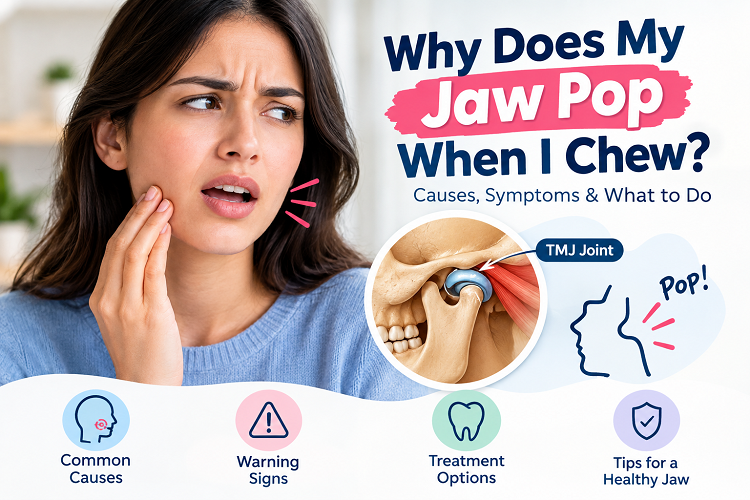
The TMJ connects your lower jaw to your skull. You have one joint on each side of your face. These joints help you chew, speak, yawn, and open your mouth.
Several things can cause jaw popping. Some are related to normal joint movement. Others can involve muscle tension, teeth grinding, arthritis, an injury, or a problem with the small cartilage disc inside the joint.
The key is to look at the popping along with other symptoms. Pain, swelling, limited movement, locking, or changes in your bite deserve more attention.
Why Does My Jaw Pop When I Chew?
The most common reason your jaw pops when you chew is movement within the temporomandibular joint.
Inside the TMJ is a small cushion called the articular disc. It helps the joint move smoothly. When you open and close your mouth, the disc normally moves with the jaw.
Sometimes, the disc shifts slightly from its usual position. As your jaw moves, it can snap back into place. That movement may create a clicking or popping sound.
This can happen without causing pain.
Another possibility is that the muscles around your jaw are tight. Stress, chewing gum frequently, clenching your teeth, or grinding your teeth at night can increase pressure around the joint.
Your jaw may also pop after an injury or because of changes within the joint caused by arthritis or other conditions.
Common Causes of Jaw Popping
| Possible Cause | What May Happen | Usually Painful? |
|---|---|---|
| Disc movement | Clicking or popping during jaw movement | Often not |
| Teeth grinding | Jaw tension and muscle soreness | Sometimes |
| Jaw clenching | Increased pressure around the TMJ | Sometimes |
| Excessive gum chewing | Muscle fatigue and joint irritation | Sometimes |
| Arthritis | Changes in the joint surfaces | Often |
| Previous injury | Joint or tissue damage | Sometimes |
| Stress | Increased clenching and muscle tension | Sometimes |
| TMJ disorder | Pain, clicking, stiffness, or locking | May be |
Also Reed: How Often Should You Go to the Dentist
Is It Normal for Your Jaw to Pop?
An occasional jaw click can occur in otherwise healthy people. If the sound is painless and your jaw moves normally, it may not require treatment.
For example, you might hear a click when eating a sandwich or yawning. The sound may come and go. You may have no swelling, tenderness, or difficulty opening your mouth.
That situation is generally less concerning than popping accompanied by pain or restricted movement.
Still, persistent changes should not be ignored. Your jaw joint plays an important role in everyday activities. If something changes suddenly or progressively, a dental or medical evaluation can help determine the cause.
Jaw Popping With Pain: What Does It Mean?
Jaw popping becomes more significant when pain appears at the same time.
Pain may occur directly in front of the ear, where the TMJ is located. You might also feel soreness in the cheek, temple, jaw muscles, or surrounding areas.
Some people notice pain while chewing. Others feel discomfort when yawning or opening their mouth wide.
Pain can develop when the joint becomes irritated or when the muscles around it remain tense.
Teeth grinding and clenching can be especially important. Many people grind their teeth during sleep without realizing it. They may wake up with a tired or sore jaw.
If your jaw pops regularly and hurts when you chew, schedule an evaluation with a dentist or other qualified healthcare professional.
Why Does My Jaw Pop on One Side?
It is possible for only one side of your jaw to pop.
The two TMJs work together, but they do not always move in exactly the same way. A disc movement, muscle imbalance, previous injury, or joint changes can affect one side more than the other.
You may notice the sound near your right or left ear when you bite down or open your mouth.
One-sided popping without pain is not automatically dangerous. However, persistent one-sided symptoms deserve attention if they become painful or affect how your jaw moves.
Pay particular attention if you develop:
- Difficulty opening your mouth
- Jaw locking
- Significant pain
- Swelling
- A sudden change in your bite
- Difficulty chewing
- Symptoms after an injury
These signs provide more useful information than the popping sound alone.
Can Stress Make Your Jaw Pop?
Yes, stress can contribute to jaw symptoms.
When people feel stressed, they may unconsciously clench their teeth. Some also grind their teeth during sleep.
Constant clenching keeps the jaw muscles active for long periods. This can cause muscle fatigue and soreness. It may also increase stress on the TMJ.
You may notice symptoms during particularly stressful periods. Your jaw could feel tired by the end of the day. Headaches or facial soreness may occur as well.
Reducing unnecessary clenching can help.
Try keeping your teeth slightly apart when you are not eating or speaking. Your lips can remain gently closed while your jaw muscles stay relaxed.
Can Chewing Gum Cause Jaw Popping?
Frequent gum chewing can contribute to jaw discomfort.
Chewing is repetitive. Long chewing sessions make the jaw muscles work continuously. If your TMJ is already irritated, excessive chewing may make symptoms more noticeable.
This does not mean chewing gum automatically causes TMJ problems. Many people chew gum without developing symptoms.
The concern is excessive or prolonged chewing, especially when combined with clenching or existing jaw pain.
If your jaw has started popping or hurting, consider taking a break from gum for a while. Choose softer foods temporarily if chewing makes the symptoms worse.
Other Symptoms to Watch For
Jaw popping is only one possible symptom of a TMJ problem.
Other symptoms may include:
- Jaw pain
- Facial tenderness
- Ear-area discomfort
- Headaches
- Jaw stiffness
- Difficulty opening your mouth
- Difficulty closing your mouth
- A locked jaw
- Pain while chewing
- Changes in your bite
- Grinding or clenching
- Clicking or grinding sounds
Not everyone with these symptoms has the same condition. That is why an examination can be useful when symptoms persist.
When Should You See a Dentist?
You do not necessarily need professional care for every painless jaw click.
However, you should consider seeing a dentist or healthcare professional if the popping is persistent and comes with other symptoms.
Seek an evaluation if you experience:
Pain: Pain while chewing or opening your mouth should be assessed if it persists.
Limited movement: Difficulty opening your mouth can indicate a joint or muscle problem.
Locking: A jaw that gets stuck open or closed requires professional attention.
Swelling: Swelling around the jaw can have several causes and should be evaluated.
Bite changes: A sudden change in how your teeth fit together can be significant.
Injury: Jaw symptoms following a blow to the face should be checked.
Severe pain, significant swelling, major difficulty opening the mouth, or symptoms following a serious injury may require prompt medical attention.
How Is a Popping Jaw Diagnosed?
A healthcare professional will usually start by asking about your symptoms.
They may ask when the popping started, whether it hurts, and whether the sound occurs while chewing, opening, or closing your mouth.
A dentist may examine your jaw movement and feel the muscles and joints around your face. They may also check your teeth for signs of grinding or clenching.
In some cases, imaging may be recommended. The type of imaging depends on your symptoms and what your healthcare professional suspects.
The goal is not simply to find the source of the sound. It is to determine whether the joint or surrounding tissues are causing a meaningful problem.
How to Stop Your Jaw From Popping
There is no single treatment for every popping jaw. Treatment depends on the underlying cause.
If the popping is painless and your jaw works normally, treatment may not be necessary.
When symptoms are uncomfortable, conservative approaches are often considered first.
1. Avoid Excessive Chewing
Give your jaw muscles a break.
Limit chewing gum and avoid unnecessarily tough or chewy foods when your jaw is irritated.
2. Choose Softer Foods Temporarily
If chewing hurts, softer foods may reduce stress on the joint.
Examples include:
- Yogurt
- Eggs
- Oatmeal
- Soft vegetables
- Mashed potatoes
- Smooth soups
- Tender fish
This should generally be a temporary strategy rather than a permanent restriction unless a healthcare professional recommends otherwise.
3. Stop Unnecessary Clenching
Notice what your jaw does when you are concentrating, driving, working, or feeling stressed.
If your teeth are constantly touching, consciously relax your jaw.
4. Manage Stress
Stress management can be useful when clenching contributes to symptoms.
Relaxation exercises, regular physical activity, adequate sleep, and other healthy stress-management habits may help reduce muscle tension.
5. Avoid Extreme Jaw Movements
Repeatedly opening your mouth very wide can aggravate an already sensitive jaw.
Try supporting your jaw when yawning and avoid forcing your mouth open beyond a comfortable range.
6. Follow Professional Advice
If symptoms continue, see a qualified professional rather than repeatedly trying to force the jaw into a different position.
Treatment may involve conservative care, physical therapy, dental treatment, or other approaches depending on the diagnosis.
Can Jaw Popping Go Away on Its Own?
Sometimes it can.
Temporary irritation may improve when you reduce activities that place extra stress on the jaw.
For example, someone who develops mild jaw soreness after several days of heavy gum chewing may improve after reducing that activity.
However, there is no guarantee that persistent popping will disappear.
If the sound continues for weeks, becomes more frequent, or develops alongside pain or limited movement, professional evaluation is reasonable.
Does Jaw Popping Mean You Have TMJ Disorder?
Not necessarily.
“TMJ” refers to the temporomandibular joint itself. People often use “TMJ” to describe temporomandibular disorders, or TMD.
A clicking or popping sound alone does not automatically mean you have a disorder requiring treatment.
Healthcare professionals consider the entire symptom pattern. Pain, impaired jaw function, locking, and other changes are more important when determining whether treatment is needed.
That distinction matters because many people have joint sounds without significant dysfunction.
What Should You Avoid If Your Jaw Pops?
If chewing causes symptoms, temporarily reduce activities that place heavy demands on your jaw.
Consider avoiding:
- Excessive gum chewing
- Very chewy foods
- Hard candies
- Biting ice
- Opening your mouth extremely wide
- Nail biting
- Chewing pens or other objects
- Deliberate jaw clicking
Trying to repeatedly make your jaw pop can also irritate the joint.
The objective is to reduce unnecessary stress while allowing the jaw to move comfortably.
Jaw Popping vs. Jaw Locking
These symptoms are not the same.
A popping or clicking sound may occur while the jaw continues moving normally. A locked jaw is different because movement becomes restricted.
If your jaw repeatedly gets stuck open or closed, seek professional evaluation.
Locking can indicate a mechanical problem within the joint and deserves more attention than an isolated painless click.
(FAQs) About Why Does My Jaw Pop When I Chew
Is it bad if my jaw pops when I chew?
Not always. An occasional painless pop can occur without a serious problem. However, popping with pain, locking, swelling, limited movement, or bite changes should be evaluated.
Why does my jaw pop when I chew but not hurt?
A painless pop may result from movement of structures within the TMJ. If your jaw opens and closes normally and you have no other symptoms, it may not require treatment.
Why does my jaw pop on one side when I eat?
One TMJ may move differently from the other. Disc movement, muscle tension, previous injury, or joint changes can produce one-sided clicking or popping.
Can teeth grinding cause jaw popping?
Teeth grinding can increase muscle tension and place additional stress on the jaw joints. It may contribute to jaw soreness, clicking, or other symptoms.
Should I stop chewing gum if my jaw pops?
If chewing gum makes your jaw pop more frequently or causes pain, reducing or stopping gum chewing temporarily may help decrease stress on the joint.
Can stress cause jaw popping?
Stress can contribute indirectly by increasing teeth clenching and muscle tension. Reducing clenching may help if stress is contributing to your symptoms.
Should I massage my jaw if it pops?
Gentle muscle relaxation may help some people with muscle-related jaw tension. Avoid aggressive pressure or forcing the joint to move. If you have significant pain, consult a professional before trying self-treatment.
Can a popping jaw heal naturally?
Some mild symptoms can improve without treatment, particularly when caused by temporary muscle tension or overuse. Persistent or worsening symptoms should be evaluated.
When is jaw popping an emergency?
A simple painless click is generally not an emergency. Seek urgent medical attention for severe symptoms such as major facial swelling, serious injury, significant difficulty breathing or swallowing, or other severe or rapidly worsening symptoms.
Final Thoughts: Why Does My Jaw Pop When I Chew
If you have been asking, “Why does my jaw pop when I chew?”, the answer can range from a harmless joint sound to a symptom of a TMJ-related problem.
The sound itself is not always the main concern. What matters is what comes with it.
A painless click with normal jaw movement may be relatively minor. Pain, stiffness, locking, swelling, limited movement, or changes in your bite deserve more attention.
Start by reducing excessive chewing, avoiding unnecessary clenching, and giving irritated jaw muscles a chance to rest. If symptoms continue or interfere with eating and daily activities, talk with a dentist or qualified healthcare professional.
Your jaw does a remarkable amount of work every day. Paying attention to changes early can help you protect comfortable movement and address problems before they become more disruptive.