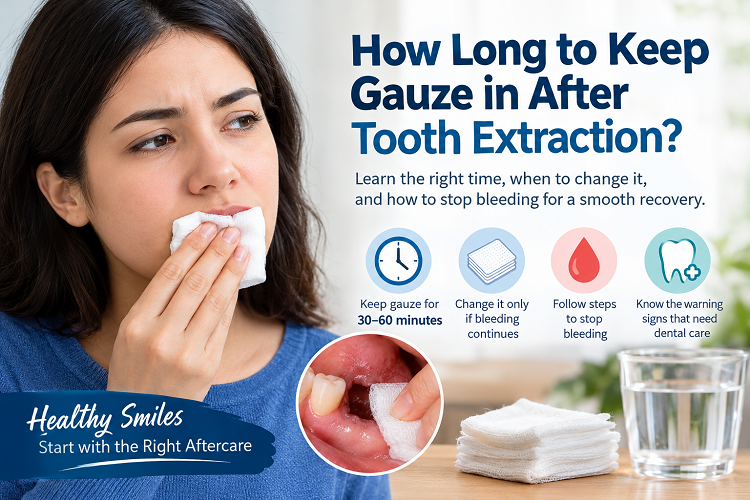

Getting a tooth pulled is rarely anyone’s idea of a good day. Even after the procedure is over, you may have questions about bleeding, gauze, and what to do during those first few hours at home. One of the most common concerns is how long to keep gauze in after tooth extraction. Should you remove it after 30 minutes? What if it is still soaked with blood? And do you need to keep replacing it throughout the day?
For most patients, the answer is straightforward: bite firmly on the initial gauze for 30–60 minutes, or follow the specific instructions provided by your dentist. The pressure helps control bleeding while your body begins forming a protective blood clot.
Knowing when to remove the gauze and what to do if bleeding continues can make recovery easier. More importantly, proper aftercare helps protect the extraction site and reduces the risk of complications.
Here is what you need to know about gauze use, bleeding, blood clot protection, and the warning signs that deserve professional attention.
Also Read: Infected Wisdom Tooth Symptoms
How Long Should You Keep Gauze in After Tooth Extraction?
Most dentists recommend keeping gauze over the extraction site for approximately 30–60 minutes immediately after the procedure. During this time, bite down firmly enough to maintain steady pressure without causing unnecessary discomfort.
The goal is to help your blood clot naturally. Once your dentist removes the tooth, the socket contains small blood vessels that need time to seal. A stable clot protects the underlying tissue and supports the healing process.
Your dentist may recommend a different timeframe after a complicated extraction, wisdom tooth surgery, or another procedure that requires additional care. Follow those instructions rather than relying on a general schedule.
What to Do When It’s Time to Remove the Gauze
After the recommended period, remove the gauze gently and check whether bleeding has stopped.
Follow these steps:
- Wash your hands before handling the gauze.
- Remove the pad slowly without pulling or tugging at the extraction site.
- Check for active bleeding rather than judging by saliva colour alone.
- If bleeding has stopped or reduced to slight oozing, leave the gauze out.
- If fresh blood continues to flow, place a new piece of slightly damp gauze directly over the socket.
- Bite down firmly for another 20–30 minutes without repeatedly checking the wound.
You generally do not need gauze once bleeding is under control. Pink saliva can occur when a small amount of blood mixes with saliva, so it does not automatically mean you need another pad.
Never eat, drink, or sleep with gauze in your mouth. Loose gauze can become a choking hazard, particularly when you are tired or drowsy.
Why Gauze Matters After a Tooth Extraction: How Long to Keep Gauze in After Tooth Extraction
Gauze is more than an absorbent dressing. When positioned correctly, it applies direct pressure to the extraction site and helps control bleeding while your body forms a clot.
That clot serves as a natural protective covering. It shields the exposed tissue and supports the early stages of healing.
If the clot becomes dislodged or fails to remain in place, you may experience renewed bleeding or develop dry socket. This painful complication occurs when the protective clot is lost or breaks down before the socket has healed sufficiently.
What Happens If You Remove Gauze Too Soon?
Removing gauze before the recommended pressure period ends may interfere with bleeding control. However, keeping it in longer than necessary does not automatically improve healing.
Repeatedly lifting the pad to inspect the socket can interrupt steady pressure. Removing dry gauze forcefully may also disturb the developing clot.
If gauze sticks to the extraction site, moisten it slightly with clean water before easing it away. Do not pull hard or attempt to scrape anything from the socket.
The key is to apply consistent pressure for the recommended period, then leave the site alone once bleeding is controlled.
When Should You Change Gauze After Tooth Extraction?
You do not need to change gauze at regular intervals if bleeding has stopped. Replace it only when active bleeding continues and another period of pressure is necessary.
Here is a practical guide to the first few hours.
| Time after extraction | What to do |
|---|---|
| First 30–60 minutes | Keep the initial gauze in place and maintain steady pressure. |
| After the initial period | Remove the gauze and check whether active bleeding has stopped. |
| If bleeding continues | Apply fresh, slightly damp gauze for another 20–30 minutes. |
| If bleeding persists after another attempt | Contact your dentist for further instructions. |
| Once bleeding is controlled, | Leave the gauze out and protect the clot during recovery. |
These timeframes are general guidance. Your dentist may recommend a different approach based on the procedure, medications, and your medical history.
Should You Keep Gauze in Overnight?
No. Remove gauze before going to sleep, even if you are concerned about minor oozing.
Guares left in the mouth during sleep can shift toward the throat and create a choking risk. It may also interfere with swallowing.
If active bleeding continues when you are ready for bed, contact your dentist for advice. Do not rely on leaving gauze in overnight to manage the problem.
How to Stop Bleeding After Tooth Extraction: How Long to Keep Gauze in After Tooth Extraction
A little blood in your saliva during the first day is common. It can make your spit appear pink or reddish, even when the actual bleeding is minimal.
However, fresh blood that continues to collect in your mouth requires attention. The first step is to apply direct pressure correctly.
Step-by-Step Instructions
1. Sit upright. Keep your head elevated instead of lying flat.
2. Wash your hands. Prepare a clean piece of dental gauze.
3. Moisten the gauze slightly. Damp gauze may be less likely to stick to the healing site.
4. Position it over the socket. Make sure the pad rests directly on the extraction site, rather than between your teeth away from the wound.
5. Bite down firmly. Maintain steady pressure for 20–30 minutes. Avoid talking, chewing, or lifting the gauze to check your progress.
6. Reassess the bleeding. Remove the gauze carefully when the pressure period ends.
If bleeding continues, you can repeat the process once. Contact your dentist urgently if active bleeding persists despite firm, uninterrupted pressure.
Seek prompt professional advice if you take blood thinners or have a known bleeding disorder. Do not stop prescribed medication without guidance from your clinician.
Can You Use a Tea Bag Instead of Gauze?
Some oral surgeons recommend a slightly damp black tea bag when ordinary gauze does not control mild bleeding. Black tea contains tannins that may help support clot formation.
However, a tea bag is not a replacement for professional care when bleeding is heavy or persistent. Ask your dentist before trying this approach, especially if you have undergone surgical extraction.
Avoid placing loose tea leaves, tissue fragments, cotton balls, or other household materials inside the socket. They can leave debris behind and may irritate the wound.
Gauze After Different Types of Tooth Extractions: How Long to Keep Gauze in After Tooth Extraction
The amount of bleeding and the time needed to control it can vary from one procedure to another.
A straightforward extraction may require only one period of gauze pressure. Surgical removal of an impacted wisdom tooth can involve a longer recovery and more swelling.
| Extraction type | General gauze guidance | What to expect |
|---|---|---|
| Simple tooth extraction | Usually 30–60 minutes initially | Mild bleeding or oozing may occur. |
| Wisdom tooth removal | Often 30–60 minutes initially | Swelling and discomfort may be more noticeable. |
| Surgical extraction | Follow your oral surgeon’s instructions. | Additional pressure or follow-up care may be necessary. |
| Extraction with stitches | Follow your dentist’s instructions. | Stitches support the wound but do not eliminate the possibility of bleeding. |
| Extraction while taking blood thinners | Obtain individualised guidance. | Bleeding may require closer monitoring. |
These recommendations are not a substitute for instructions tailored to your procedure.
If you take anticoagulants or other medication that affects clotting, never stop taking it on your own. Your dentist and prescribing clinician can help determine the safest approach.
What to Avoid After Removing Gauze: How Long to Keep Gauze in After Tooth Extraction
Once bleeding has stopped, your priority shifts from applying pressure to protecting the blood clot.
The extraction site may feel comfortable surprisingly quickly, but the underlying tissue still needs time to heal. Certain everyday habits can disturb the clot and increase the risk of complications.
1. Avoid Forceful Spitting and Rinsing
Forceful spitting and vigorous rinsing create movement and pressure inside your mouth. These actions may disturb the clot and cause bleeding to restart.
Avoid forceful rinsing during the first 24 hours unless your dentist gives you different instructions. Swallowing saliva normally is fine.
After the first day, gentle warm saltwater rinses may help keep the area clean. Follow your dentist’s advice about when to start and how to rinse.
2. Do Not Use Straws
Sucking through a straw creates negative pressure inside your mouth. That pressure may dislodge the clot.
Drink directly from a cup during the early healing period. Avoid vigorous sucking or similar movements until your dentist says normal activities are safe.
3. Avoid Smoking and Vaping
Smoking can interfere with healing and increases the risk of dry socket after extraction. Vaping is also best avoided during recovery.
Avoid both for at least 48–72 hours, and preferably longer if possible. Follow your oral surgeon’s specific recommendations.
4. Choose Soft, Cool or Lukewarm Foods
Very hot food and drinks may irritate the extraction site and encourage bleeding in the early stages.
Choose softer options, such as yogurt, applesauce, mashed potatoes, scrambled eggs, or lukewarm soup. Avoid hard, crunchy, or sharp foods that may injure the area.
Wait until your local anesthetic wears off before chewing. Otherwise, you could accidentally bite your cheek, lips, or tongue.
5. Take a Break From Strenuous Exercise
Heavy lifting and vigorous exercise can increase blood pressure and encourage renewed bleeding.
Rest for the remainder of the day after extraction. Avoid strenuous activity for at least 24 hours, or longer if your dentist recommends it.
6. Avoid Poking the Socket
Do not touch the extraction site with your fingers, toothpicks, or other objects. Avoid repeatedly probing the socket with your tongue.
Brush your other teeth carefully, but keep the toothbrush away from the extraction site during the initial healing period. Follow your dentist’s instructions about resuming normal brushing and rinsing.
These precautions help protect the clot while the tissue begins to repair itself.
How to Tell Whether Your Extraction Is Healing Normally
Knowing what to expect can make the first few days less stressful.
During the first 24 hours, you may notice:
- Slight bleeding or pink saliva.
- Mild soreness around the extraction site.
- Some swelling or tenderness.
- A dark red or brown blood clot inside the socket.
These symptoms are common after many extractions. Swelling and discomfort may temporarily increase during the first two or three days, particularly after surgical removal of a wisdom tooth.
The important thing is to watch how your symptoms change over time.
Warning Signs That Need Dental Attention
Contact your dentist if you experience:
- Heavy bleeding that does not stop with firm pressure.
- Severe pain or pain that worsens several days after extraction.
- Increasing swelling, particularly when accompanied by fever.
- Pus, a persistent unpleasant taste, or other possible signs of infection.
- Significant pain after the blood clot appears to have disappeared.
Dry socket often causes intense, throbbing pain a few days after extraction. The discomfort may spread toward your ear or the side of your face.
Your dentist can examine the socket and provide appropriate treatment. Do not attempt to clean deeply inside the wound or replace the clot yourself.
Seek emergency medical help if you have difficulty breathing or swallowing. Heavy bleeding accompanied by faintness or weakness also requires urgent assessment.
Pros and Cons of Using Gauze After Tooth Extraction
Gauze remains a simple and effective way to control bleeding after dental extraction. Problems generally arise when patients use it incorrectly or continue using it after it is no longer needed.
Advantages
- Applies direct pressure to help control bleeding.
- Absorbs excess blood during the early recovery period.
- Supports the body’s natural clotting process.
- Offers an inexpensive and accessible aftercare option.
Disadvantages
- Repeated removal can interrupt consistent pressure.
- Dry gauze may stick to the wound.
- Keeping it in unnecessarily can cause discomfort.
- Leaving it in during sleep creates a choking hazard.
The best approach is straightforward: use gauze for the recommended period, replace it if active bleeding continues, and remove it when bleeding is controlled.
Expert Tips for a Smoother Recovery: How Long to Keep Gauze in After Tooth Extraction
A few practical adjustments can make recovery more comfortable and help you avoid common mistakes.
Keep your head elevated. Rest with your head slightly raised during the first night, as long as you can breathe comfortably.
Prepare soft foods in advance. Stock your kitchen with yogurt, mashed potatoes, scrambled eggs, applesauce, and other foods that require little chewing.
Take medication as directed. Follow your dentist’s instructions for pain relief. Ask your dentist or pharmacist before taking a medication if you have an existing medical condition or use other prescriptions.
Protect the blood clot. Avoid poking the socket, smoking, using straws, or rinsing forcefully during the early recovery period.
Maintain oral hygiene. Brush your other teeth carefully and follow your dentist’s instructions about cleaning near the extraction site.
Pay attention to persistent bleeding. Do not keep replacing gauze indefinitely if firm pressure fails to control the bleeding.
Keep your dentist’s contact information nearby. Knowing whom to call can save time if symptoms become concerning after you return home.
These measures support routine recovery, but they cannot replace a dental examination when complications develop.
(FAQs): About How Long to Keep Gauze in After Tooth Extraction
1. How long should I keep gauze in after tooth extraction?
Most patients should bite on the initial gauze for 30–60 minutes. Remove it afterward and check whether active bleeding has stopped. Your dentist may recommend a different timeframe depending on your procedure.
2. Can I remove gauze after 30 minutes?
Yes, if your dentist’s instructions allow it. Remove the gauze gently and check for active bleeding. If fresh blood continues to flow, replace it and maintain steady pressure for another 20–30 minutes.
3. What happens if I leave gauze in too long?
Leaving gauze in longer than necessary may cause discomfort or allow it to stick to the extraction site. Never sleep with gauze in your mouth because it can become a choking hazard.
4. Should I replace gauze if it becomes soaked with blood?
If active bleeding continues, replace the gauze with a fresh, slightly damp pad and bite firmly. Maintain pressure without repeatedly checking the wound. Contact your dentist if bleeding remains heavy or does not stop.
5. Is pink saliva normal after tooth extraction?
Yes. Small amounts of blood mixed with saliva can make it look pink or reddish during the first 24 hours. However, blood that continuously fills your mouth or flows heavily requires prompt dental assessment.
6. Can I eat while gauze is in my mouth?
No. Remove the gauze before eating or drinking. Wait until bleeding is controlled and the anesthetic has worn off before eating soft foods. This reduces the risk of choking, accidental bites, and damage to the developing clot.
7. What if my tooth extraction is still bleeding after two hours?
Apply firm pressure using fresh, slightly damp gauze for 20–30 minutes without interruption. If active bleeding continues after another attempt, contact your dentist urgently.
Seek emergency care if bleeding is heavy or you experience faintness or weakness. If you take blood thinners or have a bleeding disorder, seek professional advice promptly.
8. Can I sleep with gauze in my mouth after tooth extraction?
No. Always remove gauze before sleeping. Loose gauze can obstruct your airway or cause choking. If active bleeding continues when you are ready for bed, contact your dentist instead of leaving gauze in overnight.
9. How long does it take for a blood clot to form?
Clot formation begins soon after the extraction, and steady pressure helps control bleeding while the clot develops. The clot then stabilizes as healing continues. Avoid disturbing the socket during the first 24 hours, when the clot is particularly vulnerable.
10. When should I call a dentist about bleeding?
Contact your dentist if active bleeding continues despite repeated, uninterrupted pressure or restarts heavily. Seek professional advice promptly if you take blood thinners or have a known bleeding disorder. Call emergency services for serious bleeding accompanied by weakness or faintness, or for breathing difficulties.
Conclusion: How Long to Keep Gauze in After Tooth Extraction
Knowing how long to keep gauze in after tooth extraction can help you manage bleeding and protect the healing socket.
For most patients, the initial gauze stays in place for 30–60 minutes, unless the dentist recommends otherwise. If active bleeding continues, fresh gauze and firm, uninterrupted pressure may help control it.
Once bleeding has stopped, remove the gauze and focus on protecting the clot. Avoid smoking, straws, forceful rinsing, and strenuous exercise during the early recovery period.
A little blood in your saliva is common, but persistent or heavy bleeding deserves attention. Contact your dentist when pressure fails to control it, and seek emergency care for serious symptoms.
With proper aftercare and guidance from your dental professional, you can support a smoother recovery and give the extraction site the time it needs to heal.


Pingback: How Long After Tooth Extraction Can I Use a Straw? (2026 Guide)