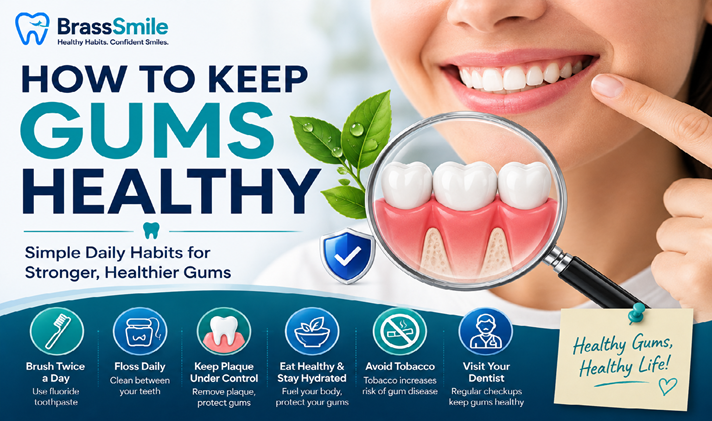

Healthy gums are easy to overlook.
Most people pay attention to their teeth because they can see them when they smile. Gums, however, quietly do some of the most important work in your mouth. They surround and support your teeth while helping protect the tissues underneath.
The good news is that keeping your gums healthy does not require a complicated routine. Consistent brushing, daily cleaning between your teeth, sensible eating habits, avoiding tobacco, and regular dental care can make a meaningful difference. The American Dental Association (ADA) and National Institute of Dental and Craniofacial Research (NIDCR) both emphasize these basic habits as part of good oral care.
So, how do you keep your gums healthy?
Start with the basics, but do them well. Just as importantly, learn to recognize changes in your gums before a small problem becomes a bigger one.
Why Healthy Gums Matter
Your gums are not simply the tissue surrounding your teeth.
They form part of the structures that support your teeth and protect the underlying areas of your mouth. When plaque remains along the gumline, the bacteria within it can trigger inflammation.
Early gum disease is commonly called gingivitis. Gums may become red, swollen, tender, or bleed easily. If plaque remains and hardens into tartar, the problem can become harder to manage without professional cleaning. More advanced periodontal disease can damage the tissues and bone that support your teeth.
That is why gum care should not begin only after your gums start hurting.
Prevention is easier than waiting for symptoms to become severe.
How to Keep Gums Healthy: 10 Habits That Matter
1. Brush Your Teeth Twice a Day
Regular brushing is the foundation of gum care.
The ADA recommends brushing twice a day for two minutes with fluoride toothpaste. NIDCR also recommends brushing twice daily and positioning the bristles toward the gumline.
When brushing, pay attention to where your teeth meet your gums. Plaque can accumulate around this boundary, so rushing through the gumline can leave an important area inadequately cleaned.
A practical technique is:
- Hold the toothbrush at a slight angle toward the gumline.
- Use gentle, short circular movements.
- Clean the outer surfaces of your teeth.
- Clean the inner surfaces.
- Brush the chewing surfaces.
- Gently clean your tongue.
You do not need to scrub aggressively.
In fact, more pressure does not mean better cleaning. Gentle, controlled brushing is the better approach.
Clean Between Your Teeth Every Day
This is one of the most important answers to the question, “how to keep gums healthy?”
A toothbrush cannot effectively reach every surface between your teeth. Plaque can collect in these spaces and along the gumline. Interdental cleaning helps remove it before it hardens into tartar.
You can use:
- Dental floss
- Floss holders
- Interdental brushes
- Water flossers
- Other interdental cleaning tools recommended by a dental professional
The ADA recommends cleaning between the teeth daily.
The best tool is not necessarily the most expensive one.
It is the tool that fits your mouth and that you can use correctly and consistently.
Floss or water flosser?
There is no single option that works perfectly for everyone.
People with tight spaces between their teeth may prefer floss. People with larger spaces or certain dental work may find interdental brushes more practical. Water flossers can also be useful for some people.
If you have braces, bridges, implants, or other dental appliances, ask your dentist which method makes the most sense for you.
Be Gentle Around Your Gumline
Your gumline deserves careful attention, not aggressive scrubbing.
Place the bristles near the area where the teeth and gums meet. Then use gentle movements to disturb plaque.
Avoid repeatedly pressing hard against the gums.
If brushing causes discomfort or you notice gum recession, sensitivity, or other changes, talk with a dental professional. Your brushing technique, toothbrush, or an underlying dental issue may need attention.
A soft-bristled toothbrush is often a sensible choice for routine cleaning.
Don’t Ignore Bleeding Gums
Bleeding during brushing or flossing should not automatically be considered normal.
Bleeding, redness, swelling, or tenderness can be signs of gum inflammation. NIDCR lists easily bleeding gums among the symptoms associated with gum disease.
That does not mean every episode of bleeding indicates advanced disease.
However, persistent or repeated bleeding deserves attention.
Instead of abandoning interdental cleaning because your gums bleed, consider improving your technique and consistency. If the bleeding continues, make an appointment with your dentist.
Your gums are giving you information. Pay attention to it.
Keep Plaque Under Control
Plaque is a sticky film of bacteria that continuously develops on your teeth.
If you do not remove it regularly, it can contribute to tooth decay and gum disease. Over time, plaque can harden into tartar, also called calculus. Unlike plaque, tartar cannot simply be brushed away at home. Professional cleaning is required.
This is why daily cleaning matters.
You are not trying to keep your mouth perfectly sterile. That is neither realistic nor necessary.
The goal is to consistently remove plaque before it causes problems.
Choose Fluoride Toothpaste
Fluoride toothpaste is not just about protecting teeth from cavities.
Fluoride helps strengthen tooth enamel and prevent tooth decay. The ADA and NIDCR both recommend fluoride toothpaste as part of routine oral care.
When shopping for toothpaste, look beyond flashy marketing claims.
For general adult oral care, fluoride should be one of the first things you check.
If you have specific dental concerns, such as sensitivity or a high risk of cavities, your dentist may recommend a particular toothpaste or additional fluoride treatment.
Watch Your Diet
Your gums and teeth are affected by more than your toothbrush.
A balanced diet supports general health, while frequent consumption of sugary foods and drinks can increase the risk of dental problems. The ADA recommends a healthy diet that limits sugary beverages and snacks.
You do not need to eliminate every sweet food.
Instead, consider your overall eating pattern.
Helpful habits include:
- Drinking water regularly
- Limiting sugary drinks
- Reducing frequent sugary snacks
- Eating a balanced diet
- Avoiding constant sipping of sweetened beverages
If you frequently snack or drink sugary beverages throughout the day, your teeth may face repeated exposure to acids produced by oral bacteria.
Small changes can be easier to maintain than extreme diets.
Avoid Tobacco Products
If you are serious about learning how to keep gums healthy, tobacco deserves special attention.
NIDCR identifies smoking and other tobacco use as a major risk factor for gum disease. Tobacco can also interfere with healing and make treatment less successful.
That includes more than traditional cigarettes.
Smokeless tobacco can also affect oral health.
If you currently use tobacco and want to stop, consider talking with a healthcare professional about evidence-based cessation support.
Your gums can benefit from that decision.
Visit Your Dentist Regularly
Good home care is essential, but it cannot do everything.
A dental professional can examine your gums, check for signs of disease, and remove tartar that cannot be removed with ordinary brushing and flossing.
There is no universal appointment schedule that works for every person.
Your dental needs depend on factors such as:
- Your gum health
- Cavity risk
- Existing dental conditions
- Age
- Medications
- Tobacco use
- Certain health conditions
- Previous dental treatment
Your dentist can recommend an appropriate schedule.
Pay Attention to Changes in Your Mouth
One of the smartest gum-care habits costs nothing.
Simply notice changes.
Look for:
- Red or swollen gums
- Gums that bleed easily
- Persistent tenderness
- Gums pulling away from teeth
- Persistent bad breath
- Loose teeth
- Pain while chewing
- Changes in how your teeth fit together
- Increased tooth sensitivity
NIDCR identifies several of these symptoms as potential signs of gum disease.
You do not need to diagnose yourself.
Instead, use these changes as a reason to schedule a professional evaluation.
What Healthy Gums Should Look Like
Healthy gums generally look and feel comfortable.
They should not routinely bleed when you brush or clean between your teeth. They should not remain noticeably swollen, tender, or inflamed.
However, everyone’s mouth is slightly different.
The important thing is to notice persistent changes from your normal condition.
If your gums suddenly become swollen or start bleeding regularly, do not simply wait and hope the problem disappears.
Gingivitis vs. Periodontitis
Understanding these terms can help you recognize why early gum care matters.
| Feature | Gingivitis | Periodontitis |
|---|---|---|
| Stage | Early gum disease | More advanced gum disease |
| Common signs | Redness, swelling, bleeding | May include bleeding, recession, loose teeth |
| Main issue | Gum inflammation | Damage to tissues supporting teeth |
| Reversible? | Often reversible with appropriate care | Requires professional treatment |
| Professional care | May be needed | Typically necessary |
NIDCR explains that plaque-related gingivitis can often be reversed with daily brushing and flossing, while periodontal disease requires professional treatment. Advanced disease can damage the structures supporting the teeth.
This is one reason early attention matters.
What to Do If Your Gums Bleed When You Floss
This is a common concern.
If your gums bleed occasionally, do not immediately conclude that flossing is harmful. Inflammation can cause gums to bleed more easily.
Try to make interdental cleaning gentle and consistent.
Do not force floss into tight spaces. Guide it carefully around the sides of your teeth instead. NIDCR recommends easing floss between the teeth and curving it around each tooth rather than forcing it into the gums.
If bleeding continues despite consistent care, contact your dentist.
Persistent bleeding is worth investigating.
Can Mouthwash Keep Your Gums Healthy?
Mouthwash can be a useful addition for some people, but it should not replace brushing and interdental cleaning.
The ADA describes mouthwash as something that may complement a daily dental routine. Your specific needs determine whether a particular mouthwash is appropriate.
Some people may benefit from a therapeutic mouth rinse based on their oral-health risk.
If you are dealing with persistent gum problems, ask your dentist before relying on mouthwash as the solution.
A bottle of mouthwash cannot compensate for neglected plaque removal.
Does Flossing Really Help Your Gums?
Yes, cleaning between your teeth is an important part of gum care.
A toothbrush cannot adequately clean every tight space between teeth. Floss and other interdental cleaners help remove plaque and debris from those areas.
The evidence does not mean that one specific interdental product is perfect for every person.
The practical lesson is simpler:
Find an effective interdental method that fits your mouth and use it consistently.
A Simple Gum-Health Routine
If you want a routine you can actually maintain, keep it simple.
Morning
Brush for two minutes with fluoride toothpaste.
Pay attention to the gumline rather than rushing through the visible front surfaces.
During the Day
Drink water regularly and avoid constantly snacking on sugary foods.
Evening
Clean between your teeth with floss, an interdental brush, or another appropriate tool.
Then brush your teeth again with fluoride toothpaste.
Regularly
Visit your dentist for preventive care and professional cleaning when recommended.
This basic routine aligns with recommendations from the ADA and NIDCR.
Common Gum-Care Mistakes
Brushing too hard
Aggressive brushing is unnecessary. Focus on technique rather than pressure.
Cleaning only the visible teeth
Your back teeth and gumline need attention too.
Skipping interdental cleaning
Food may not be visible between your teeth, but plaque can still accumulate there.
Ignoring recurring bleeding
Persistent bleeding should be evaluated rather than accepted as normal.
Waiting for pain
Gum disease does not always begin with dramatic pain. Early signs can be subtle.
Relying entirely on home remedies
Home care is important, but tartar and established periodontal disease may require professional treatment.
Smoking or using tobacco
Tobacco is a significant risk factor for gum disease and can interfere with healing.
How to Keep Gums Healthy With Braces, Implants, or Dental Work
People with braces, bridges, implants, crowns, or other dental work may need a more customized cleaning strategy.
These structures can create additional areas where plaque collects.
An ordinary toothbrush may not be enough to reach every area comfortably. Your dentist or dental hygienist can recommend appropriate interdental tools, floss threaders, brushes, or water flossers.
Do not assume that the same routine that worked before your dental treatment will always be sufficient afterward.
Gum Health and Overall Health
Oral health does not exist in isolation.
Certain health conditions can influence gum health. For example, NIDCR notes that people with diabetes may have an increased risk of oral problems, including gum disease, particularly when blood glucose is not well controlled.
That does not mean every gum problem is caused by another health condition.
It does mean your dentist should know about relevant medical conditions and medications when assessing your oral health.
Good communication between healthcare professionals can make care more effective.
Pros and Cons of a Strong Gum-Care Routine
Pros
- Helps control plaque
- Supports healthier gums
- Helps reduce the risk of gingivitis
- Supports overall oral hygiene
- Can help identify problems earlier
- Builds habits that protect teeth and gums
Cons
- Requires daily consistency
- Cannot remove hardened tartar at home
- Does not guarantee that gum disease will never develop
- Some people need specialized dental care
- Existing periodontal disease may require professional treatment
The goal is not perfection.
Consistency is the real advantage.
Expert Tips for Healthier Gums
Make the gumline part of your normal brushing pattern
Do not treat it as a separate chore. Include it every time you brush.
Choose your interdental tool based on your mouth
Traditional floss is not the only option. Interdental brushes and water flossers may be useful for certain people.
Do not wait for severe symptoms
Earlier evaluation can be easier than dealing with advanced disease.
Tell your dentist about medications and health conditions
Some conditions and medications can affect oral health.
Make tobacco cessation part of your gum-health plan
Stopping tobacco use can remove an important risk factor.
Think long term
Healthy gums are built through repeated daily habits, not a one-week treatment.
Frequently Asked Questions
How can I keep my gums healthy naturally?
The most useful approach is consistent oral hygiene: brush twice daily with fluoride toothpaste, clean between your teeth daily, eat a balanced diet, avoid tobacco, and maintain routine dental care.
How often should I brush my teeth for healthy gums?
The ADA recommends brushing twice a day for two minutes with fluoride toothpaste.
Is flossing necessary for healthy gums?
Cleaning between your teeth is an important part of gum care because toothbrush bristles cannot effectively reach every interdental surface.
Why do my gums bleed when I brush?
Bleeding can occur when gums are inflamed. Persistent bleeding can be a sign of gum disease and should be discussed with a dental professional.
Can gingivitis go away?
Plaque-related gingivitis can often be reversed with appropriate daily brushing and cleaning between the teeth. More advanced periodontal disease requires professional treatment.
Can tartar be removed by brushing?
No. Once plaque hardens into tartar, ordinary brushing and flossing cannot remove it. Professional dental cleaning is needed.
Is mouthwash enough to protect my gums?
No. Mouthwash may complement oral care for some people, but it should not replace brushing and interdental cleaning.
Does smoking affect gum health?
Yes. NIDCR identifies tobacco use as a major risk factor for gum disease and notes that it can also interfere with healing.
When should I see a dentist about my gums?
See a dental professional if you have persistent bleeding, swelling, tenderness, receding gums, loose teeth, painful chewing, persistent bad breath, or other ongoing changes.
What is the most important thing I can do for my gums?
There is no single magic step. The strongest foundation is consistent daily plaque removal through twice-daily brushing and daily interdental cleaning, combined with professional dental care when needed.
Final Thoughts
Learning how to keep gums healthy does not require an expensive collection of dental products.
Start with the fundamentals.
Brush twice a day with fluoride toothpaste. Clean between your teeth every day. Be gentle around the gumline. Pay attention to bleeding, swelling, or other changes. Avoid tobacco, make sensible food choices, and see your dentist regularly.
Most importantly, do not wait for serious discomfort before taking your gums seriously.
Healthy gums are built through ordinary actions repeated over time. When those habits become part of your daily routine, they create a stronger foundation for your teeth, your oral health, and the confident smile BrassSmile is designed to support.
Healthy gums are not just part of a beautiful smile. They are part of a healthy mouth.

Pingback: Jaw Hurts When I Chew: Causes, Treatment & Warning Signs