
A cold glass of water should feel refreshing. A spoonful of ice cream should be enjoyable. Yet for people with sensitive teeth, ordinary foods and drinks can sometimes trigger a sudden, sharp pain.
That discomfort may last only a few seconds, but recurring sensitivity should not simply be ignored. Sensitive teeth can develop for several reasons, including worn enamel, gum recession, cavities, cracked teeth, worn fillings, or exposed tooth roots.
The good news is that tooth sensitivity is often manageable once its cause is identified.
This guide explains what sensitive teeth are, why they happen, what you can do at home, which habits may make symptoms worse, and when professional dental care becomes necessary.
Medical note: This article provides general oral-health information. It does not replace an examination or diagnosis from a dentist.
What Are Sensitive Teeth?
Sensitive teeth, medically known as dentin hypersensitivity, occur when the inner tooth structure becomes more exposed to external triggers.
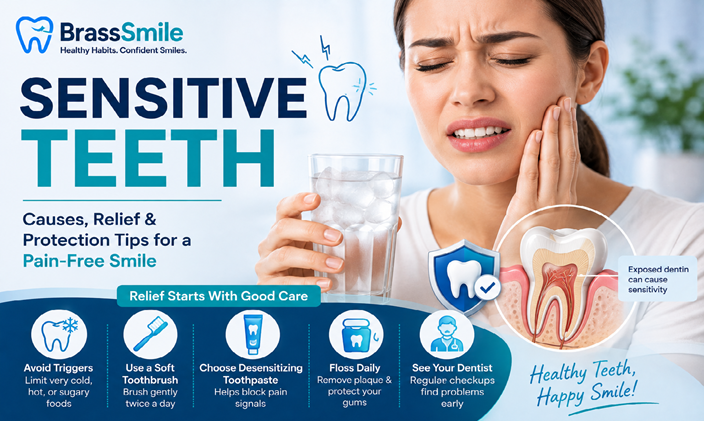
The visible part of a healthy tooth is protected by enamel. Beneath the enamel is dentin, a less-dense layer containing microscopic channels called tubules. When protective enamel or gum tissue is lost, these channels can become exposed. Hot, cold, sweet, acidic, or even touching stimuli can then trigger discomfort.
The sensation is usually quick and sharp rather than a dull, continuous ache.
For example, you might notice:
- A sharp pain after drinking ice water
- Discomfort when eating ice cream
- Sensitivity to hot coffee or tea
- Pain when brushing a particular tooth
- A brief reaction to sweet or acidic foods
- Discomfort when cold air hits your teeth
The trigger and pattern can provide useful clues, but only a dental professional can determine the underlying cause.
What Causes Sensitive Teeth?
Tooth sensitivity does not have one universal cause.
Several dental conditions and everyday habits can expose dentin or irritate the tooth.
1. Enamel Wear
Enamel is the hard outer layer that protects the tooth.
It can gradually wear because of factors such as acidic foods and beverages, aggressive brushing, or other forms of enamel erosion. When enough protective enamel is lost, sensitivity can become more noticeable.
Acidic drinks such as soda, sports drinks, citrus beverages, and some other foods can contribute to enamel erosion when consumed frequently.
The American Dental Association recognizes enamel erosion and dietary acids as factors relevant to sensitivity management.
2. Receding Gums
Your gums normally cover and protect the roots of your teeth.
When gums recede, part of the tooth root can become exposed. Unlike the crown, the root does not have the same enamel protection.
That exposed surface can therefore become much more sensitive to temperature and touch. The ADA lists exposed tooth roots resulting from gum recession among common causes of tooth sensitivity.
If you notice that your teeth appear longer or that sensitivity occurs near the gumline, mention it to your dentist.
3. Tooth Decay
A cavity can sometimes cause sensitivity.
Although sensitivity does not automatically mean you have a cavity, a new or localized reaction deserves attention, particularly if it affects one tooth.
Tooth decay is one of the recognized causes of sensitive teeth.
This is one reason simply treating symptoms with toothpaste may not be enough.
4. Cracked or Damaged Teeth
A fractured tooth can cause unusual sensitivity, particularly when you bite or chew.
The crack may be difficult to see yourself. A dentist can evaluate the tooth and determine whether damage is contributing to your symptoms.
The ADA specifically identifies fractured teeth as one possible cause of tooth sensitivity.
5. Worn Dental Fillings
Dental fillings can eventually wear, fracture, or develop problems around their edges.
A damaged filling may expose sensitive tooth structure or allow other dental problems to develop.
If sensitivity occurs around a tooth with an older filling, a dental examination is worthwhile.
6. Gum Disease
Gum disease can affect the tissues surrounding your teeth.
As gum disease progresses, gums may recede and expose tooth roots. NIDCR lists sensitive teeth among the symptoms that can occur with periodontal disease.
Look for other signs too, such as:
- Red or swollen gums
- Bleeding during brushing
- Tender gums
- Persistent bad breath
- Gums pulling away from teeth
- Loose teeth
If sensitivity appears alongside these symptoms, do not treat it as an isolated problem.
Why Does Cold Food Hurt Sensitive Teeth?
Cold temperatures are one of the most common triggers.
When dentin becomes exposed, temperature changes can affect the fluid inside microscopic dentinal tubules. This can stimulate the nerves inside the tooth and create the sudden pain associated with sensitivity.
That explains why something as simple as ice water can produce an unexpectedly intense reaction.
The pain often disappears quickly after the stimulus is removed.
However, repeated or worsening sensitivity still deserves attention.
How to Reduce Sensitive Teeth at Home
If your teeth react to hot or cold foods, several everyday habits may help reduce discomfort.
Use a Soft-Bristled Toothbrush
A harder brush does not necessarily clean your teeth better.
Instead, focus on gentle, controlled brushing. The ADA has advised people dealing with sensitivity to use a soft-bristled toothbrush and a gentler technique.
Avoid aggressively scrubbing the gumline.
A simple approach is to use small, gentle movements while allowing the bristles to clean the tooth surfaces.
Choose a Desensitizing Toothpaste
A toothpaste specifically formulated for sensitivity may help.
The ADA notes that desensitizing toothpastes contain ingredients that can reduce tooth sensitivity. Depending on the formulation, active ingredients may include compounds such as potassium-based agents or stannous fluoride.
Do not expect an instant cure after one use.
These products generally require repeated use before sensitivity improves.
When selecting toothpaste, consider products carrying the ADA Seal of Acceptance when available. The ADA says its Seal indicates that products have been evaluated against standards for safety and effectiveness for their intended claims.
Continue Cleaning Between Your Teeth
Sensitivity can make people hesitant to floss.
That is usually not a good reason to abandon daily interdental cleaning.
Plaque can accumulate between teeth and around the gumline, contributing to gum problems that may eventually expose sensitive tooth roots.
Instead, clean between your teeth gently and consistently. If a particular area repeatedly hurts or bleeds, have it evaluated rather than simply avoiding it.
Be Careful With Acidic Foods and Drinks
Acidic foods and beverages can contribute to enamel erosion.
You do not necessarily need to eliminate them completely. Instead, pay attention to frequency and habits.
Consider:
- Drinking water after acidic beverages
- Avoiding constant sipping of acidic drinks
- Limiting frequent exposure to highly acidic foods and drinks
- Following your dentist’s advice if enamel erosion is already present
If your sensitivity is significant, your dentist can help determine whether enamel erosion is contributing to the problem.
What About Teeth Whitening?
Whitening products can sometimes make teeth feel more sensitive.
If you already have sensitive teeth, jumping directly into an aggressive whitening routine may not be the best choice.
The ADA recommends discussing whitening with a dentist, particularly when you have existing dental concerns.
Before whitening, it is worth determining why your teeth are sensitive.
Otherwise, you may be treating the appearance of your smile while overlooking the underlying dental problem.
Can Sensitive Teeth Be Fixed?
In many cases, yes—but the treatment depends on the cause.
There is a major difference between treating temporary sensitivity and treating the condition responsible for it.
A dentist may recommend:
| Cause | Possible approach |
|---|---|
| Dentin sensitivity | Desensitizing toothpaste or professional treatment |
| Enamel erosion | Preventive care and treatment based on severity |
| Gum recession | Gum-focused treatment or other options |
| Cavity | Restorative dental treatment |
| Cracked tooth | Evaluation and appropriate restoration |
| Worn filling | Repair or replacement |
| Gum disease | Professional periodontal treatment |
The ADA notes that treatment can include desensitizing toothpaste, fluoride treatment, bonding or other restorations, gum grafting in selected cases, and root canal treatment when severe persistent sensitivity has a specific indication.
That does not mean everyone with sensitivity needs extensive treatment.
The right treatment depends entirely on what is causing the symptoms.
When Should You See a Dentist?
A brief reaction to cold food does not necessarily mean something serious is happening.
However, persistent, severe, or unexplained sensitivity deserves professional evaluation.
Make a dental appointment if:
- Sensitivity keeps returning
- The pain is becoming stronger
- One particular tooth is unusually sensitive
- You have pain when biting
- Your gums bleed or swell
- Your gums appear to be receding
- You have persistent bad breath
- You notice a cracked or damaged tooth
- A filling feels damaged or uncomfortable
- Sensitivity continues despite improving your oral-care routine
NIDCR lists symptoms such as sensitive or loose teeth, bleeding gums, receding gums, pain while chewing, and persistent bad breath among signs associated with periodontal disease.
Sensitive Teeth vs. Toothache
These terms are sometimes used interchangeably, but the experience can be different.
Sensitivity often produces a quick, sharp response to a specific trigger such as cold or sweet food.
A toothache may be more persistent and can occur without an obvious trigger.
That distinction is not enough to diagnose the cause.
A cavity, cracked tooth, gum disease, or another dental problem can sometimes produce sensitivity-like symptoms. The ADA recommends having concerning tooth sensitivity evaluated so the underlying cause can be identified.
Common Mistakes That Can Make Sensitivity Worse
Brushing too aggressively
More pressure is not better cleaning.
Use a gentle technique instead.
Using a very abrasive approach
If your enamel is already worn, aggressive brushing or inappropriate products may add to the problem.
Ignoring gum recession
Exposed roots can be highly sensitive.
Continuing frequent acidic drinks
Repeated acid exposure can contribute to enamel erosion.
Whitening without addressing existing sensitivity
Whitening may increase discomfort for some people.
Treating symptoms without finding the cause
Sensitivity toothpaste can help, but it cannot repair a cavity or cracked tooth.
A Simple Daily Routine for Sensitive Teeth
You do not need a complicated routine.
Morning
Brush with fluoride toothpaste using a soft-bristled toothbrush.
Spend enough time cleaning every surface without scrubbing aggressively.
During the Day
Drink water regularly.
If you consume acidic beverages, avoid prolonged sipping and consider rinsing with water afterward.
Evening
Clean between your teeth.
Then brush again with fluoride toothpaste.
If your dentist has recommended a sensitivity toothpaste, use it consistently according to the product directions.
Long Term
Keep regular dental appointments.
Professional examinations can identify cavities, gum problems, enamel wear, damaged fillings, and other potential causes of sensitivity.
Does Sensitive Toothpaste Really Work?
It can.
Desensitizing toothpaste contains ingredients designed to reduce the transmission of sensations from exposed tooth surfaces. The ADA notes that evidence supports several desensitizing ingredients for reducing dentin hypersensitivity.
However, results are not necessarily immediate.
If sensitivity continues despite regular use, that is a reason to investigate the cause rather than simply switching from one toothpaste to another.
Can You Prevent Sensitive Teeth?
You cannot prevent every possible cause.
A cracked tooth, cavity, gum recession, or other dental condition can develop despite good habits.
Still, you can reduce avoidable risks.
Helpful habits include:
- Brush twice daily with fluoride toothpaste.
- Use a soft-bristled toothbrush.
- Avoid aggressive brushing.
- Clean between your teeth daily.
- Limit frequent exposure to acidic drinks.
- Follow professional advice for gum care.
- Avoid unnecessary overuse of whitening products.
- Visit your dentist regularly.
- Address dental problems early.
Good oral hygiene is an important part of preventing dental problems associated with sensitivity.
Frequently Asked Questions About Sensitive Teeth
What causes sensitive teeth?
Common causes include worn enamel, exposed tooth roots, gum recession, cavities, fractured teeth, worn fillings, and gum disease.
Why do my teeth hurt when I drink cold water?
Cold temperatures can trigger exposed dentin and stimulate the nerves inside the tooth. This commonly produces the quick, sharp pain associated with sensitivity.
Can sensitive teeth go away?
Sometimes sensitivity improves after the underlying cause is addressed or with consistent use of desensitizing toothpaste. Persistent sensitivity should be evaluated by a dentist.
What toothpaste is best for sensitive teeth?
Look for a toothpaste formulated for sensitivity and, for routine cavity protection, one containing fluoride. The ADA also recommends looking for its Seal of Acceptance when choosing oral-care products.
Should I stop brushing if my teeth are sensitive?
No. Good oral hygiene remains important. Instead, use a soft-bristled toothbrush and gentle technique.
Can cavities cause sensitive teeth?
Yes. Tooth decay is one recognized cause of tooth sensitivity.
Can gum recession cause tooth sensitivity?
Yes. Receding gums can expose tooth roots, which lack the protective enamel found on the crown of the tooth.
Can teeth whitening cause sensitivity?
Whitening treatments can be associated with sensitivity in some people. If you already have sensitive teeth, discuss whitening with your dentist before starting treatment.
Are sensitive teeth a sign of a serious problem?
Not always. Sensitivity can have relatively straightforward causes, but it can also be associated with cavities, cracks, gum disease, or exposed roots. Persistent or worsening symptoms deserve a professional examination.
When should I see a dentist for sensitive teeth?
See a dentist when sensitivity is persistent, severe, localized to one tooth, accompanied by swelling or bleeding, or associated with pain while chewing or other unusual symptoms.
Final Thoughts
Sensitive teeth are common, but persistent tooth sensitivity should not become something you simply learn to tolerate.
The first step is understanding what triggers the discomfort. Cold drinks, hot foods, sweets, acidic foods, brushing, or even touching a particular tooth can provide useful clues.
From there, focus on the fundamentals: gentle brushing, fluoride toothpaste, daily interdental cleaning, sensible dietary habits, and regular dental care.
A desensitizing toothpaste may provide relief for many people, but it should not replace an examination when symptoms continue. A cavity, cracked tooth, gum recession, worn filling, or gum disease requires a different approach.
At BrassSmile, the goal is simple: make dental information easier to understand so readers can make better decisions about their teeth and gums. Understanding sensitivity is one more step toward maintaining a healthier mouth and a more confident smile.
If your teeth are telling you something hurts, listen before the problem gets louder.