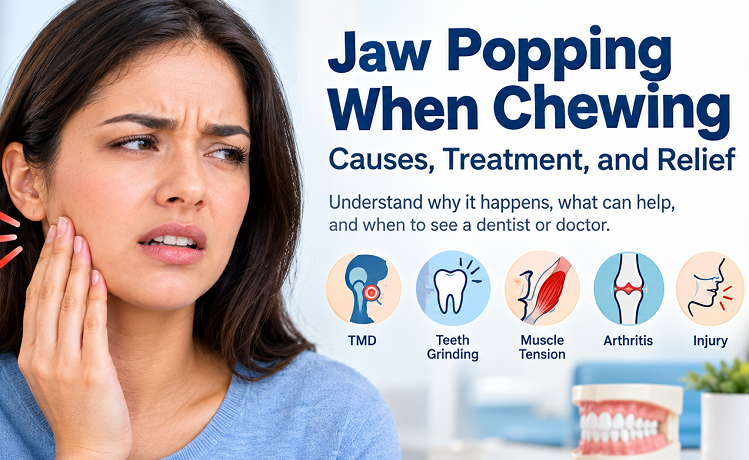

A sudden click or pop in your jaw can make an ordinary meal feel uncomfortable. You might hear it when biting into a sandwich, chewing something crunchy, or opening your mouth to take a large bite. Sometimes, the sound causes no pain. In other cases, it comes with soreness, stiffness, or difficulty moving your jaw. Jaw popping when chewing often involves the temporomandibular joint (TMJ), which connects your lower jaw to your skull. This joint helps you chew, speak, yawn, and open your mouth. Problems involving the joint, its cushioning disc, or nearby muscles can produce clicking and popping sounds.
The good news is that an occasional, painless click does not necessarily indicate a serious problem. Many people experience jaw noises without needing treatment. However, persistent popping accompanied by pain, locking, or limited movement deserves attention.
Understanding what causes the sound can help you decide whether to monitor it at home or seek professional care. Here’s what you should know about jaw popping, available treatments, and the warning signs you shouldn’t ignore.
Also Read: Why Does My Jaw Pop When I Open My Mouth
What Does Jaw Popping When Chewing Mean?
Jaw popping describes a clicking, snapping, or popping sound that occurs as your mouth opens, closes, or moves from side to side. You may notice it on one side of your face or both.
The temporomandibular joints sit just in front of your ears. Each joint contains a small disc of cartilage that helps the jaw move smoothly and distributes pressure during chewing.
When the disc, joint surfaces, or surrounding muscles don’t move as expected, you may hear a click. The sound can occur during a meal, while talking, or even when yawning.
Several factors may contribute to jaw popping, including:
- Movement of the cartilage disc inside the jaw joint.
- Tight or overworked chewing muscles.
- Teeth grinding or clenching.
- Irritation or inflammation around the joint.
- Arthritis affecting the jaw.
- A previous injury involving the jaw or face.
The sound alone cannot identify the exact cause. A dentist or qualified healthcare professional may need to examine your jaw, assess its movement, and review your symptoms.
Common Causes of Jaw Popping When Chewing
1. Temporomandibular Disorders (TMD)
Temporomandibular disorders, commonly called TMD, affect the jaw joints and the muscles that control chewing. People sometimes call these conditions TMJ disorders, although TMJ technically refers to the joint itself.
TMD is a common explanation for jaw clicking that occurs alongside pain, tenderness, or restricted movement.
Depending on the underlying problem, symptoms may include:
- Clicking or popping when opening or closing the mouth.
- Pain near the ears or along the jawline.
- Tenderness in the cheeks or facial muscles.
- Headaches around the temples.
- Difficulty opening the mouth fully.
- A jaw that catches or locks during movement.
Not everyone with TMD experiences pain. Some people notice clicking without any other symptoms.
Treatment depends on the specific problem. Many people benefit from conservative approaches, such as reducing jaw strain, changing certain habits, and following an individualised care plan.
2. A Displaced Jaw Joint Disc
A small cartilage disc sits between the bones of each temporomandibular joint. It acts as a cushion and helps the joint move smoothly.
Sometimes, the disc shifts from its usual position. As the jaw opens or closes, it may move back into alignment or slide across surrounding structures, producing a noticeable click.
You might hear one click when opening your mouth and another when closing it. In other cases, the popping occurs only while chewing.
Disc displacement doesn’t automatically mean that the joint is seriously damaged. If your jaw moves normally and the sound causes no discomfort, treatment may not be necessary.
However, recurring locking, restricted movement, or persistent pain warrants an evaluation. These symptoms may indicate a more significant joint problem.
3. Teeth Grinding and Jaw Clenching
Teeth grinding, also known as bruxism, and habitual jaw clenching place extra pressure on the chewing muscles. These habits can occur during sleep or while you’re awake.
You may clench your teeth while working, driving, exercising, or dealing with stress without realising it.
Common clues include morning jaw soreness, headaches around the temples, worn teeth, and fatigue in the facial muscles. Grinding and clenching can contribute to TMD symptoms, although they don’t explain every case of jaw popping.
A few changes may help:
- Notice when your teeth press together unnecessarily.
- Relax your jaw during the day.
- Avoid chewing gum for extended periods.
- Talk with your dentist if you suspect nighttime grinding.
Depending on your symptoms, a dentist may recommend a custom-made oral appliance to protect your teeth. Such appliances can help manage grinding, but they don’t guarantee that jaw clicking will stop.
4. Tight or Overworked Jaw Muscles
Your chewing muscles work whenever you eat, speak, or open your mouth. Excessive chewing, prolonged clenching, and repetitive habits can leave these muscles tight or fatigued.
Muscle tension may cause soreness around the cheeks, temples, and jawline. It can also occur alongside joint clicking.
Consider someone who chews gum throughout the workday. By evening, their jaw may feel tired, and clicking may become more noticeable during dinner.
Reducing repetitive chewing and avoiding unnecessarily wide mouth movements can help ease the strain. If the symptoms persist, seek an assessment because muscle problems and joint disorders can produce similar complaints.
5. Arthritis in the Jaw Joint
Arthritis can affect the temporomandibular joint, just as it affects other joints in the body.
Osteoarthritis involves changes to joint cartilage and bone. Inflammatory forms of arthritis may also affect the jaw and surrounding tissues.
Possible symptoms include:
- Pain that increases when chewing.
- Jaw stiffness, particularly after periods of inactivity.
- Reduced ability to open the mouth.
- Clicking, grinding, or grating sounds.
- Tenderness around the affected joint.
A popping sound alone doesn’t establish a diagnosis of arthritis. A clinician may consider your symptoms, medical history, physical examination, and imaging results when appropriate.
Treatment depends on the type and severity of the condition. Your healthcare professional can recommend suitable pain management, movement strategies, or specialist care.
6. A Previous Jaw Injury
A fall, sports injury, accident, or blow to the face can damage the jaw joint or surrounding tissues.
If popping begins after an injury, pay attention to other symptoms. Swelling, bruising, significant pain, and difficulty opening or closing your mouth may indicate a more serious problem.
A severe injury can sometimes cause a fracture or dislocation. Seek prompt medical evaluation if you suspect either condition.
Never try to force your jaw back into position yourself. Doing so could make the injury worse.
7. Dental Problems and Bite Changes
Missing teeth, changes in the bite, and certain dental conditions can affect how your teeth meet during chewing. These factors may influence jaw comfort and movement.
However, jaw popping doesn’t automatically mean your bite is misaligned. It also doesn’t prove that you need braces, crowns, or another major dental procedure.
A dentist can assess your teeth, bite, and jaw function together. Any recommended treatment should address an identified problem rather than the clicking sound alone.
Why Does My Jaw Pop When Chewing but Not Hurt?
Painless jaw popping is relatively common. It may occur because the joint disc shifts during movement or because the joint structures produce noise as they move.
If you can open and close your mouth normally, chew comfortably, and experience no swelling or locking, the sound may not require treatment.
Still, keep an eye on changes. A click that becomes painful, starts interfering with eating, or occurs alongside restricted movement deserves professional attention.
Try not to open and close your mouth repeatedly just to reproduce the sound. Constantly testing the joint can add unnecessary movement and may aggravate an already irritated area.
How to Relieve Jaw Popping When Chewing
The best approach depends on what’s causing the popping. For mild symptoms without warning signs, a few practical changes may reduce strain while you monitor your condition.
Choose Softer Foods Temporarily
Hard, crunchy, and chewy foods require more effort from your jaw muscles. Switching to softer options for a short time may make eating more comfortable.
Consider foods such as the following:
- Scrambled eggs.
- Oatmeal.
- Yoghurt.
- Soft-cooked vegetables.
- Tender fish.
- Mashed potatoes.
Cut food into smaller pieces and chew gently. Avoid foods that consistently trigger pain or make your jaw feel tired.
A softer diet can reduce short-term strain, but prolonged dietary restrictions are rarely necessary without specific medical advice.
Apply a Warm Compress.
A comfortably warm compress may relax tight jaw muscles and ease soreness.
Place it against the affected area for about 10–15 minutes. Keep the temperature moderate to avoid burns, particularly if your skin is sensitive.
Some people prefer a cold compress when swelling or recent irritation is present. Wrap cold packs in a cloth rather than placing ice directly against your skin.
Stop using either compress if it worsens your symptoms.
Reduce Clenching and Grinding
Pay attention to how you hold your jaw when you’re not eating or speaking.
At rest, let your teeth remain slightly apart and allow your jaw muscles to relax. Avoid deliberately pushing your jaw forward or holding it in an uncomfortable position.
If you suspect nighttime grinding, discuss it with your dentist. Depending on your needs, the dentist may recommend an oral appliance or another approach to protect your teeth and manage symptoms.
Avoid Gum and Excessive Chewing
Chewing gum for long periods increases the workload on your jaw muscles. Tough foods can have a similar effect when your jaw is already irritated.
During a flare-up, limit gum, chewy candy, tough meat, and other foods that require prolonged chewing.
Also avoid biting your nails, chewing pens, or using your teeth to open packages. These habits add unnecessary strain without providing any benefit.
Try Gentle Jaw Relaxation
Relaxation techniques may help when muscle tension contributes to your discomfort.
Try this simple routine:
- Sit comfortably and relax your shoulders.
- Let your upper and lower teeth separate slightly.
- Breathe slowly without clenching your jaw.
- Allow your jaw muscles to soften.
- Repeat briefly throughout the day.
Don’t force your mouth open or perform exercises that cause pain, catching, or locking. If you need structured jaw exercises, ask a qualified clinician which movements are appropriate for your condition.
Use Over-the-Counter Pain Relief Carefully
Some people use nonprescription pain relievers for short-term jaw discomfort. However, these medicines aren’t suitable for everyone.
Follow the product label. Ask a pharmacist or healthcare professional for guidance if you have an existing medical condition, take other medications, are pregnant, or aren’t sure which option is appropriate.
Don’t use pain medication simply to push through activities that aggravate your symptoms. Relief from pain doesn’t necessarily address the underlying cause.
Jaw Popping Treatments: A Comparison
| Treatment | When it may help | Important consideration |
|---|---|---|
| Softer foods | Temporary pain or irritation during chewing | Avoid unnecessary long-term food restrictions |
| Warm compress | Tight or sore jaw muscles | Use comfortable warmth, not excessive heat |
| Habit changes | Clenching, gum chewing, or repetitive strain | Improvement may take time |
| Dental evaluation | Persistent clicking, pain, or bite concerns | Treatment should follow an individual assessment |
| Custom oral appliance | Certain cases of teeth grinding or TMD | May protect teeth without eliminating clicking |
| Physical therapy | Selected muscle or jaw movement problems | Exercises should match the diagnosis |
| Medication | Certain painful or inflammatory conditions | Suitability depends on the individual |
| Surgery | Rare, carefully selected joint conditions | Usually not the first option for ordinary clicking |
Many people with TMD symptoms improve with conservative treatment. More invasive procedures generally require a clear diagnosis and careful consideration of the potential benefits and risks.
When Should You See a Dentist or Doctor?
An occasional, painless click may not need treatment. However, schedule an appointment if jaw popping continues, becomes painful, or starts interfering with everyday activities.
Professional evaluation is particularly worthwhile if you experience:
- Recurrent jaw pain or facial tenderness.
- Difficulty opening your mouth fully.
- A jaw that catches or locks.
- Frequent headaches associated with jaw movement.
- A noticeable change in your bite.
- Symptoms that began after an injury or dental procedure.
- Popping that is becoming more frequent or uncomfortable.
Some symptoms require urgent attention. Seek urgent medical care after a significant injury or if your jaw becomes stuck open or closed. Severe swelling, uncontrolled bleeding, or difficulty breathing or swallowing also requires urgent evaluation.
Jaw pain accompanied by chest pressure, shortness of breath, sweating, or pain spreading into the arm or neck can signal a medical emergency. Call 911 in the United States rather than assuming the symptoms come from your jaw joint.
How Do Professionals Diagnose Jaw Popping?
A dentist or healthcare professional will usually begin by reviewing your symptoms and medical history.
They may ask when the popping started, whether it hurts, and whether your jaw ever locks. Questions about teeth grinding, headaches, recent injuries, and chewing difficulties can also help narrow down the possible causes.
During an examination, the clinician may:
- Observe how your jaw opens and closes.
- Listen for clicking or grinding sounds.
- Check for tenderness around the joint and chewing muscles.
- Assess your range of motion.
- Examine your teeth and bite.
Imaging isn’t necessary for every case. Depending on the suspected problem, your clinician may recommend an X-ray, CT scan, or MRI to examine the bones or soft tissues.
The purpose is to identify a meaningful problem and guide treatment. A popping sound by itself doesn’t always justify extensive testing.
Pros and Cons of Home Care: Jaw Popping When Chewing
Home care can be useful when symptoms are mild, but it has limits.
Potential Benefits
- Convenience: You can adjust your eating habits and reduce clenching at home.
- Low cost: Warm compresses and temporary food changes are inexpensive.
- Reduced strain: Limiting gum and hard foods may ease discomfort.
- Support for recovery: Relaxation habits can reduce unnecessary muscle tension.
Limitations
- No definitive diagnosis: Home care can’t establish whether the joint disc, muscles, or bones are responsible.
- Variable results: A strategy that helps muscle tension may not address arthritis or an injury.
- Risk of delayed treatment: Persistent pain or locking may require professional attention.
- Potential aggravation: Forceful stretching or aggressive jaw manipulation can worsen symptoms.
Home care is best viewed as a cautious first step for mild symptoms, not a replacement for necessary medical evaluation.
Expert Tips for Preventing Jaw Strain: Jaw Popping When Chewing
Not every cause of jaw popping can be prevented. Still, a few everyday habits may reduce unnecessary strain on the jaw.
- Take smaller bites: Avoid forcing your mouth wide open to eat large pieces of food.
- Limit repetitive chewing: Reduce gum use, particularly when symptoms appear.
- Check for daytime clenching: Pay attention to your jaw while working, driving, or managing stressful situations.
- Address nighttime grinding: Ask your dentist about appropriate options if you grind your teeth while sleeping.
- Avoid self-manipulation: Don’t force your jaw to click, stretch it aggressively, or attempt to reposition the joint.
- Track your symptoms: Record when popping occurs, whether it hurts, and which foods or activities trigger it.
- Respond to changes: New pain, locking, or restricted movement deserves professional attention.
A short symptom diary can be especially helpful. For example, note whether your jaw pops only when eating tough foods or also when speaking and yawning. This information can help your clinician understand the pattern.
(FAQs): About Jaw Popping When Chewing
1. Is jaw popping when chewing normal?
Occasional, painless jaw popping can be common and may not require treatment. However, persistent clicking accompanied by pain, locking, or restricted movement should be evaluated by a dentist or healthcare professional.
2. Why does my jaw pop on one side when I eat?
One-sided popping may reflect differences in how the joints, discs, or surrounding muscles move. It can also occur after an injury or alongside a joint disorder. The location of the sound alone cannot establish the cause.
3. Can jaw popping go away on its own?
Yes. Some mild symptoms improve without specific treatment, particularly when temporary muscle strain contributes to the problem. Persistent symptoms, worsening pain, or locking warrant professional assessment.
4. Should I stop chewing if my jaw keeps popping?
You usually don’t need to stop eating altogether. Choose softer foods, take smaller bites, and avoid movements that trigger pain. If you can’t chew comfortably or your jaw locks, seek medical advice promptly.
5. Does jaw popping mean I have TMJ disorder?
No. Clicking can occur without a significant disorder. Clinicians consider pain, movement limitations, locking, and other symptoms before determining whether a temporomandibular disorder is present.
6. Can stress cause jaw popping?
Stress may encourage teeth clenching and muscle tension, contributing to jaw discomfort and some joint symptoms. However, stress doesn’t explain every case. Relaxation techniques and professional guidance may help when clenching is involved.
7. Are jaw exercises helpful for popping?
Certain gentle exercises can help with specific muscle or movement problems. The right approach depends on the underlying cause. Avoid forceful stretching and stop any exercise that increases pain, catching, or locking.
8. Can a dentist fix a popping jaw?
A dentist can evaluate your teeth, bite, jaw movement, and possible signs of TMD. Depending on the findings, treatment may include habit changes, an oral appliance, physical therapy, or referral to a specialist. Not every painless click requires treatment.
9. When is jaw popping an emergency?
Seek urgent care if your jaw becomes stuck open or closed, you sustain a significant injury, or you develop severe swelling or trouble swallowing or breathing. Chest pressure or shortness of breath accompanied by jaw pain also requires emergency evaluation.
10. Can jaw popping damage my teeth?
The popping sound itself doesn’t necessarily damage your teeth. However, associated grinding or clenching can wear down enamel, crack teeth, and increase sensitivity. A dentist can check for these problems and recommend appropriate protection.
Conclusion: Jaw Popping When Chewing
Jaw popping when chewing can have several explanations, from ordinary joint movement to muscle tension, teeth grinding, disc displacement, arthritis, or an injury. The sound alone doesn’t tell you whether something is seriously wrong.
If your jaw clicks without pain and moves normally, monitoring the symptoms may be reasonable. Temporary changes, such as choosing softer foods, limiting gum chewing, and relaxing your jaw, can help reduce unnecessary strain.
Persistent pain, locking, restricted movement, or symptoms that begin after an injury deserve professional evaluation. A dentist or healthcare professional can assess the likely cause and recommend treatment suited to your needs.
Rather than forcing your jaw to click or ignoring worsening symptoms, pay attention to changes in comfort and movement. Knowing when to seek help can make it easier to protect your jaw health and keep everyday activities, including eating and speaking, comfortable.


Pingback: Does Coconut Oil Whiten Teeth? Facts and Benefits 2026