
A brighter smile can change the way you feel about your appearance. But getting whiter teeth should not come at the expense of healthy enamel or irritated gums.
Coffee, tea, red wine, tobacco, aging, and certain foods can gradually change tooth color. Some stains sit on the surface, while others develop within the tooth itself. That difference matters because not every whitening product works the same way.
The best teeth whitening tips focus on more than making teeth look brighter. They also consider sensitivity, enamel protection, existing dental work, oral hygiene, and realistic expectations.
Whether you are considering whitening toothpaste, strips, dentist-supervised treatment, or professional whitening, this guide will help you understand your options and make a safer choice.
Dental health note: This article provides general educational information and does not replace an examination or personalized advice from a licensed dentist.
What Causes Teeth to Become Discolored?
Teeth naturally change color over time.
Some discoloration develops on the outer surface of the enamel. Dentists call these extrinsic stains. Coffee, tea, cola, red wine, tobacco, and strongly pigmented foods can contribute to them.
Other discoloration occurs within the tooth. These are known as intrinsic stains.
Age can contribute to intrinsic discoloration because enamel gradually becomes thinner and more translucent, allowing the naturally yellower dentin underneath to show through. Certain medications, dental trauma, tooth decay, and developmental conditions can also affect tooth color.
This explains why two people can follow the same whitening routine and see very different results.
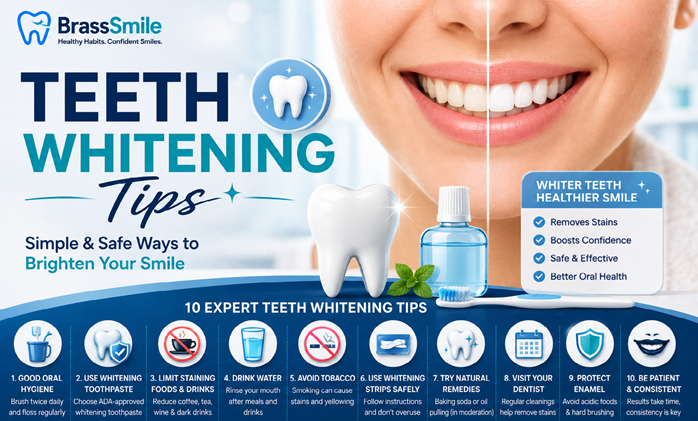
10 Practical Teeth Whitening Tips for a Brighter Smile
1. Start With Good Oral Hygiene
Whitening should not replace basic dental care.
Brush your teeth twice a day with fluoride toothpaste and clean between your teeth regularly. Removing plaque helps keep the surfaces of your teeth cleaner and can reduce the buildup that contributes to some surface staining.
A professional dental cleaning may also make a noticeable difference before you consider bleaching.
In fact, ADA experts note that cleaning before whitening can sometimes make teeth appear brighter on its own because plaque and surface buildup have been removed.
Think of whitening as an enhancement—not a substitute for oral hygiene.
2. Understand the Difference Between Stain Removal and Bleaching
This distinction is often overlooked.
Whitening toothpaste primarily helps remove surface stains through ingredients that clean or polish the enamel. Some formulas also contain low levels of peroxide.
Bleaching products, on the other hand, use peroxide-based ingredients such as hydrogen peroxide or carbamide peroxide to chemically lighten tooth color.
That means a whitening toothpaste may improve the appearance of coffee stains without significantly changing the natural color of the tooth.
If you want a more noticeable change, you may need a peroxide-based whitening treatment.
3. Choose Products Carefully
Not every whitening product deserves your trust simply because its packaging promises dramatic results.
In the United States, the ADA Seal of Acceptance can be a useful signal when choosing certain oral-care products. The ADA says products carrying the Seal have undergone evaluation for safety and effectiveness related to their specific claims.
The ADA’s current product categories include whitening toothpastes designed to remove surface stains and tooth-bleaching products shown to safely whiten natural teeth.
This does not mean every product without an ADA Seal is unsafe.
It simply gives consumers another piece of evidence when comparing products.
4. Don’t Ignore Tooth Sensitivity
One of the most common side effects of tooth bleaching is temporary sensitivity.
You may notice discomfort when drinking cold water, eating ice cream, or consuming hot foods. Gum irritation can also occur when whitening gel contacts the gums. These effects are generally temporary, but they can be uncomfortable.
If you already have sensitive teeth, take extra care before whitening.
Existing sensitivity may be related to enamel wear, gum recession, cavities, cracks, or other dental conditions. Whitening will not fix those underlying problems.
If sensitivity is significant or persistent, talk with your dentist before continuing treatment.
5. Don’t Overuse Whitening Products
More whitening does not automatically mean a better smile.
Repeated or excessive bleaching can increase the risk of sensitivity and gum irritation. Experts have also raised concerns about enamel damage associated with frequent or aggressive whitening.
Follow the product’s instructions rather than extending treatment because you want faster results.
If the recommended course says to use a product for a particular number of days, do not assume that doubling the duration will double the benefit.
Your enamel deserves better than that.
6. Be Careful With DIY Whitening Hacks
Social media is full of homemade whitening recipes.
Some recommend lemon juice, vinegar, charcoal, baking soda mixtures, hydrogen peroxide rinses, or other household ingredients.
These approaches may sound inexpensive and natural, but natural does not automatically mean safe or effective.
The ADA notes that evidence supporting many DIY whitening techniques is limited. Research has also raised concerns about abrasive charcoal-based approaches and other homemade methods.
The ADA has specifically warned about potentially harmful social-media dental trends, including lemon juice whitening and homemade whitening products that can cause chemical burns, sensitivity, or enamel damage.
If a whitening hack sounds too aggressive, skip it.
7. Reduce Foods and Drinks That Cause Stains
You do not have to give up coffee forever to maintain a brighter smile.
Instead, think about frequency and habits.
Common sources of extrinsic staining include:
- Coffee
- Tea
- Red wine
- Cola
- Tobacco
- Dark berries
- Strongly pigmented sauces
- Other deeply colored foods and beverages
The ADA identifies coffee, tea, red wine, cola, tobacco, and pigmented foods among contributors to extrinsic tooth discoloration.
If you regularly consume staining beverages, drinking water afterward can help rinse away residue.
8. Stop Smoking and Avoid Tobacco
Tobacco can discolor teeth and affect your oral health in other ways.
Smoking and other tobacco use can create persistent stains that ordinary whitening toothpaste may not fully remove.
More importantly, tobacco use is associated with gum disease and other oral-health concerns.
If you want a brighter smile, quitting tobacco offers benefits that go far beyond tooth color.
9. Give Whitening Time to Work
One of the biggest mistakes people make is expecting overnight results.
Different whitening methods work at different speeds.
Professional in-office treatment can produce faster changes because dentists can use stronger whitening materials under controlled conditions. Dentist-supervised take-home trays generally work more gradually. Over-the-counter strips and other products may also require repeated use before results become noticeable.
The right question is not:
“Which product works overnight?”
A better question is:
“Which approach can brighten my teeth while fitting my dental needs and risk level?”
10. Remember That Dental Restorations Don’t Whiten Like Natural Teeth
This is one of the most important teeth whitening tips if you have dental work.
Bleaching products can lighten natural teeth. They do not change the color of tooth-colored restorations in the same way. Crowns, veneers, implants, and other restorations may therefore remain their original shade.
This can create a color mismatch.
For example, if your front teeth contain crowns or veneers, whitening your natural teeth may make the restoration appear darker by comparison.
Tell your dentist about existing dental work before starting a whitening treatment.
Teeth Whitening Options Compared
| Whitening Method | Best For | Speed | Main Consideration |
|---|---|---|---|
| Whitening toothpaste | Surface stains | Gradual | Mainly removes surface discoloration |
| Whitening strips | At-home bleaching | Gradual | Can cause temporary sensitivity |
| Dentist-supervised trays | Controlled home whitening | Gradual | Customized to the patient |
| In-office whitening | Faster cosmetic change | Faster | Professional supervision and higher cost |
| DIY remedies | Not recommended | Unpredictable | Safety and effectiveness concerns |
The ADA recognizes several legitimate whitening approaches, including in-office treatment, dentist-supplied take-home products, and appropriate over-the-counter products.
Professional Whitening vs. At-Home Whitening
Professional Whitening
A dentist can examine your teeth first and determine whether whitening is appropriate. In-office treatment can provide faster results, while dentist-supplied take-home trays offer a more gradual approach.
Advantages
- Professional assessment
- Controlled application
- Faster results with in-office treatment
- Customized treatment options
- Better opportunity to identify dental problems beforehand
Potential disadvantages
- Higher cost
- Temporary sensitivity may occur
- Results are not permanent
- Not appropriate for every dental situation
At-Home Whitening
Over-the-counter whitening strips, gels, toothpastes, and other products are widely available.
Some can effectively lighten teeth when used as directed. However, results can take longer than professional treatment, and sensitivity or gum irritation can occur.
Advantages
- Convenient
- Usually less expensive
- Can be used at home
- Several product formats are available
Potential disadvantages
- Results vary
- Incorrect application can irritate gums
- Sensitivity can occur
- Products do not whiten restorations
- Some stains may not respond well
How Long Does Teeth Whitening Last?
Teeth whitening is not permanent.
The duration depends on your diet, oral hygiene, tobacco use, the type of whitening treatment, and the original cause of discoloration.
The NHS says whitening is not permanent and notes that the effect may last around three years when people follow their dentist’s advice.
That does not mean everyone will get exactly three years of results.
Think of whitening as maintenance rather than a one-time permanent transformation.
How to Keep Your Teeth White After Whitening
Once your teeth are brighter, your everyday habits matter.
Keep brushing regularly
Good oral hygiene helps control plaque and surface buildup.
Clean between your teeth
Flossing or another appropriate interdental method helps maintain overall oral health.
Drink water
Water can help rinse your mouth after meals and beverages.
Limit frequent staining exposures
You don’t necessarily need to eliminate coffee or tea. Reducing frequent exposure can help.
Avoid tobacco
Smoking can quickly work against the appearance you are trying to maintain.
Keep dental appointments
Professional cleanings can help control plaque and surface stains while allowing your dentist to monitor your oral health.
Can You Whiten Sensitive Teeth?
Possibly, but proceed carefully.
People with pre-existing sensitivity should discuss whitening with a dentist before beginning treatment. ADA experts specifically recommend professional guidance for people who already experience tooth sensitivity.
A dentist can determine whether your sensitivity comes from something that should be treated first.
For example, whitening is not the right solution for a cavity.
Likewise, it will not repair a cracked tooth or reverse gum recession.
Should You Whiten Your Teeth Before Seeing a Dentist?
Generally, an examination is the smarter starting point.
A dentist can check for:
- Cavities
- Gum disease
- Cracked teeth
- Significant enamel wear
- Gum recession
- Existing restorations
- Causes of unusual discoloration
- Tooth sensitivity
The ADA notes that a dental examination before bleaching can help identify factors contributing to discoloration and determine whether whitening is appropriate.
Sometimes a professional cleaning is enough to make your smile look noticeably brighter.
Who Should Avoid or Delay Teeth Whitening?
Whitening is not suitable for everyone.
For example, the NHS advises against whitening for people aged 17 or younger and says it is not recommended for people with unhealthy teeth or gums. It also advises against whitening during pregnancy or breastfeeding and notes that crowns, dentures, and implants will not be lightened by whitening.
Your individual situation may differ.
If you have significant sensitivity, untreated cavities, gum problems, extensive dental restorations, or unexplained discoloration, speak with a dentist before starting.
Teeth Whitening: Common Mistakes to Avoid
Using too much whitening gel
More product can increase gum exposure without providing proportional benefits.
Whitening every day indefinitely
Whitening is not meant to become an endless daily routine.
Using household acids
Lemon juice and vinegar are not sensible substitutes for evidence-based whitening.
Scrubbing harder
Aggressive brushing can damage or wear dental tissues.
Ignoring pain
Pain is not a sign that whitening is “working better.”
Expecting crowns to whiten
Whitening affects natural teeth, not restorations in the same way.
Buying unregulated treatments
The NHS warns that whitening performed outside appropriate dental settings or using unsuitable products can be less effective and may harm teeth or gums.
Frequently Asked Questions About Teeth Whitening
What is the safest way to whiten teeth?
For many people, dentist-supervised whitening offers the greatest level of professional oversight. Appropriate over-the-counter products can also be effective when used exactly as directed.
How can I whiten my teeth naturally?
The safest “natural” approach is to focus on preventing new stains through good oral hygiene, water consumption, and limiting tobacco and frequent exposure to staining foods and drinks. DIY acidic whitening methods are not recommended.
Does whitening toothpaste really whiten teeth?
Whitening toothpaste can help remove surface stains. It generally does not have the same bleaching effect as peroxide-based whitening treatments.
Can coffee make teeth yellow?
Yes. Coffee contains pigments that can contribute to extrinsic tooth staining over time.
Why do my teeth hurt after whitening?
Temporary sensitivity is one of the most common side effects of bleaching. Gum irritation can also occur.
Can I whiten crowns and veneers?
Whitening treatments affect natural teeth, not crowns and veneers in the same way. This can create a color difference between natural teeth and restorations.
Is charcoal good for whitening teeth?
Current evidence does not establish charcoal-based whitening as a reliably safe and effective way to whiten natural teeth. Some charcoal products can also be abrasive.
How long does professional teeth whitening last?
Whitening is temporary. The duration varies by individual habits and treatment. The NHS says the effect may last around three years when following dental advice, but results vary.
Can I whiten my teeth if they are sensitive?
You may be able to, but pre-existing sensitivity should be discussed with a dentist first. Finding the cause of sensitivity is more important than simply masking it.
Should I whiten my teeth at home or at the dentist?
Both options exist. At-home products can be convenient and less expensive, while professional treatment offers dental supervision and potentially faster results. Your dental condition and goals should guide the choice.
Final Thoughts
The best teeth whitening tips are not about finding the strongest product or the fastest shortcut.
They are about making smart choices.
Start with healthy teeth and gums. Maintain excellent oral hygiene. Understand whether your discoloration comes from surface stains or deeper changes. Choose evidence-based products, follow directions carefully, and avoid aggressive DIY methods.
If you already have sensitive teeth, gum problems, cavities, cracked teeth, or dental restorations, talk with a dentist before whitening.
And remember one important point: whiter teeth are not automatically healthier teeth.
At BrassSmile, our goal is to help readers understand the connection between appearance and oral health. A brighter smile can boost confidence, but protecting the teeth underneath should always come first.
Whiten with care. Protect your enamel. Keep your smile healthy.