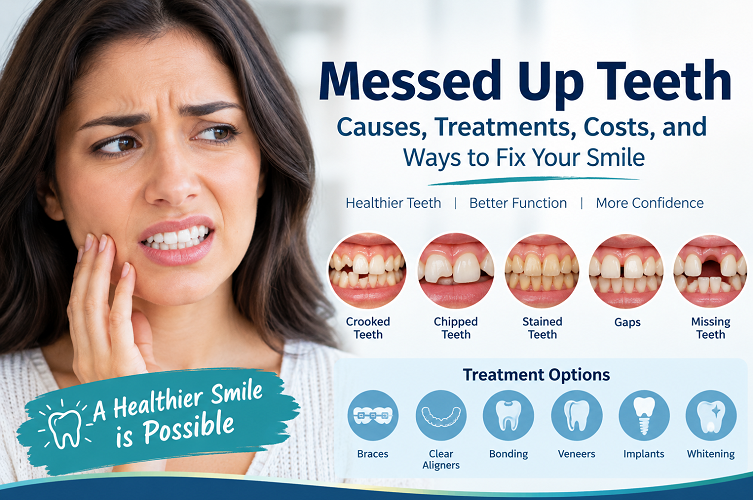

A crooked tooth, a chipped front tooth, or a smile that looks uneven can make you feel self-conscious. But messed up teeth are not always just a cosmetic concern. Depending on the underlying problem, they can make brushing difficult, interfere with chewing, or signal damage that needs professional attention.
Some people develop crooked teeth because of genetics or jaw development. Others experience changes after years of grinding, untreated cavities, gum disease, or dental injuries. The causes differ, and so do the solutions.
Fortunately, modern dentistry offers several ways to improve the appearance and function of your teeth. Braces and clear aligners can correct many alignment problems. Dental bonding can repair minor chips, while crowns and fillings restore damaged teeth. Whitening may help with certain stains, although it cannot correct crookedness or structural damage.
The first step is understanding what is actually wrong with your teeth. This guide covers the common causes of messed up teeth, available treatments, typical costs in the United States, and practical ways to protect your smile.
Also Read: Why Does My Jaw Pop? Causes, Symptoms & Treatment
What Does “Messed Up Teeth” Mean?
“Messed up teeth” is an everyday expression rather than a formal dental diagnosis. People use it to describe teeth that look crooked, overlap, appear discoloured, have uneven edges, or have suffered damage.
The phrase can refer to several different conditions:
- Crooked teeth: Teeth that twist or grow at unusual angles.
- Crowded teeth: Teeth that overlap because there is not enough room in the jaw.
- Gaps between teeth: Spaces between neighbouring teeth that may develop naturally or for other reasons.
- Chipped or broken teeth: Teeth damaged by an accident, biting pressure, decay, or weakened enamel.
- Discoloured teeth: Teeth that appear yellow, brown, gray, or stained.
- Worn-down teeth: Teeth that lose their normal shape through grinding, erosion, or repeated wear.
- Bite problems: Conditions in which the upper and lower teeth do not meet properly.
- Missing teeth: Gaps that can affect chewing and allow nearby teeth to shift.
These conditions require different approaches. Braces may help straighten crowded teeth, but they cannot repair a broken tooth. Whitening can brighten certain stains, yet it will not treat gum disease or correct a misaligned bite.
A dental examination helps distinguish a cosmetic concern from a problem that needs restorative or periodontal treatment.
What Causes Messed Up Teeth?
Teeth can become irregular or damaged for several reasons. In many cases, genetics, daily habits, and oral health problems contribute to the same issue.
1. Genetics and Jaw Development
Your genes influence the size of your teeth, the shape of your jaw, and how much space your mouth provides for permanent teeth.
When teeth are large relative to the available jaw space, crowding may develop. Differences in the growth of the upper and lower jaws can also affect how the teeth fit together.
This explains why someone with excellent oral hygiene may still have crooked teeth. Alignment problems are not necessarily a sign of neglect, and brushing alone cannot correct them.
2. Childhood Habits
Certain habits during childhood can influence the development of teeth and jaws.
Prolonged thumb-sucking, extended pacifier use, and persistent tongue thrusting may contribute to changes in tooth position or bite development. The effects depend on factors such as the habit’s duration and intensity.
Parents who notice persistent habits or developing bite problems should consult a pediatric dentist. Early evaluation can help determine whether intervention is necessary.
3. Poor Oral Hygiene and Tooth Decay
Plaque contains bacteria that contribute to tooth decay and gum disease. Without consistent brushing and cleaning between teeth, plaque can accumulate and damage oral tissues.
An untreated cavity may weaken a tooth until part of it breaks. Advanced gum disease can damage the bone and tissues that support teeth, sometimes causing them to loosen or shift.
Daily oral hygiene and regular dental examinations help reduce these risks. They also give dentists an opportunity to identify small problems before they require more extensive treatment.
4. Teeth Grinding and Clenching
Bruxism is the medical term for repeated teeth grinding or clenching. It can happen during sleep or while someone is awake.
Over time, excessive pressure can flatten biting surfaces, chip enamel, and contribute to jaw discomfort. Some people also experience morning headaches or tooth sensitivity.
A dentist can look for signs of grinding and assess the resulting damage. Depending on the cause, treatment may include a custom night guard and strategies to manage contributing factors.
5. Dental Injuries and Everyday Wear
Falls, sports injuries, accidents, and biting hard objects can chip or fracture teeth. Existing decay may make the damage worse by weakening the tooth’s structure.
Acid exposure can also wear away enamel. Frequent consumption of acidic beverages, for example, may contribute to erosion over time.
A suitable sports mouthguard can reduce the risk of certain dental injuries. Avoiding habits such as chewing ice or using teeth to open packaging can also help protect natural teeth.
6. Missing Teeth and Shifting Alignment
Losing a tooth can affect more than the space it leaves behind. Neighboring teeth may gradually move toward the gap, while the opposing tooth may shift into the empty space.
These changes can affect the bite and make some areas harder to clean. Depending on the circumstances, a dentist may recommend an implant, bridge, or removable partial denture.
Replacing a missing tooth is not necessary in every situation, but it deserves a professional assessment. The location of the gap, the health of nearby teeth, and the patient’s overall oral condition all influence the decision.
How to Tell Whether Your Teeth Need Treatment
Not every uneven tooth needs correction. Mild rotations, small gaps, and natural variations in tooth shape can be perfectly compatible with good oral health.
The question is whether the condition affects your comfort, ability to clean your teeth, chewing function, or personal goals.
Consider scheduling a dental appointment if you notice:
- Teeth that overlap or are difficult to clean.
- Pain when chewing or biting.
- New gaps or changes in tooth position.
- Chipped, cracked, or broken teeth.
- Bleeding gums, persistent bad breath, or gum recession.
- Jaw soreness or signs of excessive tooth wear.
- Difficulty bringing your teeth together comfortably.
- Teeth that feel loose without an obvious explanation.
Some symptoms require faster attention. Severe dental pain, facial swelling, uncontrolled bleeding, and significant dental injuries warrant urgent care.
A knocked-out permanent tooth is a time-sensitive dental emergency. Handle it by the crown rather than the root, keep it moist in milk or an approved tooth-preservation solution if necessary, and contact a dentist immediately. If you have difficulty breathing or swallowing, especially with facial or neck swelling, seek emergency medical care.
Best Treatments for Messed Up Teeth
The right treatment depends on the cause and severity of the problem. Orthodontists focus on tooth alignment and bite correction, while general dentists often manage cavities, chips, discolouration, and restorative work.
1. Braces for Crooked and Crowded Teeth
Braces use brackets, wires, and controlled pressure to move teeth into better positions over time. They can address crowding, gaps, rotated teeth, and many bite problems.
Traditional metal braces remain a common option. Ceramic braces use tooth-coloured brackets that blend more closely with natural teeth.
Advantages
- Treat a broad range of alignment problems.
- Provide continuous, controlled tooth movement.
- Can address many complicated orthodontic cases.
Disadvantages
- Treatment may take months or several years.
- Brackets and wires require careful cleaning.
- Some foods can damage the appliance.
- Adjustments may cause temporary soreness.
Treatment time varies according to the complexity of the case. Your orthodontist can estimate the likely duration after examining your teeth and bite.
Braces are worth considering when the problem involves tooth position rather than appearance alone. They move natural teeth instead of simply covering irregularities.
2. Clear Aligners for a Less Noticeable Option
Clear aligners are removable plastic trays designed to move teeth through a planned series of small adjustments.
Many adults and teenagers prefer them because they are less noticeable than traditional braces. Patients can remove the trays for meals, brushing, and flossing.
However, convenience comes with responsibility. Aligners generally need to be worn for most of the day according to the clinician’s instructions. Inconsistent use can delay progress or affect the final result.
Clear aligners work well for many selected mild or moderate alignment problems, but they are not ideal for every case. Some patients need braces or a combination of treatments.
Before beginning treatment, ask who will supervise your progress, whether dental imaging is necessary, and how the provider will monitor your gums and tooth roots.
Avoid unsupervised, do-it-yourself teeth straightening. Poorly planned tooth movement can damage supporting tissues and lead to lasting dental problems.
3. Dental Bonding for Small Chips and Gaps
Dental bonding offers a straightforward way to improve certain minor imperfections.
A dentist applies tooth-coloured composite resin, shapes it to match the tooth, and hardens the material. Bonding can repair small chips, improve the appearance of selected stains, and close certain small gaps.
The procedure often requires little removal of natural tooth structure and may be completed in one appointment.
However, bonded material can stain, chip, or wear over time. It is usually better suited to minor cosmetic corrections than extensive structural damage.
For example, someone with a slightly uneven front tooth may achieve a pleasing result with bonding. Significant crowding or a serious bite problem generally requires a different treatment plan.
4. Veneers for Cosmetic Improvements
Veneers are thin coverings attached to the front surfaces of teeth. Dentists may recommend them for selected concerns involving tooth color, shape, small gaps, or mild irregularities.
Porcelain veneers can produce natural-looking results when carefully designed and maintained. Composite veneers offer another option, although durability and appearance vary.
Veneers have limitations. They do not correct every alignment problem, and they cannot replace treatment for active gum disease or decay. Some procedures require removing enamel, making the change irreversible.
Before choosing veneers, ask whether braces, clear aligners, or bonding could meet your goals with less alteration of healthy teeth.
5. Fillings, Crowns, and Root Canal Treatment
When decay or injury damages a tooth, restoring its health takes priority over cosmetic improvements.
Common treatments include:
- Fillings: Repair cavities and replace damaged tooth structure.
- Dental crowns: Cover and protect teeth that have lost substantial structural strength.
- Root canal treatment: Removes infected or inflamed tissue inside a tooth when indicated, allowing the tooth to be restored in many cases.
- Tooth extraction: Removes a tooth when it cannot be predictably saved.
Your dentist will consider the extent of the damage, the amount of healthy tooth remaining, and the condition of surrounding tissues.
Early treatment can preserve more natural tooth structure. If a tooth hurts or appears damaged, whitening or veneers will not necessarily address the underlying problem.
6. Professional Teeth Whitening
Stains can make a smile look uneven, even when the teeth are otherwise healthy. Professional whitening may help lighten discoloration caused by substances that respond to bleaching.
Whitening changes the color of natural teeth. It does not straighten them, repair chips, or treat cavities.
Fillings, crowns, and veneers also do not respond to whitening in the same way as natural enamel. If you already have dental restorations, discuss the expected color match with your dentist before treatment.
Tooth sensitivity and gum irritation are possible side effects. A dentist can help determine whether whitening is appropriate and which approach best fits your needs.
7. Dental Implants, Bridges, and Partial Dentures
When a tooth is missing, replacement may help restore chewing function and address changes in the surrounding teeth.
Dental implants use fixtures placed in the jawbone to support replacement teeth. Bridges fill gaps using supporting teeth or other suitable structures. Removable partial dentures replace one or more missing teeth and can be taken out for cleaning.
Each option has different costs, maintenance requirements, and clinical considerations.
Your dentist will evaluate gum health, bone support, the location of the missing tooth, and your overall health before recommending a solution.
Comparison Table: Which Treatment Is Right for You?
| Dental problem | Common treatment | Main purpose |
|---|---|---|
| Crooked or crowded teeth | Braces or clear aligners | Improve alignment and bite |
| Small chips | Dental bonding | Restore tooth shape |
| Deep cavities | Fillings or crowns | Repair damaged structure |
| Infection inside a tooth | Root canal and restoration, when appropriate | Treat the affected tissue and preserve the tooth when possible |
| Surface stains | Professional whitening | Lighten natural tooth color |
| Cosmetic shape concerns | Bonding or veneers | Improve visible appearance |
| Missing teeth | Implant, bridge, or partial denture | Replace missing teeth |
| Gum disease | Periodontal treatment | Control disease and protect supporting tissues |
This comparison provides a starting point, not a personalized diagnosis. Some patients need more than one treatment, and the order of treatment matters.
For example, a dentist may recommend treating gum disease before beginning orthodontic work. A patient with a chipped, crowded front tooth might need both restorative care and alignment treatment.
How Much Does It Cost to Fix Messed Up Teeth in the United States?
The cost of fixing messed up teeth varies considerably across the United States. Your location, provider, treatment complexity, materials, and dental insurance can all affect the final bill.
There is no single price for fixing an uneven or damaged smile. A small bonding repair differs substantially from comprehensive orthodontic treatment or replacing several missing teeth.
When requesting estimates, ask for a written treatment plan that separates professional fees, imaging, preliminary procedures, follow-up appointments, and maintenance.
What affects the final cost?
Several factors can influence what you pay:
- The severity of the dental problem.
- The number of teeth requiring treatment.
- Whether a specialist is necessary.
- The materials used for crowns, veneers, or other restorations.
- Dental insurance coverage and annual benefit limits.
- Retainers, follow-up visits, repairs, and future replacements.
A patient with several problems may need staged treatment. For example, cavities and gum disease may need attention before orthodontic treatment begins.
How to make treatment more affordable
Dental care can be expensive, but a few practical steps may help you manage the cost.
- Request an itemized estimate. Make sure you understand what the quoted price includes.
- Check your insurance benefits. Ask about annual limits, waiting periods, deductibles, and orthodontic coverage.
- Ask about payment arrangements. Some dental offices offer payment plans or financing.
- Compare qualified providers. Consider credentials, treatment plans, and total costs rather than choosing solely by price.
- Explore lower-cost care. Dental school clinics and community health centers may offer affordable services.
Do not ignore urgent pain or swelling while saving for treatment. Untreated decay and infection can become more difficult and expensive to manage.
Pros and Cons of Fixing Messed Up Teeth: Messed Up Teeth
Dental treatment can improve comfort, function, and appearance. However, every procedure comes with considerations.
Pros
- Better alignment and smile appearance.
- Easier cleaning in some crowded areas.
- Improved chewing or bite function when the underlying problem is corrected.
- Repair of damaged teeth and restoration of lost function.
- Greater confidence for people who feel self-conscious about their smiles.
Cons
- Treatment may be expensive.
- Braces and aligners require time and consistent commitment.
- Some procedures cause temporary soreness or sensitivity.
- Crowns, veneers, and other restorations require ongoing maintenance and may need replacement.
- Poorly planned cosmetic procedures can remove unnecessary healthy tooth structure.
The best outcome is not necessarily the straightest or whitest smile. It is a result that meets your goals while protecting long-term oral health.
Expert Tips for Protecting Your Teeth: Messed Up Teeth
Healthy habits cannot straighten every crooked tooth or repair a broken one. They can, however, reduce the risk of further damage and help maintain treatment results.
Follow a consistent oral hygiene routine
The National Institute of Dental and Craniofacial Research recommends brushing twice daily with fluoride toothpaste and cleaning between teeth regularly.
Build these habits into your daily routine:
- Brush gently for two minutes, twice a day.
- Clean between your teeth daily with floss or an appropriate interdental cleaner.
- Limit frequent sugary snacks and drinks.
- Choose water instead of regularly sipping sugary beverages.
- Attend dental examinations at intervals recommended for your needs.
- Wear an appropriate mouthguard during contact sports.
- Discuss possible nighttime grinding if you notice chipped teeth, flattened edges, or jaw soreness.
Consistency matters more than complicated routines. Simple habits, practiced every day, help protect natural teeth.
Avoid DIY teeth straightening
Rubber bands, improvised braces, and unmonitored aligners can damage gums and supporting structures. Teeth move through biological processes that require appropriate planning and supervision.
If you want straighter teeth, consult a licensed dentist or orthodontist rather than attempting to reposition them yourself.
Address gum problems before cosmetic treatment
Bleeding gums, persistent swelling, gum recession, and loose teeth deserve attention before elective cosmetic procedures.
Gum disease can damage the tissues supporting teeth and compromise treatment outcomes. A dentist can determine whether professional cleaning, periodontal treatment, or specialist care is necessary.
Protect damaged teeth from further injury
If a tooth chips or cracks, avoid chewing hard foods on that side until a dentist evaluates it. Do not try to file the tooth or repair it with household adhesives.
Prompt evaluation helps determine whether the tooth needs bonding, a crown, root canal treatment, or another procedure.
Can You Fix Messed Up Teeth Naturally?
Many people look for natural ways to straighten crooked teeth or rebuild damaged enamel. Unfortunately, home remedies cannot reliably reposition permanent teeth or restore a tooth that has broken.
Healthy habits can support your teeth and gums, though.
What can help at home?
- Fluoride toothpaste: Helps prevent cavities and supports remineralization of early enamel damage.
- Balanced nutrition: Limits frequent sugar exposure and supplies nutrients needed for healthy teeth and gums.
- Proper brushing: Removes plaque that contributes to decay and gum disease.
- Regular dental care: Helps identify problems before they become more complicated.
What should you avoid?
Do not use lemon juice, vinegar, charcoal powders, or abrasive substances to reshape or whiten teeth. Acidic ingredients can erode enamel, while abrasive products may wear down tooth surfaces.
Never file your teeth at home. Enamel does not grow back, and removing it can cause permanent sensitivity and increase the risk of decay.
If your teeth look uneven, a dental professional can explain which treatments are appropriate and which natural features you can safely leave alone.
Internal Link Suggestions for Your Website: Messed Up Teeth
Help readers explore related topics by linking to useful, relevant pages on your website.
| Suggested anchor text | Recommended article topic |
|---|---|
| How to straighten crooked teeth | Braces and clear aligners |
| Causes of yellow teeth | Tooth discoloration and whitening |
| How to repair a chipped tooth | Dental bonding and restorative dentistry |
| Signs of gum disease | Symptoms, prevention, and treatment |
| Dental crown vs. veneer | Differences, benefits, and limitations |
| Affordable dental care in the US | Insurance, dental schools, and community clinics |
Use descriptive anchor text and link only to published pages that genuinely support the reader’s next step.
External Authority Sources: Messed Up Teeth
Reliable health information strengthens an article’s credibility and gives readers a way to verify important claims.
- American Dental Association (ADA): MouthHealthy provides patient-friendly information about oral health, orthodontics, and dental procedures.
- National Institute of Dental and Craniofacial Research (NIDCR): Health Information covers tooth decay, gum disease, bruxism, and oral hygiene.
- American Dental Association: Home Oral Care offers guidance on daily dental care and related oral health topics.
For stronger editorial credibility, link directly to the specific guidance supporting each medical claim rather than relying only on an organization’s homepage.
Recommended Schema Markup
Structured data can help search engines understand how your article fits into your website. Use markup that accurately reflects the published content.
- Article schema: Identifies details such as the headline, author, publication date, and publisher.
- BreadcrumbList schema: Describes the page’s position within your website’s navigation.
- Organization schema: Provides information about the publishing organization when appropriate.
Use FAQPage markup only when the content meets Google’s current eligibility requirements. Structured data does not guarantee enhanced search results, and all marked-up information must match the visible page. Never invent author credentials, patient reviews, or medical endorsements.
(FAQs): About Messed Up Teeth
1. Can messed up teeth be fixed?
Yes. Many dental problems can be improved with braces, clear aligners, bonding, veneers, fillings, crowns, or other procedures. The right treatment depends on whether the problem involves alignment, discoloration, structural damage, or gum disease.
2. How can I fix messed up teeth without braces?
Clear aligners can straighten suitable cases without traditional braces. Bonding or veneers may improve selected cosmetic concerns, but they do not correct every bite problem. A dentist or orthodontist can help you choose the safest option.
3. Are messed up teeth always caused by poor hygiene?
No. Genetics, jaw development, childhood habits, injuries, and natural tooth positioning can all contribute to irregular teeth. Poor oral hygiene can cause decay and gum disease, but crooked teeth alone do not mean someone neglects dental care.
4. Can adults straighten their teeth?
Yes. Adults can receive orthodontic treatment when their teeth and supporting tissues are suitable for it. Treatment may involve braces or clear aligners. Your dentist may recommend addressing gum disease or cavities before moving your teeth.
5. Do messed up teeth cause health problems?
Some dental problems affect chewing, cleaning, or bite function. Crowded teeth may be harder to clean, while untreated decay and gum disease can cause pain, infection, and tooth loss. Mild cosmetic irregularities do not automatically indicate a health problem.
6. How long does it take to fix crooked teeth?
Treatment time depends on the severity of the misalignment, the method used, and how consistently you follow instructions. Some cases take several months, while others require a few years. Your orthodontist can estimate your treatment time after an examination.
7. Are veneers better than braces for crooked teeth?
Neither option is best for everyone. Braces move natural teeth, while veneers change the appearance of their front surfaces. Significant crowding or bite problems may require orthodontic treatment. Veneers can involve permanent enamel removal, so discuss less invasive alternatives first.
8. Can I straighten my teeth at home?
You should not try to move teeth with rubber bands, household materials, or improvised appliances. These methods can damage gums, tooth roots, and supporting tissues. Safe orthodontic treatment requires professional assessment and monitoring.
9. Should I fix messed up teeth if they do not hurt?
Not every cosmetic irregularity needs treatment. However, a lack of pain does not rule out cavities, gum disease, or other dental problems. Keep up with routine examinations and seek advice if your teeth shift, your gums change, or chewing becomes uncomfortable.
Conclusion: Messed Up Teeth
Messed up teeth can mean anything from a slightly crooked front tooth to significant structural damage or a bite problem. The right response depends on the cause, not simply on how your smile looks.
Braces and clear aligners can improve alignment. Bonding and veneers may address selected cosmetic concerns, while fillings, crowns, and other restorative procedures can repair damaged teeth. When gum disease or active decay is present, treating those conditions may need to come first.
If you feel unhappy with your teeth, start with a dental examination. Ask about the available treatments, their risks and limitations, expected costs, and long-term maintenance requirements.
You do not need perfectly straight teeth to have a healthy smile. With the right care, you can protect your natural teeth, address problems that matter, and make informed decisions about your appearance and oral health.


Pingback: Turkey Teeth: Costs, Risks and What to Know in 2026
Pingback: Dental Fillings Crowns Bridges: A Complete Guide 2026