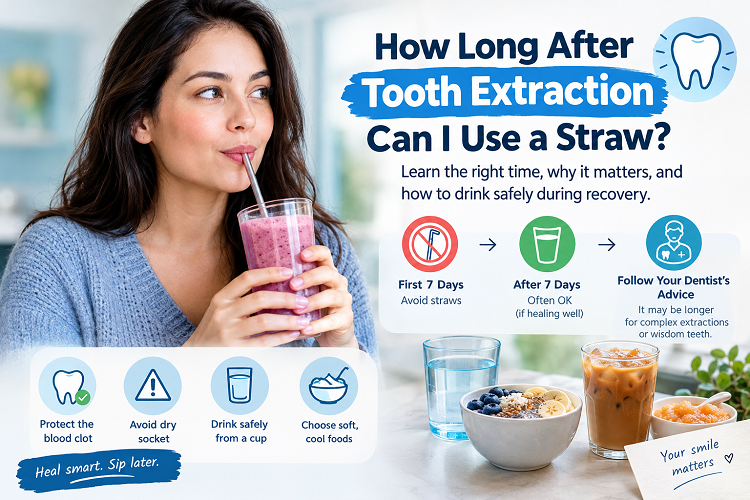

Recovering from a tooth extraction means making a few temporary changes to your daily routine. Even something as ordinary as drinking a smoothie or sipping iced coffee can raise questions. One of the most common concerns is how long after tooth extraction you can use a straw. How Long After Tooth Extraction Can I Use a Straw?
As a cautious general guideline, wait at least seven days before using a straw. Your dentist may recommend a shorter or longer period depending on the extraction, your healing progress, and any complications.
The reason comes down to a small but important part of your recovery: the blood clot that forms inside the empty tooth socket. This clot helps protect the underlying bone and supports the healing process. The suction created by a straw may disturb it, increasing the risk of a painful condition known as dry socket.
Fortunately, you don’t have to give up your favourite drinks entirely. You can usually drink water, milk, and suitable smoothies from a regular cup while your mouth heals.
Here’s what you need to know about using straws after tooth extraction, recognising potential complications, and making your recovery more comfortable.
Also Read: How Long to Keep Gauze in After Tooth Extraction
How Long After Tooth Extraction Can I Use a Straw?
Most patients should avoid straws for about seven days after a tooth extraction unless their dentist provides different instructions.
The first 24 to 72 hours deserve particular care. During this time, the blood clot is becoming established, and unnecessary suction may interfere with healing.
However, recovery doesn’t follow the same schedule for everyone. A simple extraction may heal differently from surgical removal of an impacted wisdom tooth.
Tooth Extraction Recovery Timeline
| Time after extraction | Should you use a straw? | What to do instead |
|---|---|---|
| First 24 hours | No | Drink gently from a cup and protect the blood clot. |
| 24–72 hours | Avoid it. | Continue drinking without suction and avoid forceful spitting. |
| Days 4–6 | Generally, no | Allow the extraction site to heal without unnecessary pressure. |
| Day 7 onwards | Often possible | Resume cautiously if healing is progressing and your dentist agrees. |
| Beyond 7 days | Depends on recovery. | Follow your dentist’s advice if symptoms persist or the procedure was complex. |
This timeline is a general guide, not a guarantee that every extraction site has healed by the seventh day.
For example, someone who has a straightforward extraction may recover differently from someone who undergoes surgery to remove an impacted wisdom tooth. Your dentist may recommend avoiding straws for longer after a complicated procedure.
The safest approach is to follow your dentist’s specific instructions rather than relying on the calendar alone.
Why Should You Avoid Using a Straw After Tooth Extraction?
The main concern is the blood clot that develops in the extraction socket.
After your dentist removes a tooth, your body begins repairing the area. A blood clot forms to control bleeding and protect the exposed tissues while healing begins.
Drinking through a straw creates suction inside your mouth. That pressure change may disturb the clot, particularly during the early stages of recovery.
If the clot becomes dislodged or breaks down prematurely, you may experience renewed bleeding, delayed healing, or dry socket.
1. Suction Can Disturb the Blood Clot
The suction involved in drinking through a straw creates pressure changes inside your mouth. Depending on the procedure and the stage of healing, those changes may interfere with the clot protecting the socket.
You might feel perfectly comfortable while drinking, but that doesn’t necessarily mean the extraction site has finished healing.
Avoiding straws during the recommended period is a simple precaution that helps protect the wound.
2. You May Develop a Dry Socket
Dry socket, medically known as alveolar osteitis, occurs when the protective blood clot is lost or breaks down too early. This can expose the underlying bone and nerve endings.
The condition often causes significant pain that begins or worsens a few days after extraction. The discomfort may spread toward your ear, temple, or jaw. Some people also notice an unpleasant taste or persistent bad breath.
Using a straw does not guarantee dry socket will develop. The condition can occur even when patients follow their aftercare instructions carefully.
However, avoiding suction is one way to reduce preventable risks during recovery.
3. Your Recovery May Become More Uncomfortable
If the extraction site begins bleeding again or the clot becomes disturbed, you may experience additional discomfort.
You might also need an extra dental appointment to assess the wound and manage any complications.
Although avoiding a straw can feel inconvenient, the temporary adjustment is usually easier than dealing with an avoidable recovery problem.
What Is Dry Socket, and How Is It Related to Straws?
Dry socket is a painful complication that can develop after a tooth extraction. It occurs when the blood clot that normally protects the socket disappears or breaks down prematurely.
Straw use is one possible concern because suction may disturb the clot. However, dry socket has multiple contributing factors, and it does not develop after every extraction.
Understanding its symptoms can help you recognise when you need professional care.
Common Symptoms of Dry Socket
Contact your dentist if you experience:
- Severe pain that develops or worsens several days after extraction.
- Pain that spreads toward your ear, jaw, or temple.
- An unpleasant taste or bad breath that doesn’t improve.
- An extraction site that appears empty or shows visible bone.
- Pain that does not respond adequately to your recommended pain medication.
These symptoms don’t automatically confirm dry socket. Your dentist will need to examine the extraction site and determine what’s causing the discomfort.
If your pain gets worse instead of gradually improving, don’t simply wait for it to disappear.
A dentist can assess the socket, gently clean the area when appropriate, and apply a medicated dressing to relieve symptoms.
Does Using a Straw Always Cause Dry Socket?
No. Using a straw once doesn’t automatically cause dry socket, and avoiding straws cannot eliminate every possible risk.
The purpose of the restriction is to minimise unnecessary suction while the blood clot remains vulnerable.
For most patients, waiting about a week is a cautious approach. If you had oral surgery or an impacted wisdom tooth removed, ask your dentist whether you should wait longer.
When Can You Use a Straw After Wisdom Tooth Removal?
Wisdom tooth removal often requires more recovery time than a straightforward extraction, particularly when the tooth is impacted or trapped beneath the gum.
Your oral surgeon may need to open the gum tissue, remove some surrounding bone, or place stitches. These additional steps can make aftercare more involved.
After wisdom tooth removal, avoid straws for at least the first week unless your oral surgeon gives you different instructions.
Some patients need to avoid suction for longer, depending on the complexity of the procedure and their recovery.
Why Wisdom Tooth Extraction May Require Extra Care
You may need additional precautions if:
- Your wisdom tooth was impacted.
- Your surgeon removed bone or cut through the gum.
- You received stitches.
- You still have substantial swelling or pain.
- Your surgeon identified a particular concern during the procedure.
Stitches help support the surgical site, but they don’t guarantee that the blood clot will remain undisturbed.
For that reason, don’t assume you can use a straw simply because your stitches look secure or your swelling has improved.
How Do You Know When It’s Safe to Resume Straw Use?
Before returning to your usual drinking habits, consider the following:
- You’ve completed the waiting period recommended by your dentist.
- Your pain and swelling are improving rather than worsening.
- You no longer have active bleeding.
- You have no symptoms suggesting dry socket or infection.
- Your dentist hasn’t advised you to avoid suction for longer.
Even when your mouth feels normal, the tissue underneath may still be healing. If you’re unsure, check with your dental office before using a straw again.
Can You Drink Cold Drinks Without a Straw After Tooth Extraction?
Yes. Most patients can drink suitable cool or room-temperature beverages after an extraction, provided they follow their dentist’s instructions.
The key is to drink gently from a cup rather than creating suction.
Staying hydrated also matters during recovery, especially if soreness makes eating and drinking less appealing.
Drinks You Can Usually Have
Depending on your dentist’s advice, these options may work well:
- Water: An easy choice for staying hydrated throughout the day.
- Milk: Provides fluids and calories when you need something more filling.
- Smoothies: Choose smooth varieties without seeds, hard pieces, or crunchy toppings.
- Cool, nonacidic drinks: These may feel more comfortable if your mouth is sensitive.
- Nutrition drinks: These can help you maintain your calorie intake when regular meals are difficult.
Drink slowly and avoid letting liquids pool around the extraction site.
If a beverage causes stinging or discomfort, switch to something gentler.
Drinks to Avoid or Limit
During early recovery, be cautious with:
- Alcohol: It may interfere with healing and interact with prescribed medications.
- Very hot beverages: These can burn your mouth, particularly while local anesthesia is still wearing off.
- Acidic drinks: Citrus juices and similar beverages may irritate sensitive tissues.
- Drinks with small seeds or particles: These may become trapped near the extraction site.
- Carbonated beverages: Avoid them if they cause discomfort or conflict with your dentist’s instructions.
You don’t necessarily need to avoid every beverage on this list for the entire recovery period. Follow your dentist’s recommendations and pay attention to how your mouth responds.
How to Drink Safely Without a Straw: How Long After Tooth Extraction Can I Use a Straw
Avoiding straws can feel inconvenient if you regularly drink smoothies, iced coffee, or other beverages on the go.
Fortunately, you can make a few simple adjustments without changing your entire routine.
1. Drink From an Open Cup
Bring the cup to your lips and let the liquid flow naturally. Avoid sucking through pursed lips or creating unnecessary pressure inside your mouth.
A small cup may be easier to manage if your jaw feels stiff after surgery.
2. Take Small, Gentle Sips
Large gulps may feel uncomfortable when your mouth is sore. Take small sips and swallow normally.
There’s no need to rinse the extraction site with each sip. Simply drink at a comfortable pace.
3. Choose Soft, Easy-to-Eat Foods
You may find chewing uncomfortable during the first few days. Soft foods can help you maintain your nutrition without putting unnecessary pressure on the surgical area.
Consider options such as:
- Yogurt without seeds or crunchy toppings.
- Applesauce.
- Mashed potatoes.
- Scrambled eggs.
- Soft oatmeal served at a comfortable temperature.
- Smooth soups that aren’t too hot.
- Smoothies consumed slowly from a cup.
Avoid hard, crunchy, sticky, or sharp foods that may irritate the wound. Your dentist may recommend a soft diet for several days, particularly after wisdom tooth surgery.
4. Keep Your Mouth Clean
Good oral hygiene supports recovery, but you need to clean your mouth gently.
During the first 24 hours, avoid vigorous rinsing and forceful spitting unless your dentist gives you different instructions.
After the initial period, your dentist may recommend gentle warm saltwater rinses. Let the liquid move around your mouth without vigorous swishing, then allow it to drain gently.
Brush your other teeth carefully, taking care not to disturb the extraction site. Never poke the socket with your tongue, fingers, or other objects.
What Should You Do If You Already Used a Straw?
If you accidentally used a straw after your extraction, don’t panic.
A single sip doesn’t automatically mean you’ve damaged the blood clot or will develop dry socket. The best response is to stop using the straw and monitor your symptoms.
Steps to Take After Accidentally Using a Straw
- Stop using the straw. Switch to drinking gently from a cup.
- Check for bleeding. A small amount of blood-tinged saliva can occur after extraction.
- Leave the socket alone. Don’t touch the area or try to inspect it with your fingers.
- Continue your aftercare routine. Take prescribed medications as directed and follow your dentist’s cleaning instructions.
- Watch for unusual symptoms. Contact your dentist if pain worsens, bleeding persists, or other concerning symptoms develop.
If bleeding starts, sit upright and follow your dentist’s instructions for applying firm, continuous pressure with clean gauze over the extraction site.
Contact your dental office if bleeding continues despite applying pressure.
Seek urgent medical care if you develop difficulty breathing or swallowing, or significant swelling that worsens rapidly.
Pros and Cons of Avoiding Straws During Recovery
Avoiding straws is a relatively small adjustment, but it can make some daily habits less convenient.
| Pros | Cons |
|---|---|
| Helps protect the developing blood clot | Smoothies may be less convenient to drink |
| Avoids unnecessary suction near the extraction site | You may need to change your usual drinking routine |
| Makes it easier to follow cautious aftercare practices | Drinking certain beverages may be messier |
| Reduces one avoidable risk during healing | You need to remember to drink slowly and gently |
For most people, the inconvenience lasts only a short time. You can still enjoy many beverages while giving the extraction site an opportunity to heal.
Expert Tips for a Smooth Recovery After Tooth Extraction
Avoiding straws is just one part of looking after your mouth. Your overall recovery routine matters, too.
A few consistent habits can help you stay comfortable and recognize problems early.
Follow These Practical Tips
- Avoid smoking and vaping. Both can interfere with recovery. Smoking also increases the risk of healing complications.
- Don’t spit forcefully. Avoid creating unnecessary pressure inside your mouth.
- Skip vigorous rinsing during the first 24 hours. Follow your dentist’s instructions about when to begin rinsing.
- Choose soft foods. Avoid hard, crunchy pieces that may irritate the socket.
- Drink enough water. Take regular, gentle sips from a cup.
- Use medications as directed. Ask your dentist or pharmacist before changing your dose or adding another medication.
- Attend recommended follow-up appointments. Your dentist can assess healing and address concerns if necessary.
- Pay attention to changes in pain. Discomfort should generally improve over time, although recovery varies from person to person.
These precautions are particularly helpful after wisdom tooth removal or a more complicated extraction.
Tooth Extraction Aftercare Checklist
Use this checklist to keep track of your recovery routine.
- Avoid straws for the period recommended by your dentist.
- Drink water gently from a cup.
- Choose soft foods and avoid hard, crunchy pieces.
- Follow your dentist’s oral hygiene instructions.
- Avoid smoking and vaping.
- Monitor pain, swelling, and bleeding.
- Contact your dentist if symptoms worsen.
Following these steps won’t guarantee a complication-free recovery, but they can help you avoid unnecessary irritation and follow your aftercare plan more consistently.
(FAQs): About How Long After Tooth Extraction Can I Use a Straw
1. Can I use a straw three days after tooth extraction?
It’s generally safer to continue avoiding straws on day three. Some dental instructions specify shorter minimum restrictions, but waiting about seven days is a cautious approach, particularly after surgical extraction. Follow your dentist’s instructions.
2. Can I use a straw five days after tooth extraction?
Five days may be too early, especially if you had a wisdom tooth removed. The extraction site may still be healing even if your pain has improved. Consider waiting until around day seven and checking with your dentist before resuming straw use.
3. Can I use a straw seven days after tooth extraction?
Many patients can resume straw use after seven days if healing is progressing normally. However, complicated extractions may require a longer waiting period. If you still have bleeding, increasing pain, or significant swelling, contact your dentist first.
4. What happens if I use a straw too soon?
Using a straw too soon may disturb the blood clot, cause renewed bleeding, or increase the risk of dry socket. However, one accidental use doesn’t guarantee a complication. Stop using the straw and contact your dentist if you develop concerning symptoms.
5. Can I drink a smoothie after tooth extraction?
Yes, you can usually enjoy a smooth, seed-free smoothie if your dentist permits it. Drink from a cup rather than using a straw. Avoid hard ingredients, seeds, and acidic additions that irritate the extraction site.
6. Can I drink iced coffee after tooth extraction?
Cool or lukewarm coffee may be suitable if you tolerate it comfortably. Drink it from a cup and avoid straws during the recommended recovery period. Avoid very hot beverages while your mouth is numb, and follow any medication-related instructions from your dentist.
7. Is it safe to use a straw after wisdom tooth removal?
Most patients should avoid straws for at least the first week after wisdom tooth removal unless their oral surgeon advises otherwise. Impacted wisdom teeth and complex procedures may require additional precautions.
8. How do I know if I have dry socket?
Dry socket may cause severe or worsening pain several days after extraction, pain that spreads toward the ear, or an unpleasant taste or smell. Contact your dentist promptly if these symptoms occur. A dental examination can help confirm the cause.
9. Can I use a straw if I have stitches?
Not necessarily. Stitches support the surgical site but don’t guarantee that the blood clot is protected from suction. Follow your oral surgeon’s recommended waiting period, even if the stitches look secure.
10. When should I call my dentist after tooth extraction?
Contact your dentist if you experience worsening pain, persistent bleeding, increasing swelling, fever, pus, or an unpleasant taste accompanied by other concerning symptoms. Seek urgent medical attention if you have difficulty breathing or swallowing.
Conclusion: How Long After Tooth Extraction Can I Use a Straw
So, how long after tooth extraction can I use a straw?
Waiting at least seven days is a cautious general guideline, although your dentist may recommend a different period depending on the procedure and your recovery.
The goal is to protect the blood clot while your mouth heals. Drink from a cup, choose soft foods, avoid smoking, and follow your dentist’s aftercare instructions.
If you accidentally use a straw, don’t assume you’ve caused a problem. Stop using it and watch for unusual symptoms.
When you’re unsure whether the extraction site has healed enough, ask your dentist before returning to your usual drinking habits. A few days of extra caution can help you avoid unnecessary discomfort during recovery.



Pingback: Pain Under Ear Behind Jaw Bone Left Side: Causes & Relief 2026