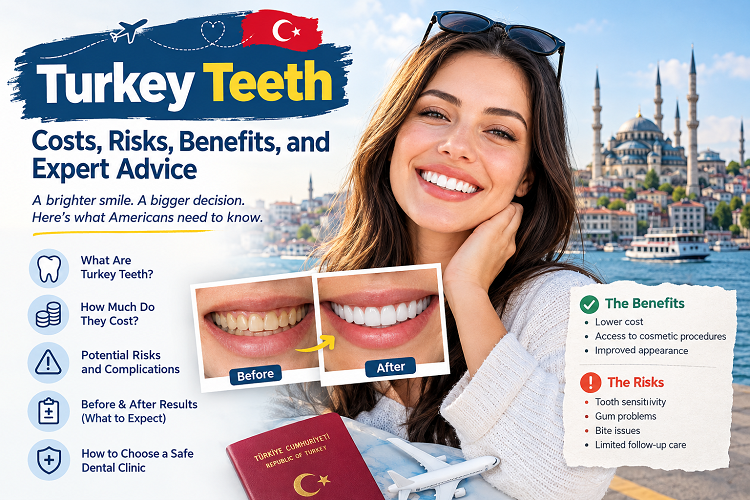

A brighter, more symmetrical smile can make a real difference in how people feel about their appearance. For many Americans, however, cosmetic dentistry comes with a substantial price tag. That has led some patients to look overseas, with Turkey emerging as a popular destination for dental treatment. The trend has a name: Turkey teeth. The phrase typically describes the bright, uniform smiles people achieve through cosmetic dental procedures in Turkey. Depending on the patient, treatment may involve porcelain veneers, dental crowns, implants, or a combination of restorations.
Social media has helped fuel interest in these dramatic smile makeovers. Before-and-after photos can make the results look almost effortless. Yet the reality is more complicated than a striking photograph suggests.
Some patients are pleased with their treatment. Others experience sensitivity, gum inflammation, bite problems, or complications that require additional dental work after they return home. In some cases, extensive treatment permanently removes healthy tooth structure.
The difference often comes down to the treatment plan, the dentist’s judgement, the quality of the restorations, and the care available afterward.
This guide examines Turkey teeth from an American patient’s perspective. It covers typical costs, common procedures, potential complications, alternatives, and practical steps for evaluating a dental clinic before making a decision.
Also Read: Messed Up Teeth: Causes, Fixes, and Treatment Costs 2026
What Are Turkey Teeth?
‘Turkey teeth’ is an informal term for cosmetic dental treatment performed in Turkey, usually to create a brighter, more even smile. It is not the name of a specific procedure or a recognised dental treatment category.
Clinics offer different approaches depending on the patient’s existing teeth, oral health, and cosmetic goals. Some treatments involve relatively conservative changes. Others require extensive preparation and multiple restorations.
Common procedures used for Turkey teeth
1. Porcelain veneers
Veneers are thin shells bonded to the front surfaces of teeth. Dentists use them to improve color, shape, size, and the appearance of minor alignment issues.
Some veneers require removing a small amount of enamel. Others may need minimal preparation, depending on the patient’s teeth and the planned result.
Although veneers can improve a smile, they are not always reversible. Once a dentist removes natural enamel, the change is permanent.
2. Dental crowns
A dental crown covers the entire visible portion of a tooth above the gumline. Dentists commonly recommend crowns for teeth that are severely damaged, weakened, heavily restored, or otherwise need substantial protection.
Crowns can also change a tooth’s appearance. However, placing them on healthy teeth solely for cosmetic reasons may involve removing more natural structure than necessary.
Before agreeing to multiple crowns, ask your dentist why each tooth needs one and whether a less invasive option could achieve a similar result.
3. Full-mouth rehabilitation
Some patients receive extensive treatment involving numerous crowns, veneers, implants, or other restorations. Dentists may recommend full-mouth rehabilitation when several teeth are damaged or when the bite requires comprehensive correction.
This type of treatment needs careful planning. A dentist should assess the teeth, gums, bite, and supporting structures before recommending a final approach.
The treatment plan should also explain which procedures are necessary, which are primarily cosmetic, and what alternatives exist.
4. Dental implants
Dental implants replace missing teeth by supporting crowns, bridges, or other prosthetic restorations. They require a different process from veneers and crowns because the implant must integrate with the jawbone.
Treatment may take several months, depending on healing, bone quality, and whether additional procedures are necessary.
Implants are not simply a shortcut to a better smile. Patients need appropriate bone support, healthy gums, careful planning, and long-term maintenance.
Why are Turkish teeth so popular?
Several factors have contributed to the trend.
Social media features dramatic smile transformations, influencer endorsements, and videos documenting treatment. Meanwhile, Turkish clinics often advertise prices below those charged by many American dental practices.
Some providers also arrange hotel stays, transportation, and appointments as part of a dental tourism package.
These conveniences can make treatment abroad appealing. However, a polished advertisement does not establish a clinic’s clinical standards, and an impressive before-and-after photo cannot prove that a treatment was appropriate.
The quality of care depends on the individual dentist, the diagnosis, the materials, the laboratory work, and the follow-up arrangements.
How Much Do Turkey Teeth Cost?
Price is one of the main reasons Americans consider dental treatment in Turkey. The savings can be substantial, particularly for patients who need several restorations.
However, advertised prices rarely tell the whole story. The final cost depends on the procedure, the number of teeth involved, the materials selected, and any additional treatment required before the dentist can begin.
Turkey teeth cost: Turkey vs. the United States
The following figures are broad planning estimates, not verified October 2026 quotations. Prices vary by clinic, location, materials, exchange rates, and clinical complexity.
| Treatment | Estimated cost in Turkey | Estimated cost in the U.S. |
|---|---|---|
| Porcelain veneer, per tooth | $200–$500 | $900–$2,500 |
| Dental crown, per tooth | $150–$400 | $800–$2,000 |
| Dental implant with crown | $700–$1,500 | $3,000–$6,000+ |
| Treatment involving 20 veneers or crowns | $4,000–$10,000 | $16,000–$50,000+ |
These figures are illustrative and should not be treated as current quotes. The 20-tooth estimates do not represent equivalent clinical treatment plans. Implant surgery, bone grafting, temporary restorations, anaesthesia, and other services may cost extra.
What determines the final price?
Several factors influence the total bill:
- Number of teeth: Treating a few front teeth generally costs less than restoring an entire arch.
- Restoration materials: Porcelain, zirconia, and other materials have different costs and clinical applications.
- Preparatory treatment: Cavities, gum disease, root canal treatment, and extractions can increase the price.
- Travel expenses: Flights, hotels, meals, local transportation, and time away from work all add to the budget.
- Aftercare: Follow-up visits, adjustments, repairs, and replacement restorations may not be included.
- Unexpected complications: Corrective treatment can become expensive, particularly when it requires several visits or a specialist.
Are Turkey’s teeth cheaper after travel expenses?
They can be, but the savings may be smaller than the initial quote suggests.
Consider a hypothetical patient who receives a $5,000 treatment quote and spends another $1,200 on flights and accommodation. The initial expense reaches $6,200 before additional dental care.
If a restoration later needs repair, the patient may face another bill from a dentist in the United States. A return trip to Turkey could add even more expense.
For a meaningful comparison, calculate the complete cost of treatment, travel, maintenance, and potential corrective care. A lower starting price is useful only if the treatment also meets your clinical needs.
Why Do People Choose Turkey Teeth?
The appeal goes beyond social media trends. Many people want to improve their smile without spending tens of thousands of dollars.
For some, overseas treatment provides access to procedures they might otherwise postpone. Others appreciate the convenience of arranging several appointments through one clinic.
Potential benefits of Turkey teeth
Lower upfront prices: Some Turkish clinics charge considerably less than comparable American practices.
Access to cosmetic dentistry: Patients can explore veneers, crowns, implants, and other restorative procedures.
Organised treatment packages: Certain clinics coordinate accommodation, transportation, and appointment scheduling.
Improved appearance: Appropriate treatment can improve tooth color, shape, and symmetry.
Restoration of damaged teeth: Patients with severely worn, broken, or heavily restored teeth may benefit from a carefully designed treatment plan.
These benefits depend on the patient’s circumstances and the quality of care. A lower price does not guarantee a good result, and a cosmetic makeover is not necessarily the best choice for otherwise healthy teeth.
What Are the Risks of Turkey Teeth?
Dental complications can happen in any country. The challenge with overseas treatment is that resolving a problem may become more difficult once the patient returns home.
The most significant concerns involve aggressive tooth preparation, inadequate diagnosis, poorly fitting restorations, and limited access to follow-up care.
1. Permanent removal of healthy tooth structure
One of the biggest concerns surrounding Turkey teeth is the amount of natural tooth structure removed during treatment.
Veneers may require some enamel removal. Traditional crowns require more extensive preparation because they cover the tooth on all sides.
Once enamel has been removed, the process cannot be reversed. Extensive preparation may leave teeth more vulnerable to sensitivity, damage, and future restorative treatment.
This does not mean every crown or veneer is inappropriate. It means the dentist should have a clear clinical reason for recommending the procedure.
If a clinic proposes crowns on numerous healthy teeth, ask why veneers or other conservative options would not work. Consider getting an independent opinion before proceeding.
2. Tooth sensitivity and nerve damage
Some sensitivity can occur after dental preparation. Persistent or severe pain, however, deserves prompt evaluation.
Extensive tooth reduction may irritate the dental pulp, which contains the tooth’s nerves and blood vessels. In some cases, the tooth may eventually require root canal treatment.
A responsible dentist should explain the relevant risks before treatment, especially when multiple teeth are involved.
3. Gum inflammation and infection
Crowns and veneers need to fit properly around the teeth and gums. Poorly fitting restorations, rough edges, and trapped food can make cleaning more difficult.
Over time, these problems may contribute to gum inflammation or decay around the restorations. Existing gum disease can also compromise the result.
A proper treatment plan should address gum health before cosmetic work begins.
4. Bite problems and jaw discomfort
A new smile must work properly when you chew and speak. If restorations are too tall or poorly shaped, they can interfere with the way your teeth meet.
Patients may notice discomfort when biting, uneven pressure, or jaw soreness.
The dentist should assess your bite during treatment and make adjustments when necessary. Appearance alone is not an adequate measure of success.
5. Poorly fitting veneers or crowns
Restorations that do not fit correctly can cause discomfort, trap food, and create areas that are difficult to clean.
Poorly designed crowns may also look bulky or unnatural. Even a beautiful photograph cannot reveal whether the restorations fit properly or protect the underlying teeth.
Accurate impressions or digital scans, careful preparation, appropriate laboratory work, and clinical adjustments all contribute to a successful result.
6. Limited access to follow-up care
Patients often return to the United States shortly after treatment. If a crown loosens or a tooth becomes painful, arranging care with the original clinic may be difficult.
A local dentist can assess the problem and may provide treatment. However, that dentist might not have the original records or agree with the initial treatment plan.
Patients should understand these limitations before traveling. The Oral Health Foundation provides additional guidance on the potential challenges of dental tourism.
7. Unexpected treatment and financial pressure
An examination may reveal problems that were not obvious during an online consultation. Sometimes additional treatment is clinically necessary.
The concern arises when a clinic pressures patients to accept extensive procedures without explaining the reasons, alternatives, risks, or costs.
Ask for a written treatment plan before agreeing to additional work. You should have enough time to understand your options and make an informed decision.
Turkey Teeth Before and After: What Photos Really Show
Before-and-after photos can help you assess a dentist’s cosmetic style. They cannot tell you whether the treatment was appropriate or whether the restorations will last.
A photograph rarely shows how much enamel the dentist removed, the condition of the gums, the health of the tooth pulp, or the patient’s bite.
Lighting, camera angles, image editing, and whitening can also affect how dramatic the transformation appears.
When reviewing a clinic’s portfolio, look for:
- Several examples of patients with dental concerns similar to yours.
- Natural-looking results that suit each patient’s face.
- Clear descriptions of the procedures performed.
- Follow-up photographs taken months or years after treatment, when available.
- Independent patient reviews that discuss comfort, function, and aftercare as well as appearance.
Ask whether the dentist used veneers, crowns, or another procedure in each example. More importantly, request realistic expectations for your own teeth.
A trustworthy provider should explain what treatment can achieve and where its limitations lie.
Turkey Teeth vs. Veneers vs. Crowns
These terms often appear together in online discussions, but they describe different things.
Turkey teeth is a trend label. Veneers and crowns are specific types of dental restorations that serve different purposes.
| Feature | Veneers | Dental crowns |
|---|---|---|
| Coverage | Mainly the front surface of a tooth | Covers the entire visible tooth |
| Tooth preparation | Often limited, but varies | Usually more extensive |
| Typical purpose | Cosmetic changes to suitable teeth | Restoring or protecting damaged teeth |
| Reversibility | Usually not reversible if enamel is removed | Not reversible because tooth preparation is permanent |
| Main considerations | Enamel availability, bonding, appearance | Tooth strength, fit, bite, gum health |
The right treatment depends on your existing teeth and the result you want to achieve.
Veneers may suit patients seeking cosmetic changes to otherwise suitable teeth. Crowns may be more appropriate when teeth need substantial restoration or protection.
Neither option is automatically better. A dentist should explain the benefits, drawbacks, and alternatives before recommending treatment.
Are Turkey Teeth Worth It?
For some patients, dental treatment in Turkey can offer a reasonable combination of cost and convenience. However, the decision requires more than comparing price lists.
Extensive cosmetic work on healthy teeth deserves particular scrutiny because some procedures permanently change the natural tooth structure.
Pros and cons of Turkey teeth
Pros
- Potentially lower upfront treatment costs.
- Access to a range of cosmetic and restorative procedures.
- Opportunities to compare clinics and treatment plans.
- Possible improvements in appearance and function when treatment is appropriate.
- Travel packages that may simplify accommodation and transportation.
Cons
- Permanent removal of healthy tooth structure with many crown and veneer procedures.
- Possible sensitivity, nerve damage, gum problems, and bite complications.
- Travel expenses and potential repeat visits.
- Difficulties arranging corrective care after returning home.
- Potential challenges resolving complaints or disputes across borders.
The most important question is whether the proposed treatment makes sense for your oral health.
A conservative approach that preserves healthy teeth may offer better long-term value than an aggressive makeover, even if the initial result looks less dramatic.
How to Choose a Safe Dental Clinic in Turkey
If you are considering dental tourism, investigate the provider and treatment plan before booking a flight.
1. Verify the dentist’s qualifications
Ask for the full name of the dentist who will perform your treatment. Check their professional registration through the appropriate Turkish authorities and review their training and experience.
For implant treatment, ask about the clinician’s experience with implant surgery. For extensive restorative work, find out who will handle each part of the process.
Marketing claims alone do not establish professional competence.
2. Arrange a proper dental examination
A responsible dentist should assess your oral health before recommending extensive cosmetic work.
Depending on your circumstances, the evaluation may include a clinical examination, photographs, and appropriate dental X-rays. Imaging should support the diagnosis rather than replace a physical examination.
Be cautious about anyone who promises a definitive treatment plan based only on a selfie.
3. Request a detailed written treatment plan
Before paying a deposit, make sure the plan identifies:
- Which teeth will receive treatment.
- Whether each tooth will receive a veneer, crown, implant, or another restoration.
- Why the dentist recommends each procedure.
- How much natural tooth structure may need removal.
- Which alternatives are available.
- The expected cost of each procedure.
- Potential complications and recovery requirements.
- The arrangements for follow-up care.
Request documents in a language you understand. Do not sign consent forms that you cannot read or explain in your own words.
4. Ask about materials and laboratory work
Find out which materials the dentist plans to use and why they suit your case.
Ask whether the clinic uses an in-house laboratory or works with an external dental laboratory. You can also request information about the manufacturer and documentation for your restorations.
Material choice matters, but it is only one part of the process. Diagnosis, preparation, fit, and the dentist’s clinical judgment also affect the outcome.
5. Read independent patient reviews
Do not rely exclusively on testimonials published by the clinic.
Look for detailed feedback on independent review platforms. Pay attention to recurring complaints about unexpected charges, rushed appointments, poor communication, or difficulties obtaining help after treatment.
Reviews cannot guarantee clinical quality, but consistent patterns may reveal issues worth investigating.
6. Confirm aftercare before committing
Ask what the clinic will do if a veneer breaks, a crown becomes loose, or you experience pain after returning to the United States.
Get written details about warranties, exclusions, emergency contacts, and any charges for repairs.
Speak with a local dentist before traveling. Ask whether they would be willing to provide follow-up care and what that care might cost.
Also, check your insurance policy. Overseas treatment and corrective care may not receive the same coverage as routine dental treatment at home.
Expert Tips Before Getting Turkey Teeth
A little preparation can help you avoid rushed decisions and expensive surprises.
Get a second opinion. Have an independent U.S. dentist review the proposed treatment. This is particularly valuable if a clinic recommends crowns on numerous healthy teeth.
Explore conservative alternatives. Professional whitening, orthodontic treatment, composite bonding, or a limited number of veneers may meet your goals with less tooth removal.
Take your time. Do not agree to an irreversible procedure because a clinic advertises a limited-time discount.
Ask about a temporary preview. For suitable cases, a dentist may create a mock-up or temporary restoration to help you assess the proposed appearance before finalizing the result.
Discuss gum health and your bite. Healthy gums and comfortable chewing matter just as much as the color and shape of your teeth.
Keep copies of your records. Obtain your treatment plan, X-rays, restoration details, invoices, and consent forms. These records can help another dentist provide appropriate care.
Set aside money for maintenance. Even well-made restorations need monitoring and may require adjustments or replacement.
Choose a natural-looking result. Extremely white, uniform teeth may not suit every face. A well-designed smile should complement your features and function comfortably.
What to Do If You Already Have Turkey Teeth
Receiving dental treatment in Turkey does not automatically mean you will experience complications. Many restorations function well when dentists plan and maintain them appropriately.
Still, establishing ongoing dental care in the United States is essential.
Arrange an examination with a licensed dentist who can assess your restorations, gums, bite, and underlying teeth. Bring your overseas treatment records if you have them.
Do not attempt to adjust a crown or veneer yourself. Seek dental advice if you experience persistent sensitivity, bleeding gums, pain when biting, or a restoration that feels loose.
Facial swelling accompanied by fever requires prompt medical assessment. Difficulty swallowing or breathing is an emergency and needs immediate medical attention.
Long-term maintenance matters even when everything feels normal. Brush twice daily with fluoride toothpaste, clean between your teeth every day, and attend dental checkups at intervals recommended for your needs.
Crowns and veneers do not protect the entire mouth from dental disease. The natural tooth underneath a restoration can still develop decay, and the surrounding gums can still become unhealthy.
(FAQs): About Turkey Teeth
1. What exactly are Turkey teeth?
Turkey teeth is an informal term for cosmetic dental work performed in Turkey, often to create a bright, symmetrical smile. Treatment may involve porcelain veneers, crowns, implants, or a combination of procedures.
The phrase does not describe a specific material or guarantee a particular standard of care.
2. How much do Turkey teeth cost in 2026?
Costs depend on the procedure, the number of teeth treated, the materials, and the clinic.
For general budgeting, individual veneers may cost around $200–$500 and crowns around $150–$400 in Turkey. These are illustrative estimates, not verified current quotations.
Flights, accommodation, preparatory treatment, and aftercare can increase the total cost.
3. Are Turkey teeth safe?
Dental treatment in Turkey can be safe when qualified dentists provide appropriate care and follow suitable clinical and infection-control standards.
However, no dental procedure is completely risk-free. The extent of tooth preparation, the dentist’s judgment, the fit of restorations, and access to follow-up care all influence the outcome.
Evaluate the individual provider rather than judging safety by the country alone.
4. Do Turkey teeth ruin your natural teeth?
Not necessarily. Properly indicated restorations can improve appearance or protect damaged teeth.
However, aggressive preparation can permanently remove healthy enamel and weaken natural teeth. Extensive crown treatment may also increase the risk of sensitivity, nerve damage, and future restorative procedures.
Ask whether a less invasive treatment could achieve a similar result.
5. Are Turkey teeth veneers or crowns?
They can involve either procedure. Veneers cover mainly the front surfaces of teeth, while crowns cover the entire visible tooth.
Some smile makeovers combine both. Ask the dentist to identify the procedure planned for every tooth instead of relying on the general term Turkey teeth.
6. How long do Turkey teeth last?
There is no single lifespan because Turkey teeth can involve different types of restorations.
Veneers and crowns may last many years, depending on their fit, materials, maintenance, bite forces, and the condition of the underlying teeth. They may eventually need repair or replacement.
Implants also require long-term maintenance, and individual components may need attention over time.
Ask your dentist about the expected lifespan of the specific treatment being proposed.
7. Can Americans get dental treatment in Turkey?
Yes. Americans can travel to Turkey for dental treatment, subject to applicable travel requirements.
Before booking, research the clinic, verify the dentist’s qualifications, obtain an independent opinion, and arrange follow-up care. Check your insurance policy for overseas benefits and possible corrective treatment costs.
8. What are the alternatives to Turkey teeth?
Depending on your needs, alternatives may include professional whitening, composite bonding, orthodontic treatment, limited veneers, or crowns for teeth that genuinely require them.
Each option serves a different purpose. A dentist should recommend treatment based on your oral health and goals, not default to the most extensive procedure.
9. Can I get Turkey teeth without shaving down my teeth?
Possibly. Some veneer treatments require minimal preparation, and certain patients may qualify for no-preparation veneers.
However, these approaches do not suit everyone. Adding material without sufficient space can create bulky teeth or an unnatural appearance.
Traditional crowns generally require substantial preparation. Ask how much enamel the proposed treatment will remove before agreeing to it.
10. Will U.S. dental insurance cover Turkey teeth?
Coverage depends on your policy and the procedure. Many plans limit or exclude elective cosmetic treatment, and overseas care may face additional restrictions.
Contact your insurer before traveling. Ask about overseas benefits, documentation requirements, annual limits, and coverage for follow-up or corrective treatment in the United States.
Conclusion: Turkey Teeth
Turkey teeth have become a popular option for people seeking a brighter, more uniform smile without paying typical U.S. dental prices. Yet the most important part of a smile makeover happens long before the final photographs.
The dentist’s treatment plan, the amount of healthy tooth structure preserved, the quality of the restorations, and the availability of follow-up care all shape the long-term outcome.
For Americans considering dental treatment abroad, start with an independent examination and compare the proposed treatment with less invasive alternatives. Verify the dentist’s qualifications, request a detailed written plan, and calculate the full cost of travel and ongoing care.
Do not choose a clinic solely because of a low price or an impressive social media transformation. Take time to understand the risks, ask questions, and avoid making irreversible decisions under pressure.
The best smile makeover is not simply the whitest or most dramatic. It is one that looks natural, functions comfortably, and supports your oral health for years to come.